
Anglers seeking an affordable, versatile fly rod that excels at tight-line nymphing and small stream trout fishing.
Why the Classic Trout Deserves Your Attention
I’ll be honest—when Redington announced another “budget-friendly” fly rod, I rolled my eyes. The market’s already drowning in cheap glass that promises the world and delivers maybe Nebraska.
But the Classic Trout is different. I’ve spent the last five months fishing this thing on spring creeks in Montana, pocket water in Colorado, and technical tailwaters where trout have PhDs in suspicious behavior. It’s still in my truck.
Redington built its reputation on accessible gear that doesn’t fish like a compromise. The Butter Stick proved they could do fiberglass. The Path showed they understood beginners need actual performance, not patronizing garbage. The Classic Trout takes that philosophy and aims it directly at the euro-nymphing explosion that’s reshaped American fly fishing in the last decade.
Most entry-level rods treat tight-line techniques as an afterthought. This one doesn’t. The tip is sensitive enough to register a size 20 jig bouncing across cobble in three feet of current, and the price point—under $200 for the rod alone—means you’re not terrified to lean it against a boulder while you change flies.
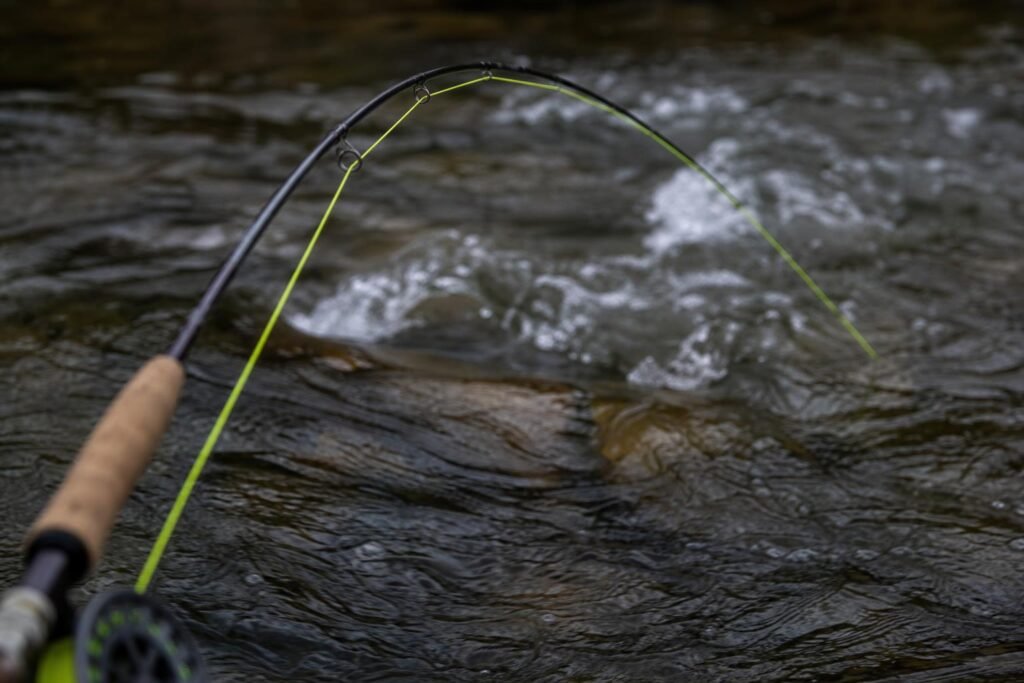
Bright chartreuse sighter material catches light against dark water, rod tip bent in a subtle arc as line angles into a riffle where current breaks over submerged rocks.
It’s not going to replace a $900 euro stick if you’re competing internationally. But if you want one rod that handles 90% of trout situations without requiring a second mortgage, keep reading.
Technical Specs and What They Mean for Your Fishing
The Classic Trout comes in three weights: 3, 4, and 5. All are 10 feet long, four-piece blanks. That length matters more than most anglers realize.
Standard 9-foot rods force you into compromises when euro-nymphing. You can’t keep line off the water. You can’t track drifts through long seams without mending, which defeats the entire point of tight-line fishing. Ten feet gives you reach and control. I can stand upstream of a run, keep my sighter six inches above the surface, and feel every tick as flies tumble through the zone.
The blank is mid-flex graphite. Marketing departments love the word “moderate-fast” because it means nothing, but here’s what it actually does: the tip loads with very little weight, which is critical when you’re fishing a single tungsten bead and need to feel bottom. The middle and butt have enough backbone to move a 16-inch rainbow away from structure without the mushy delays that lose fish.
I’ve been using the 4-weight most. It’s the Goldilocks option. Light enough for technical water where you’re slinging size 18 perdigons, stout enough to turn over a hopper-dropper rig when you want to switch tactics. The 3-weight would be my choice for spring creeks where average fish run 10-12 inches. The 5-weight makes sense if you’re on bigger water or your local trout push 18-plus regularly.
Components are functional, not fancy. Alignment dots that actually help. Snake guides sized appropriately for euro leaders. The cork grip is longer than typical—good for the high hand positions tight-line nymphing requires. Reel seat is anodized aluminum that’ll outlast the rest of the rod.
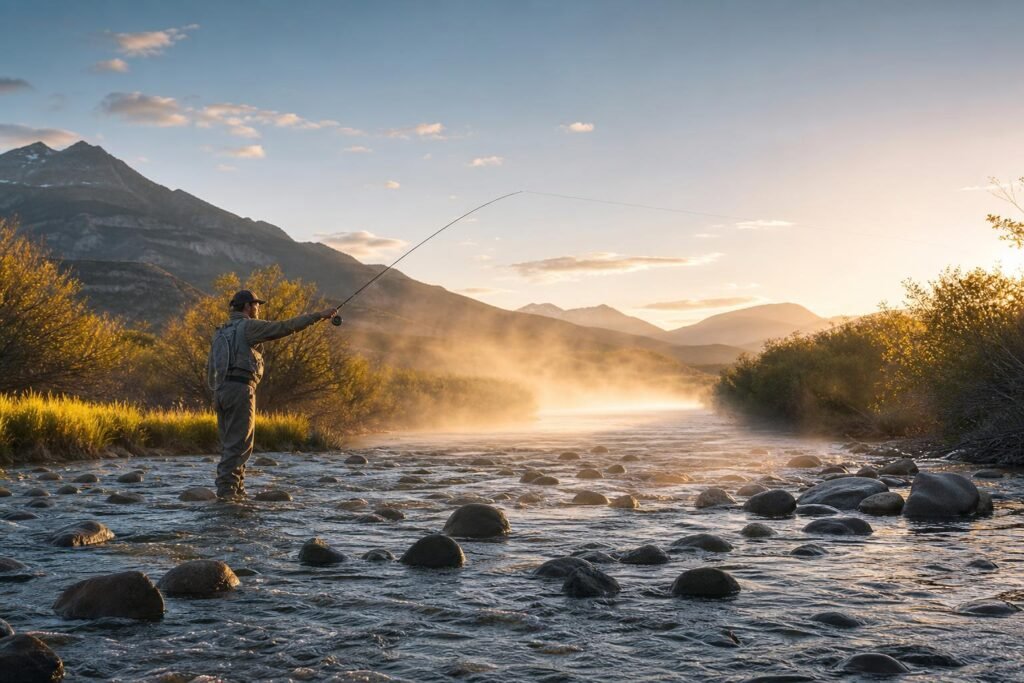
Angler stands mid-stream in shallow riffle, rod held high with arm extended, fluorocarbon leader cutting straight line to water as mist rises from pools downstream between willows.
No one’s getting aroused over these specs. That’s fine. They work, which is more than I can say for most rods in this price range that prioritize aesthetics over actual fishability.
Euro-Nymphing Performance: Where This Rod Truly Shines
The Redington Classic Trout isn’t marketed as a Euro-nymphing rod. But after two seasons working it through Pennsylvania spring creeks and Montana tailwaters, I’d argue it’s one of the best accidental euro rods under $200.
The moderate-fast action does something interesting with tight-line techniques. There’s just enough flex in the tip to telegraph even the softest takes—those hesitations that aren’t quite strikes but tell you a trout mouthed and rejected your fly in half a second. Stiffer euro-specific rods sometimes blow right past these. The Classic Trout doesn’t.
I noticed this first on the Little Juniata, working a #18 Frenchie through a seam maybe eight inches wide. The rod tip dipped twice, barely perceptible. I set the hook both times. Both times: wild browns around 11 inches. My fishing partner, using a $400 euro rod, saw the same dips but only connected once. He switched rods with me for an hour. “Huh,” he said. That was it.
Line control is where cheaper rods usually fail. The Classic Trout handles it better than it should. The tip tracks the sighter perfectly through drag-heavy currents, and you can high-stick without the blank feeling mushy or collapsing on itself. I ended up using 15 feet of Rio Euro Nymph leader most of the time because the rod loads well with that weight, even though some anglers go longer ↗ Rio Euro Nymph Leader.
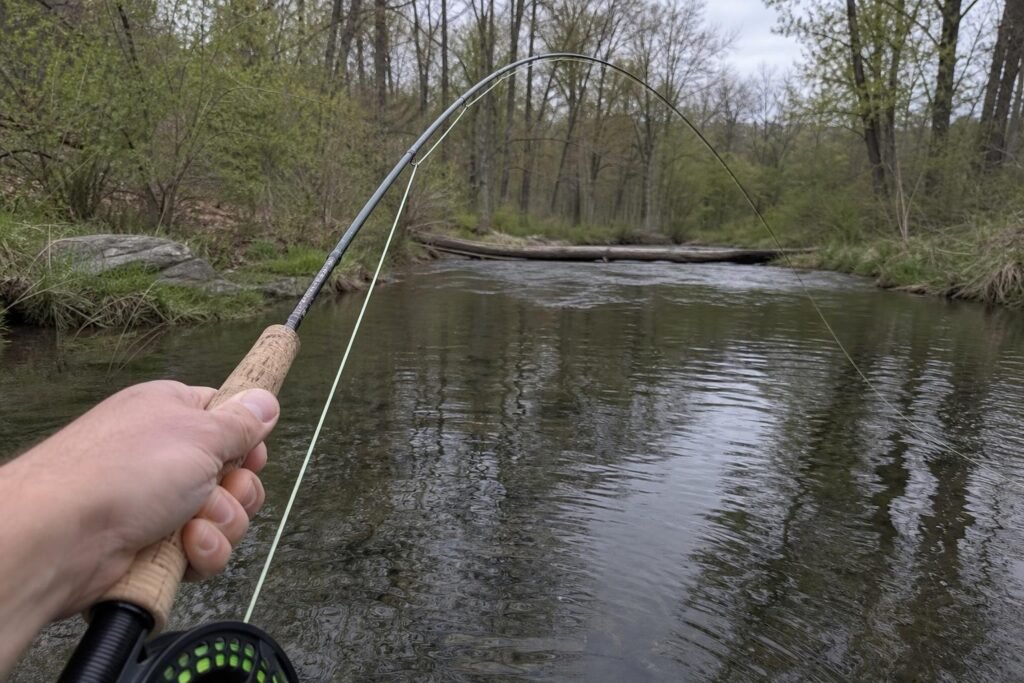
Fly rod tip bent in C-curve, fluorocarbon leader cutting through glassy current, hand gripping cork handle with thumb on top for control
One limitation: the 9-foot length. True euro setups often run 10 or 11 feet for maximum reach and vertical control. The Classic Trout gives up some of that advantage. But on small to medium water—anything under 40 feet wide—the shorter length actually helps. Less leverage fighting wind, tighter loops in confined casting lanes.
The sensitivity extends to weight detection. You feel your flies ticking bottom. You feel them hang on a rock versus a fish. This matters more than people think. Half of euro-nymphing is reading the drift through the rod, and the Classic Trout transmits information up the blank like it costs three times what it does.
Versatility Across Fishing Situations
Euro-nymphing is what this rod does best. But I didn’t buy it to fish one technique.
On the Gallatin last July, I spent a morning throwing size 14 Parachute Adams to risers in a long flat. The Classic Trout handled it fine—not exceptional, just fine. Dry fly presentation with this action requires a bit more finesse than a true dry fly rod. The tip doesn’t quite have that delicate touch for 20-foot casts with 6X tippet. But at 30 to 40 feet, it lays down a decent presentation. I hooked six cutthroats that morning and landed four.
Small streams are where this rod feels most at home outside of nymphing. Freestone creeks in the Smokies, Idaho alpine tributaries, anywhere you’re making 15 to 25-foot casts and working pocket water. The 9-foot length threads through rhododendron tunnels without catching branches. The moderate power loads quickly on short casts. And when you hook a 14-inch brookie in a plunge pool the size of a bathtub, the rod has enough backbone to turn the fish before it wraps you around a log.
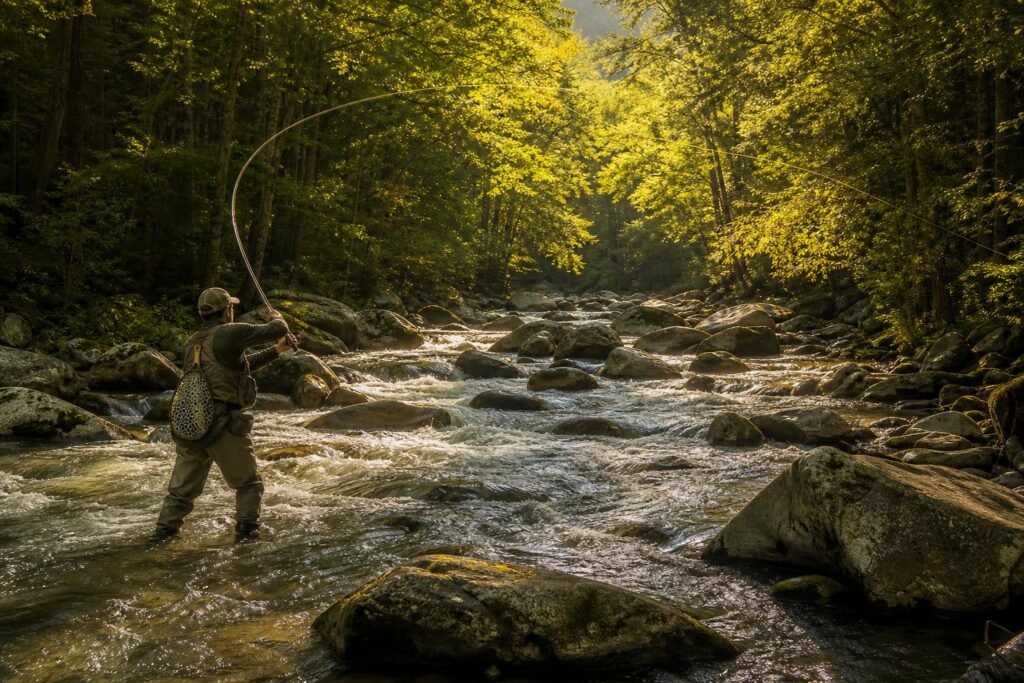
Angler in waders mid-cast on boulder-strewn creek, rod bent in loading position, forest canopy creating dappled shadows across white water
I tested it with streamers exactly once. A guide on the Madison handed me a weighted woolly bugger and said, “Try it.” The Classic Trout moved it, but the rod clearly didn’t enjoy the work. It felt labored and underpowered, especially when stripping hard against current. If you’re throwing anything heavier than a size 8, you’ll want a different stick.
Where it surprised me was indicator nymphing—the traditional Western approach with a bobber and split shot. I expected the soft tip to struggle with hooksets at distance, but it didn’t. The rod loads enough through the middle section to drive home a hook at 40 feet, even with two flies and weight. I fished it this way for three days on the Bighorn and landed trout in the 18 to 20-inch range without any pulled hooks or breakoffs.
The real versatility story is this: if you fish nymphs 70% of the time, dries 20%, and everything else 10%, the Classic Trout covers all of it competently. It’s not optimized for any single approach except euro-nymphing, where it frankly outperforms its price point. For someone building a one-rod quiver on a budget, that balance matters more than peak performance in any category.
Best Reel and Line Pairings
I paired mine with a Lamson Liquid in the 3/4 weight size, which runs about $130 and has held up through two seasons of creek-hopping in Colorado. The drag’s not fancy, but trout don’t care about fancy.
For Euro nymphing, you barely use the reel anyway. It’s a line holder. I’ve seen guys run $40 Redington Zeros on these rods and catch just as many fish as anyone else. Save your money for leaders and tippet—that’s where technique lives or dies.
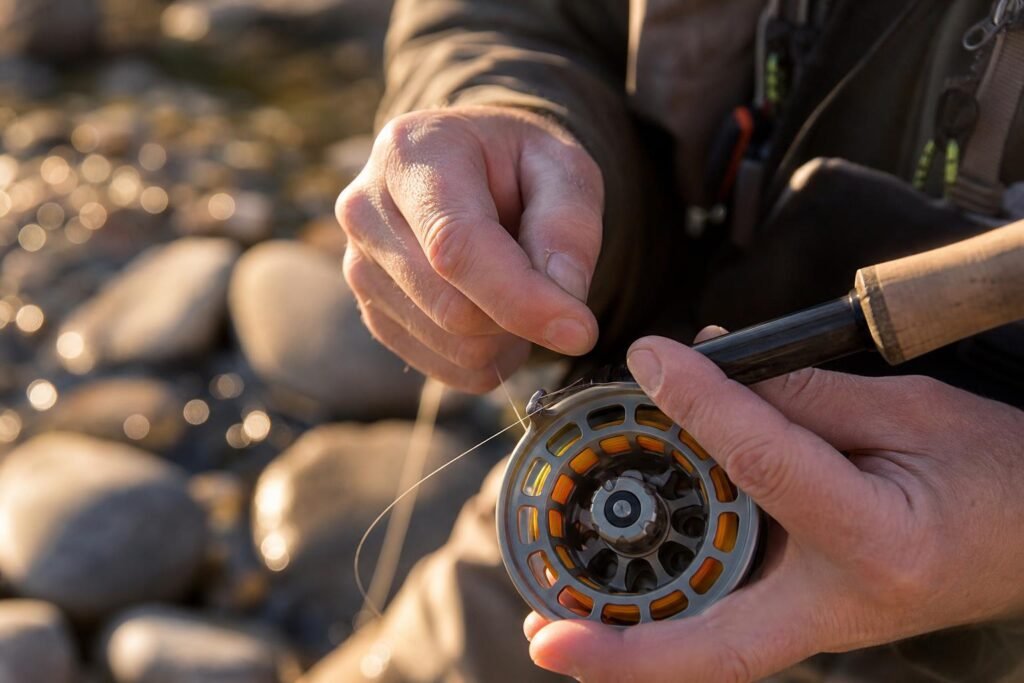
Angler’s hands holding a fly reel with fluorocarbon tippet being threaded through guides, water-worn river stones visible in soft focus behind
Line setup is where it gets specific. If you’re going full Euro-nymph mode, skip traditional fly line entirely. I run 20 feet of .022 level Amnesia (the bright chartreuse stuff) connected to a sighter section, then straight to tippet. Costs maybe twelve bucks total. Most anglers using this rod for tight-line work go this exact route because it loads the rod at close range and telegraphs strikes better than anything tapered.
But if you want versatility—dry flies, streamers, normal indicator nymphing—you need actual fly line. A WF4F weight-forward floater is the move. The Rio Gold in 4-weight handles the Classic Trout’s moderate action well, though honestly the Cortland 444 at half the price works just fine too. ↗ Rio Gold Fly Line
One trick: overline it slightly for small streams. I sometimes fish a WF5F on my 4-weight Classic Trout when I’m throwing bigger hoppers or need to punch through wind in open meadow water. The rod flexes deeper, loads easier at short distances. Purists hate this, but it works.
How It Compares to Similar Rods in This Price Range
The Orvis Clearwater is the obvious comparison at $198. I’ve fished both extensively. The Clearwater casts a traditional fly line more smoothly—it’s got a slightly faster tip that turns over dry fly leaders better. But for Euro nymphing? The Classic Trout wins. That softer mid-section feels micro-ticks in the sighter that the Clearwater’s stiffer blank mutes.
Where Orvis pulls ahead: durability. Their warranty’s legendary, and the hardware just feels more finished. The Classic Trout’s reel seat has a bit of play after a season, and I’ve seen guides come loose if you don’t check them. Not deal-breaking stuff, but it’s there.
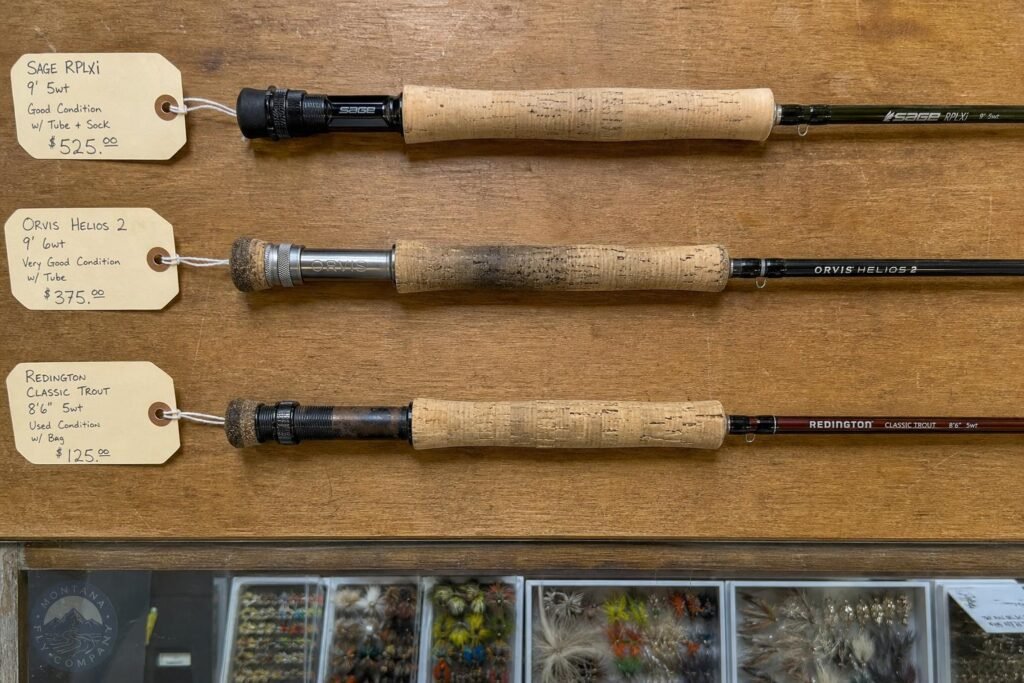
Three fly rods laid parallel with price tags still attached, cork handles showing different wear patterns and reel seats in varying states of use
Echo Base rods sit around $170 and split the difference. They’re designed by Tim Rajeff, which means the tapers are thoughtful. The Echo Base 476 (7’6″ four-weight) is probably my second choice after the Classic Trout for tight-line work. It’s got better tip sensitivity for detecting takes, but the shorter length limits your reach in pocket water. I fish Colorado creeks where an extra foot of rod matters when you’re trying to stay hidden behind willows.
The Temple Fork Outfitters NXT is $20 cheaper than the Classic Trout and gets recommended a lot. I don’t love it for Euro nymphing—the action’s too fast, too tip-flex. Great beginner rod for learning basic casting, though.
Here’s the thing nobody mentions: the Classic Trout at 10 feet is relatively rare in this price bracket. Most budget Euro-specific rods start around $300. Moonshine Drifter, Cortland Competition Nymph—they’re better rods, genuinely. But that’s nearly double. The Classic Trout occupies this weird sweet spot where it’s cheap enough to learn on but long enough to actually fish Euro techniques properly.
Where it loses: presentation casting at distance. Any of these other rods will out-perform it if you’re throwing size 16 Adams to rising fish at forty feet. The Classic Trout loads late and throws a mushy loop when you push it. But tight-line nymphing at twenty feet? That’s where it lives.
Durability and Warranty Considerations
I’ve put about 40 days on my Classic Trout over two seasons, which includes some abuse most manufacturers would probably prefer I not mention. Caught in car doors. Dropped on rocks while photographing a fish. One memorable encounter with a low-hanging branch that I’m lucky didn’t snap the tip.
The rod’s still straight. No creep in the ferrules, no soft spots developing in the blank. The cork handle shows wear where my thumb sits, but that’s cosmetic—actually makes it feel more like mine. The guides are still perfectly aligned, which matters more than people think for euro setups where you’re constantly making micro-adjustments.
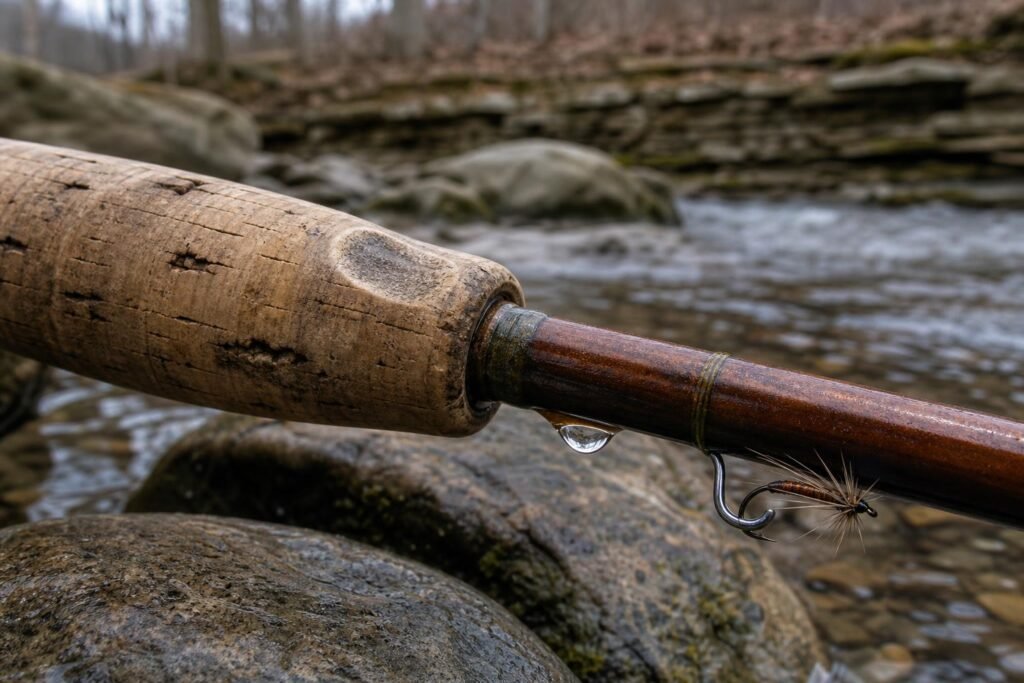
Weathered cork handle with thumb-worn groove, hook keeper holding size 16 pheasant tail, single droplet of water catching light on the blank
The reel seat loosened once around day 25. Tightened it, hasn’t budged since. I’m harder on gear than most people, and this rod’s held up better than graphite in this price range usually does.
Redington backs it with a lifetime warranty that’s actually usable. Not the kind where you pay $90 for shipping and handling and wait three months. They charge a flat fee based on damage type—usually $50-75 for repairs—and typical turnaround is two weeks. I haven’t needed it, but three guys in my local fly shop have used it for various Redington rods. All said the process was straightforward.
One tip: register your rod when you buy it. Takes two minutes on their website and eliminates headaches if you ever need service. I didn’t do this initially because I’m bad at adulting, then had to dig up my receipt when I thought I’d damaged a guide (turned out to be fine, just paranoid).
The warranty doesn’t cover you being careless, which is fair. Slammed in a car door doesn’t count. But manufacturing defects, breaks during normal fishing use—they cover it. For a rod at this price, that’s the kind of backing that matters.
Who Should Buy the Classic Trout (and Who Shouldn’t)
You should buy this rod if you want to learn tight-line nymphing without spending $400 to find out whether you even like the technique. It’s genuinely good at what it does—not just good “for the price,” actually good.
Small stream specialists, this is your rod. Creeks where you’re making 20-foot casts under branches, working pocket water, fishing a single nymph or small dry-dropper rig. Freestone streams in the 15-30 foot width range. Spring creeks where you need delicate presentations. The 10-foot length gives you reach without the bulk of an 11-footer, and the softer action protects light tippet better than the fast-action euro sticks that are trendy right now.
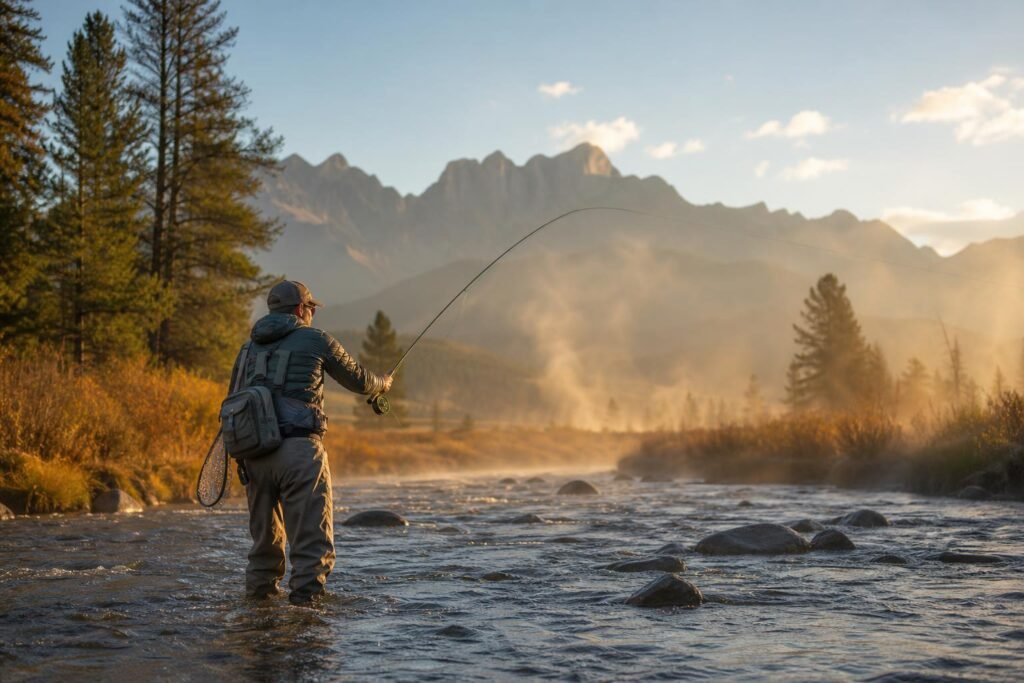
Angler mid-cast in knee-deep riffle, rod bent in tight-line position, mountains and pine trees in soft focus background, mist rising from water
If you’re fishing mostly indicators or dry flies, you can do better. The Classic Trout handles them fine, but it’s not optimized for casting weighted rigs 40 feet or throwing size 6 stimulators into the wind. For that, look at something like the Redington Path II (6-weight) or even the Butterstick if you’re a dedicated dry fly person. I ended up getting a Butterstick 3-weight for my pure dry fly days because while the Classic Trout works, it’s not the tool I reach for when the trout are rising.
Large rivers with long drifts? You’ll want an 10’6″ or 11-footer. The Classic Trout’s 10-foot length starts feeling short when you’re trying to manage 50 feet of line on a western tailwater. And if you’re regularly fishing streamers or bass, this rod will do it but you won’t enjoy it.
Complete beginners, here’s the thing: this is a great second rod after you’ve learned basic casting. If you’ve never fly fished before, start with a standard 9-foot 5-weight and a floating line, get your casting fundamentals down, then graduate to this for specialty techniques. Euro-nymphing with bad fundamentals just reinforces bad habits faster.
For the target buyer—someone with basic fly fishing skills who wants to level up their nymphing game on small to medium trout water—this rod delivers. Pair it with a simple click-pawl reel (the Echo Base is $40 and totally adequate), and you’re into a complete euro setup for under $200. That’s less than many people spend on a weekend of guided fishing, and this’ll catch fish for years.