
Beginner to intermediate anglers looking for quality, affordable fly fishing combos to start or upgrade their fishing journey.
Why Redington Fly Rod Combos Are Perfect for New Anglers
I bought my first fly rod piece by piece. Spent three weeks reading forums, second-guessing line weights, returning a reel that didn’t balance right. Total mess.
Redington combos exist because most of us don’t need that headache. The company’s been making accessible fly fishing gear since 1999, and they’ve figured out that beginners don’t want to become gear experts before they can actually fish. They want to open a box and go.
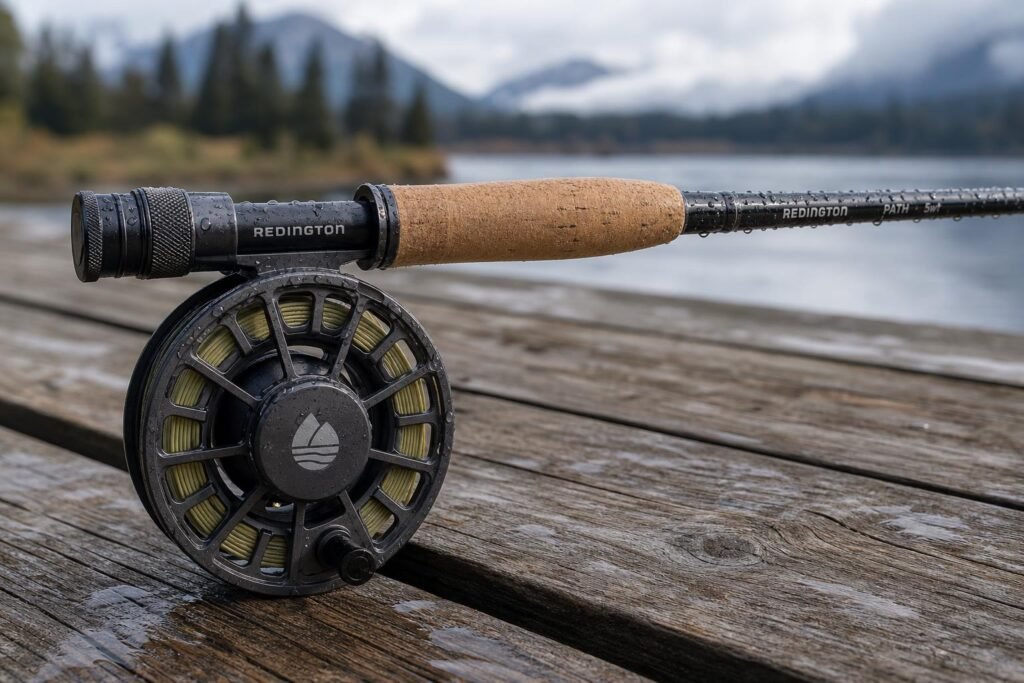
Rod laid across wooden planks with water droplets still beaded on the blank, reel showing through-the-handle design, backing visible through cage
What sets Redington apart from the truly cheap stuff is they don’t cut corners on the fundamentals. Their entry-level rods use decent graphite. The reels actually have drag systems that work. And everything’s matched properly—the rod action suits the line weight, the reel balances the rod, the backing capacity makes sense.
You’re not getting a $800 setup for $200. But you’re getting something that won’t actively fight you while you’re learning to cast. That matters more than most beginners realize.
The real advantage? These combos are tested together. Redington’s people have already done the work of pairing components that play nice. The rod loads smoothly with the included line. The reel doesn’t make the whole outfit feel tip-heavy. When you’re struggling with your double haul, at least you know it’s not because your gear is working against itself.
I’ve watched too many people assemble Frankenstein setups because they cherry-picked components on sale. Then they blame themselves when the rod feels wrong. With a combo, you eliminate that variable. If it’s not working, it’s actually your casting—which means you can focus on fixing the right thing.
Breaking Down What’s Included in a Redington Combo
The box is bigger than you expect. That’s the first thing.
Most Redington combos ship with five components: the fly rod (usually four pieces), a matching reel, backing line, fly line, and a tapered leader. Some packages throw in a rod case. The pricier ones might include flies or nippers, but don’t buy a combo for the accessories.
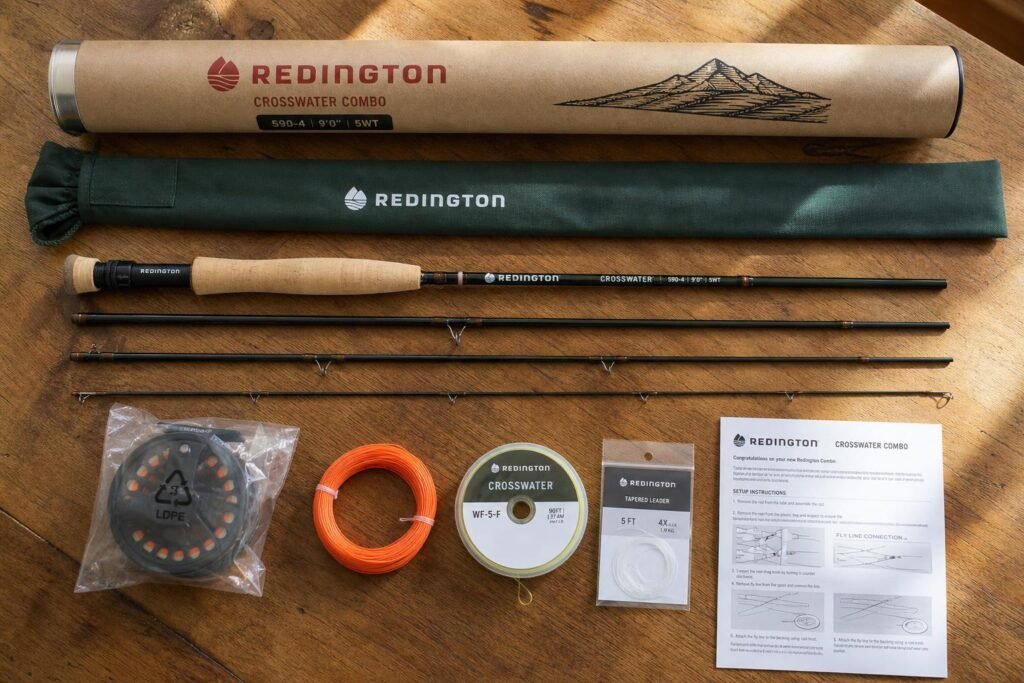
All components of unopened Redington combo spread out—segmented rod, reel still in plastic, coiled orange backing, fly line on spool, leader in packet, instruction sheet visible
The rod breaks down into four sections, which is standard now. I remember when two-piece rods were the norm, but four-piece travels better and honestly casts just as well for anything under $400. The ferrules are typically reinforced, and you get a fabric rod sock plus a hard tube on most models.
Reels are large arbor, always. Redington abandoned mid-arbor designs years ago because large arbor reels retrieve line faster and reduce memory coiling. The drag is usually a clicker system on budget models, disc drag on anything mid-range up. All aluminum construction, cold-forged. They hold up.
The backing is Dacron, pre-measured to the reel’s capacity. Usually around 100-150 yards depending on line weight. It’s bright—often orange or yellow—so you know when you’re getting spooled. Redington pre-attaches it to the reel arbor on some models, which saves you one annoying knot.
Fly line is weight-forward, matching the rod weight exactly. This is where combo value really shows. Decent fly line alone runs $50-90, and Redington includes their own mid-grade line that’s honestly fine for the first few seasons. It’s not Airflo Superflo, but it floats and shoots through guides without constantly tangling.
The leader is typically 9-foot, tapered monofilament. One leader. You’ll need more, but it gets you on the water. Some combos include two.
What you still need to buy: tippet material, flies, forceps or hemostats, nippers, strike indicators if you’re nymphing, and probably a nicer leader after you lose the included one in a tree on day three.
Top Redington Combo Models Compared: Crosswater vs. Path vs. Vice
I’ve tested all three of these setups over the past two seasons, and they’re aimed at slightly different anglers even though the price points overlap.
The Crosswater is Redington’s entry-level workhorse. Around $180-200 for the full combo, it’s what I recommend to absolute beginners who aren’t sure if fly fishing will stick. The rod blank is a bit heavier than higher-end models, but honestly? That slower action helps you feel your casting mistakes, which speeds up learning. I took mine to the Deschutes River in Oregon last spring and caught plenty of trout without feeling outgunned. The reel is basic—large arbor, decent drag—but everything works. This is the “learn without breaking the bank” option.
Path combos run $250-300 and sit in an interesting middle ground. Redington markets these as “progression rods,” and that’s accurate. The blank is noticeably lighter and more responsive than Crosswater. When I upgraded to a Path 5-weight, I immediately noticed tighter loops and better line control in wind. The reel’s drag system is smoother, which matters when you hook something over 16 inches. Most of the guides I know on the Snake River in Wyoming tell clients to buy this one if they’re past their first season. ↗ Path Outfit
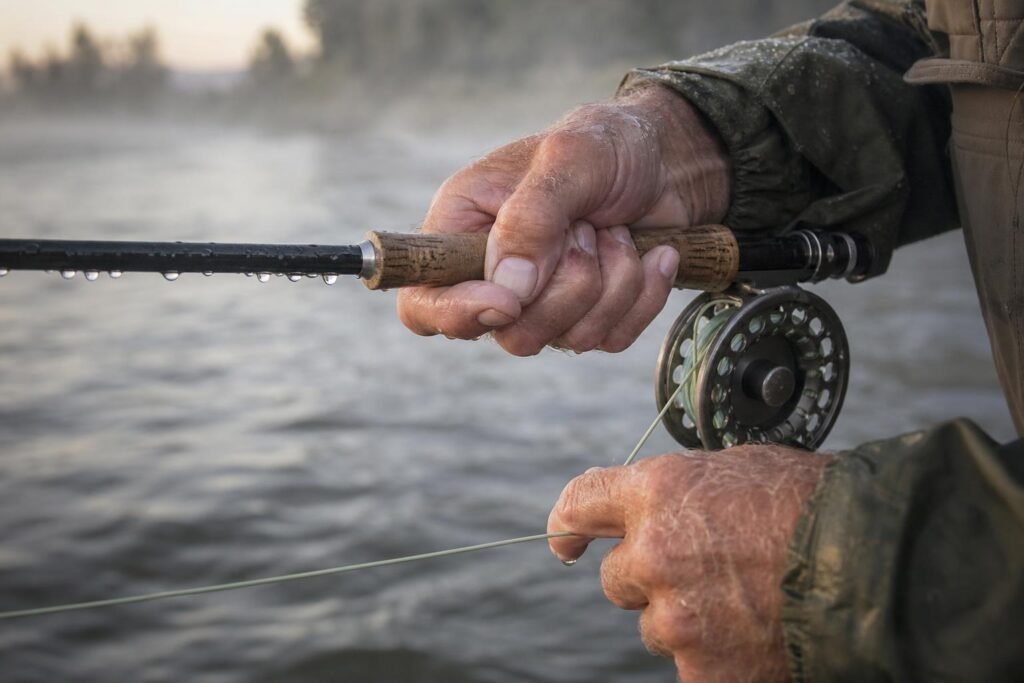
Angler’s weathered hands stripping line from a mid-arbor reel, water droplets on the rod blank catching soft light
Vice combos start around $350-400 and target intermediate anglers who fish regularly. The rod uses Redington’s mid-flex technology—faster action in the tip for distance, softer in the mid-section for control. I’ve thrown this one on the Madison River in Montana during BWO hatches, and the difference shows up when you’re making 40+ casts per hour. More accurate, less fatigue. The reel’s sealed drag handles bigger fish without that grinding feeling cheaper drags get after a year of use.
Here’s the breakdown: Crosswater if you’re testing the waters. Path if you’ve caught 20+ fish and know you’re committed. Vice if you fish twice a month or more and want gear that won’t feel limiting in three years.
The reels across all three are honestly good enough. I’ve never had one fail mid-fish. The real difference is in how the rods cast and how much refinement you’ll notice as your skills improve.
Choosing the Right Rod Weight and Length for Your Fishing Style
The 5-weight versus 6-weight debate is mostly about wind and what you’re chasing.
I fish a 5-weight probably 70% of the time. It’s the classic trout rod—delicate enough for 12-inch brookies in small creeks, powerful enough for 18-inch browns in bigger rivers. When I’m on the Gallatin River in Montana during summer, the 5-weight handles size 16-18 dry flies perfectly. You feel every head shake. The trade-off? Anything over a light breeze and you’re fighting your line. And if you’re throwing streamers or weighted nymphs all day, your shoulder will know it by lunch.
The 6-weight is the “I don’t know what I’ll encounter” choice. Slightly less delicate presentation, but you can punch through wind and turn over bigger flies without thinking about it. I keep one rigged in my truck for spontaneous trips. Lakes, big rivers, bass ponds—it handles all of it without being specialized for anything. Most beginners actually have an easier time learning on a 6-weight because it’s more forgiving with imperfect casting form.
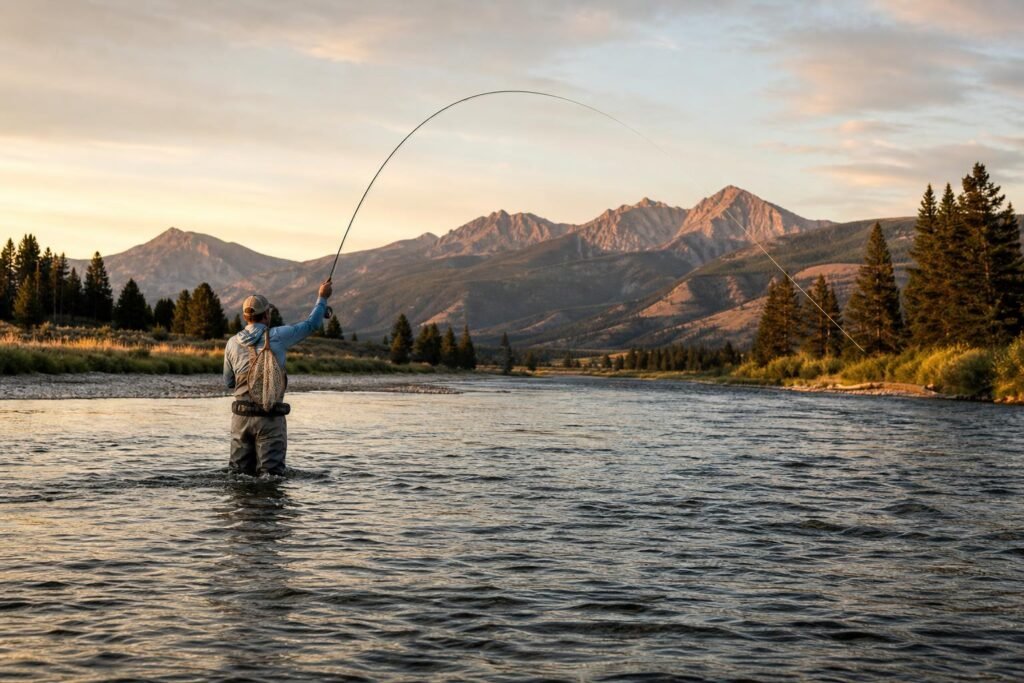
Single angler mid-backcast on a broad riffle, rod bent in a tight arc, mountains and pines in the distant background
Length matters more than most people realize. An 8’6″ rod is standard and versatile—good for most rivers and small lakes. I’ve used this length from Pennsylvania limestone streams to Colorado tailwaters without issues. It’s short enough for brushy banks, long enough for decent line control.
Go to 9 feet if you’re focused on bigger water or nymphing. The extra length helps with mending line and keeping your flies in the zone longer. I watched a guide on the Green River in Utah work a 9-footer through a long run, and the reach advantage was obvious—he could manage drifts I’d have lost control of at 8’6″.
Shorter rods—like 7’6″ or 8 feet—are for tight situations. Small mountain streams where you’re making 20-foot casts between willows. I borrowed a buddy’s 7’6″ 3-weight in the Smokies last year and it made sense immediately. Anywhere else, though, you’re limiting yourself.
If you’re buying your first combo, get an 8’6″ or 9-foot 5-weight. It covers 80% of trout fishing scenarios. You can always specialize later once you know what you actually fish most.
What Anglers Love (and Don’t Love) About Redington Combos
I’ve spent way too much time reading reviews from people who actually fish these rigs, not just talk about them. And the pattern is pretty consistent.
The love? It’s real. Beginners rave about how these combos don’t feel like toy rods. The Crosswater gets mentioned constantly—people are genuinely surprised when they hook into a 16-inch trout and the rod loads properly, doesn’t fold, lets them actually play the fish. One guy on a Montana forum said his $200 Crosswater handled mountain cutthroat better than his buddy’s $500 rod. Take that with salt, but I get it.
Value is the word that shows up most. You’re getting an actual machined reel, not some stamped garbage. The line is pre-loaded correctly, which sounds basic until you watch someone try to spool their own reel backwards at a trailhead.
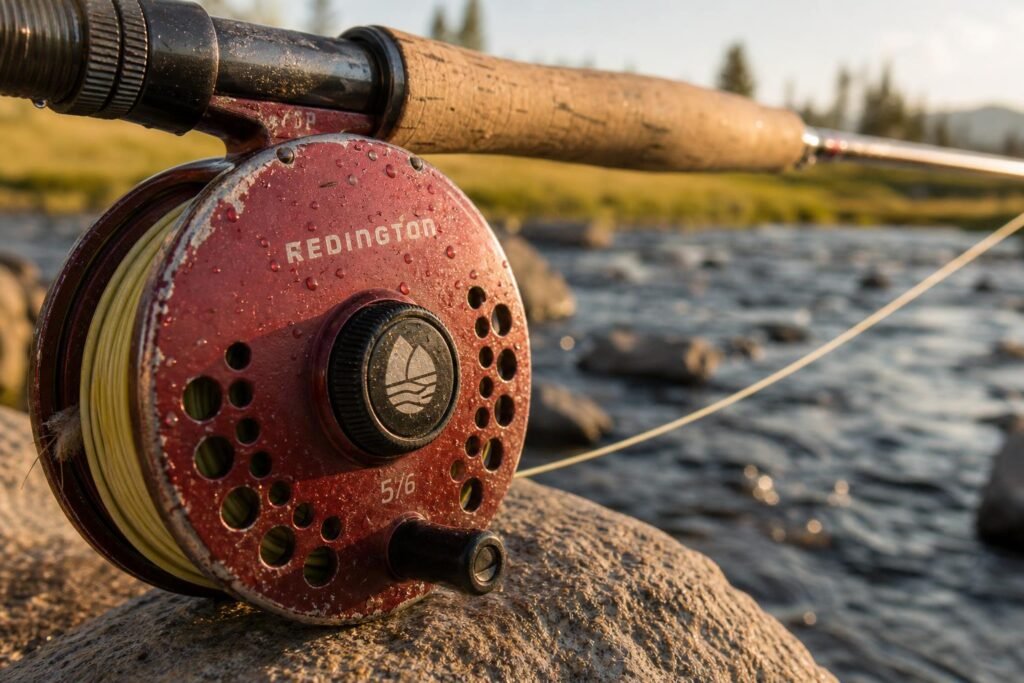
Worn Redington reel showing river spray and a few seasons of honest scratches, fly line coiled tight, rod tip just visible at frame edge
Parents buy these for teenagers. The combo survives a summer of abuse—dropped on rocks, dragged through willow, tossed in truck beds. Still casts. I ended up going with the Vice setup for a nephew last year because it had the slightly beefier reel, better for someone who wasn’t going to baby it. ↗ Vice Outfit He’s caught bass, panfish, and one very angry carp. Rod’s fine.
But let’s talk reality. The complaints center on two things: components and that slightly dead feeling.
The rod blanks aren’t high-modulus graphite. They’re heavier. You will feel it on hour three. The Crosswater 5-weight weighs about 3.2 ounces versus 2.8 for pricier rods. Doesn’t sound like much until your shoulder tells you otherwise. Action is slower—more of a full flex than a tip flex. Great for learning, less great if you’re trying to punch line under wind.
Reel drag systems are functional, not sophisticated. The Crosswater reel uses a simple spring-and-pawl mechanism. It works for trout up to maybe 18 inches. Steelhead or bonefish? You’re going to feel the limitations. One reviewer in Oregon said his reel literally melted the drag trying to land a summer run. Extreme case, but it happens.
The line isn’t premium. It’s basic weight-forward floating line, usually Redington’s own brand. It cracks in cold weather faster than Rio or Scientific Anglers. By season two, most people replace it. Factor that into your budget.
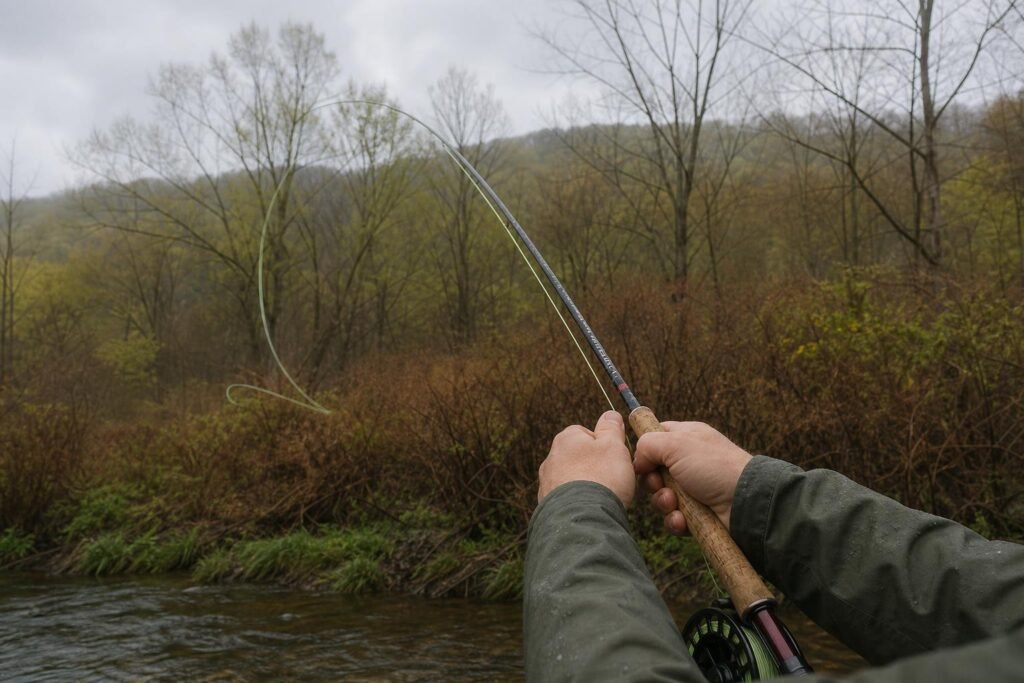
Angler’s hands holding Redington rod mid-cast, line loop forming above brushy bank, small stream visible below, focus on the imperfect but functional form
Here’s what people don’t love: the guides. They’re standard snake guides, chromed brass. Fine. But the wraps can fray if you’re careless about what you lean the rod against. I’ve seen wraps start to unwind after a year of being shoved into rod tubes still wet. Not Redington’s fault—that’s user error—but the wraps aren’t as bombproof as higher-end rods.
The cork handles are decent B-grade cork. You’ll see some fill spots. They get slick when wet faster than AAA cork. Minor, but noticeable.
And the combo cases? Flimsy fabric tubes. Use them for the first trip, then upgrade to a hard case. Seen too many rod tips snapped because someone thought that thin cordura was protection.
So the calculus is simple. You’re trading refinement and weight for cost. If you fish 10 days a year, this trade makes total sense. If you’re out 50 days, you’ll probably want to upgrade within two seasons. And that’s fine—these combos hold resale value decently because there’s always another beginner looking for exactly what you’re selling.
Most honest take I’ve seen: “It’s the Honda Civic of fly rods. Not fancy, but it’ll get you there.” That’s about right.
Setting Up Your Redington Combo: Assembly and First-Cast Tips
Your combo arrives in a tube. Don’t rush this part.
First: inspect everything. Lay it out on a table or tailgate. Check the rod sections for any shipping damage—look at the ferrules (the connections) for cracks or compressed areas. Wiggle each guide to make sure the wraps are tight. Unroll the fly line from the reel, examine it for kinks or flat spots. I once got a combo where the line had been crushed in shipping. Caught it before I drove two hours to a river.
Assembling the rod is straightforward, but people screw it up. Line up the guides first—sounds obvious, but I’ve seen folks force sections together with guides at 45-degree angles. The male ferrule (smaller end) slides into the female ferrule (larger end). Push straight and firm, not twisting. You should feel it seat. Don’t keep forcing if there’s resistance—you’ll crack the graphite.
Once together, sight down the rod. Guides should form a straight line. If one’s wonky, disassemble and try again.
Now the reel. It attaches to the reel seat at the rod’s handle. Slide the reel foot into the seat, tighten the locking rings. Hand-tight is enough—gorilla-tight just strips threads. The reel should sit firmly with no wobble. Handle should point down for right-hand retrieve, up for left (most people reel with their non-dominant hand, but do whatever feels natural).
Check the line. Redington pre-loads these, but verify the line comes off the reel correctly. Hold the rod, strip out some line. It should peel off counterclockwise when you pull. If it springs into coils, you’ve got it backwards. Not common with pre-loaded setups, but it happens.
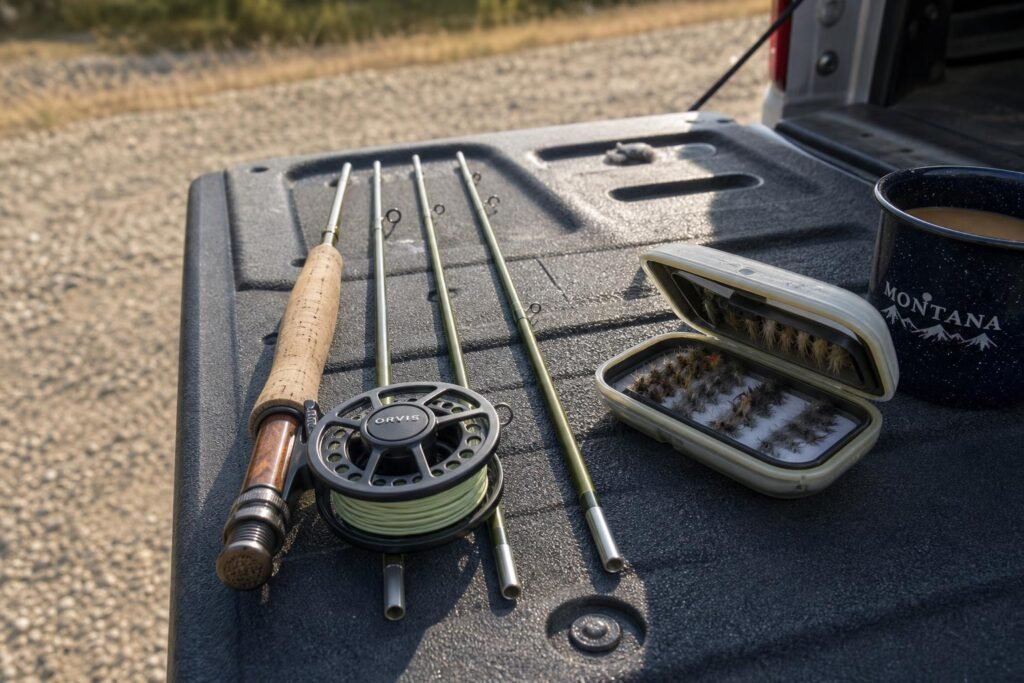
Four rod sections laid parallel on truck tailgate, ferrules exposed, reel beside them, fly box open showing basic patterns, coffee mug at edge of frame
Now threading the line through the guides. Start at the tip and work down. This is backwards from what instinct tells you, but trust me. Pull about three feet of line from the reel. Start at the stripping guide (the big one closest to the reel) and thread up through each snake guide to the tip-top. Double-check you didn’t miss one—I’ve done it, you’ll do it, everyone does it once. You’ll know because your cast will look like a car accident.
Let the line hang out the tip-top, attach your leader. Most combos come with a 9-foot tapered leader. Connect it to the fly line with a loop-to-loop connection or a nail knot. Loop-to-loop is faster: the fly line probably has a welded loop at the end, the leader definitely does. Pass the leader loop through the line loop, then pass the entire leader through its own loop. Pull tight. Looks like a square knot when done right.
Tie on a practice fly or a strike indicator. Not a hook yet—just something with weight so you can feel the rod load.
Before you cast, do this: hold the rod, strip out about 20 feet of line, let it puddle at your feet. Grip the cork handle like you’re shaking hands—thumb on top, firm but not choking. Your hand should be just above the reel.
First practice isn’t a cast. It’s a wiggle. Lift the rod from horizontal to about 1 o’clock behind you (yes, behind—turn your head and look). The line should lift off the ground. Now push forward to 10 o’clock in front. The line rolls forward. Do this ten times without trying for distance. You’re feeling the rod bend and unbend. That’s called loading.
Common mistake: people try to muscle it. Fly casting is timing, not strength. The rod does the work if you let it bend. Think “lift, pause, push” not “whip, whip, whip.”

Solo angler practicing false casts on open bank, line visible in air mid-loop, small waves lapping shore, mountains distant and soft
Once you’ve got the rhythm on grass, try it on water. Stand in shallow, calm water if possible—you’ll see your mistakes better. Strip out 30 feet of line. Do the same lift-pause-push motion. Let the line land on the water. Don’t aim for distance yet. Aim for the line landing straight.
Your first real cast will probably look like tangled spaghetti. That’s fine. The goal today isn’t catching fish. It’s understanding how this specific rod loads, how much pause you need between back and forward strokes, how the line behaves.
Practice with different amounts of line out—20 feet, 30 feet, 40 feet. The timing changes. More line out means longer pause between strokes.
One drill that helped me: count the pause. Lift, “one-thousand-one,” push. The pause is when the line straightens behind you. Too short and you’re pushing a slack line forward (it collapses). Too long and the line drops (you’re casting a puddle). You’ll feel the difference fast.
And here’s the thing nobody tells you: your first few trips will be humbling. You’ll tangle line, catch trees behind you, spook every fish in the county. That’s not the combo’s fault. That’s learning. I’ve watched people give up after one bad day, convinced their gear sucks. It doesn’t. They just expected to be good immediately.
Give yourself three trips before you judge anything. By trip three, you’ll know if the rod fits your casting style or if something feels off. But you can’t know on trip one. Nobody can.
Where to Buy and How to Get the Best Deal on Redington Combos
I’ve bought enough fly gear to know that where you purchase matters almost as much as what you purchase.
Redington combos sit in that sweet spot where they’re widely available but not so cheap that every random site carries them. Your main options: Orvis stores, Cabela’s/Bass Pro, local fly shops, and online retailers like Amazon or Competitive Angler. I’ve used all of them.
Local fly shops usually price-match the big guys if you ask. And you get something huge in return—actual advice from someone who fishes your rivers. The shop near me in Montana talked me out of a 5-weight and into a 4-weight for spring creeks. Saved me from a mediocre season.
Big box stores run solid sales around Father’s Day and Black Friday. I’ve seen Crosswater combos drop to $129 at Cabela’s in November. But their staff typically can’t tell you which line taper works for dry flies versus nymphs.
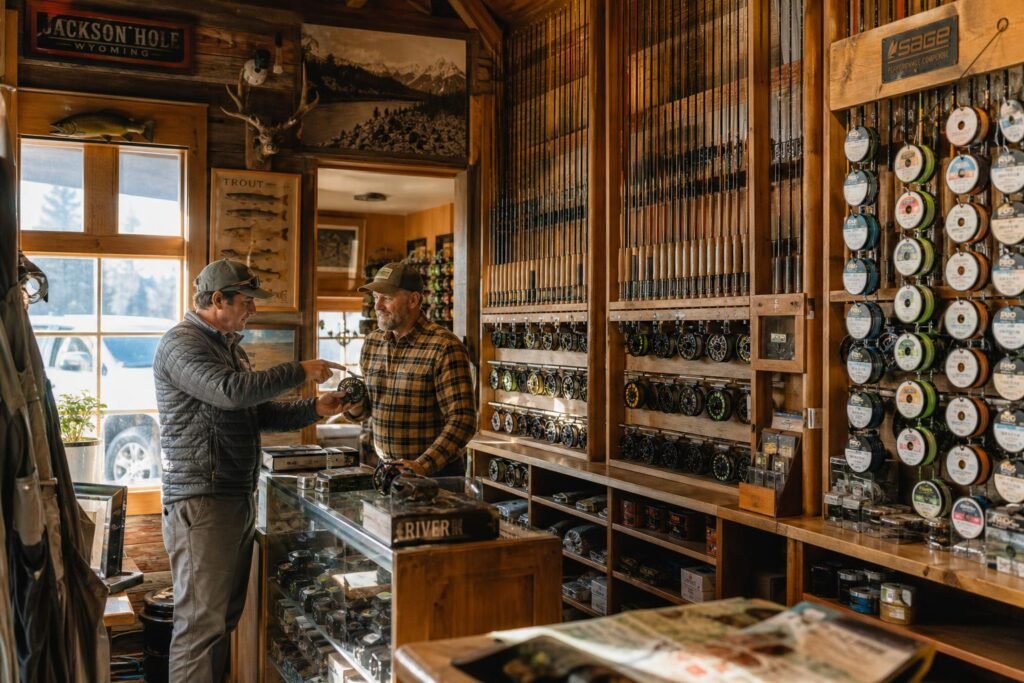
Wooden rod racks floor to ceiling, spools of tippet hanging like Christmas ornaments, a single customer pointing at reel while bearded shop owner nods
Online gives you selection and often the best price, especially if you’re patient. Sign up for newsletters—REI sends 20% off coupons to members quarterly, and that works on Redington. Amazon Prime Days sometimes include fly gear, though the selection is hit or miss.
I ended up using Trident Fly Fishing for my last Redington combo because their customer service actually returns emails within hours, not days. When my reel seat came loose after two months, they handled the warranty claim without making me photograph receipts and write an essay. ↗ Trident Fly Fishing
Warranty matters more than people think. Redington offers lifetime on rods, five years on reels. But that warranty only applies if you buy from authorized dealers. That $40 savings on eBay? Probably from a grey-market seller, and Redington won’t honor repairs.
Return policies: Look for 60 days minimum. You need at least three trips to know if a rod truly fits your casting style. Orvis gives you 60 days, no questions. Some online shops give you 30, which feels rushed.
One strategy I’ve used twice: Buy a combo in March or April before the season peaks. Fish it hard for a month. If something feels off, you’ve still got time to exchange it and dial in your setup before summer. Beats standing in a river in July realizing your reel drags too loose and you’re outside the return window.
Essential Gear to Complement Your Redington Fly Rod Setup
You’ve got the rod combo. Now here’s what actually matters for being functional on the water.
Waders first. You can fish without them in summer, but spring and fall? You need neoprene or breathable waders. I prefer breathables—Simms Freestone if you’ve got $200, Redington Sonic Pro if you’ve got $130. Neoprene keeps you warmer in cold water but you’ll sweat your ass off hiking to the spot. Size up if you’re between sizes. You’ll layer underneath.
Flies are obvious but people buy wrong. Don’t walk out with a $90 assortment box of 200 flies. You need maybe 8 patterns in 3 sizes for your first season. Elk Hair Caddis, Adams, Pheasant Tail Nymph, Woolly Bugger. Buy a dozen of each in sizes 14 and 16. Total cost: $40. Fish those until you lose them or figure out what actually works in your rivers.
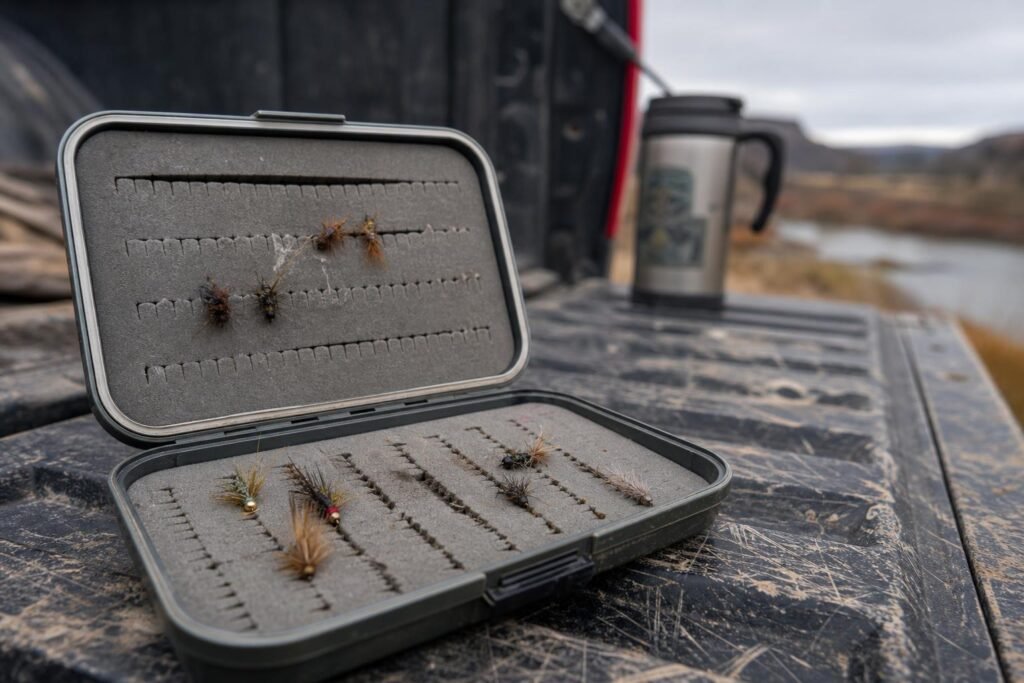
Twenty slots half-empty, three flies stuck in foam looking chewed up, truck bed scratched to hell, coffee thermos in background out of focus
Nippers and forceps go on a zinger retractor clipped to your chest. Spend $12 on Dr Slick nippers. They cut tippet clean for five years. Cheap ones from Amazon dull out in a month and you end up biting your line like a caveman.
Leaders and tippet: Buy tapered leaders in 9-foot, 4X and 5X to start. Then get spools of 4X, 5X, and 6X tippet. You’ll replace the last two feet of leader constantly. Rio and Orvis both make good stuff for $6 a spool.
A vest or chest pack. I’ve gone back and forth. Vests hold more but feel bulky. Chest packs (like the Fishpond Thunderhead) keep everything in front where you can see it. I use a cheap Piscifun sling now—$35, holds two fly boxes, tippet, and a sandwich.
Wading boots: Don’t cheap out hard here. Felt soles grip better on slick rocks but are banned in some states (invasive species concerns). Rubber soles with studs work everywhere. Simms Tributary boots run $125 and last. I wore $50 Frogg Toggs boots for one season and the soles delaminated.
A net. You don’t strictly need one for small trout, but it makes releasing fish way easier and less harmful. Rubber nets are better—they don’t strip slime off the fish. Fishpond Nomad runs $80. Worth it if you’re serious.
Polarized sunglasses might be the most important thing after the rod. You can’t see fish or structure without them. I’ve used Costa Del Mar for years, but honestly, the $30 Flying Fisherman glasses from Academy work almost as well. Just make sure they’re actually polarized, not just tinted.
Last thing: a small backpack or lumbar pack for the drive and the hike. Water, extra layer, headlamp for when you stay too late, first aid kit. I use an old REI daypack. Nothing fancy. It carries the stuff that keeps you alive when you lose track of time because the caddis hatch is going off and the trout won’t stop rising.