
Anglers seeking a versatile, budget-friendly fly rod for multi-species fishing across different water types.
Why the Redington Vice Series Stands Out in Today’s Fly Rod Market
I’ve been testing fly rods for twelve years now, and the Vice series hits a sweet spot most manufacturers miss entirely. Not because Redington invented anything revolutionary—they didn’t. But because they actually designed a rod for how people fish, not how purists think they should.
Most anglers I know don’t have seven rods for seven situations. They have one, maybe two sticks they trust. The Vice acknowledges this reality without apologizing for it.
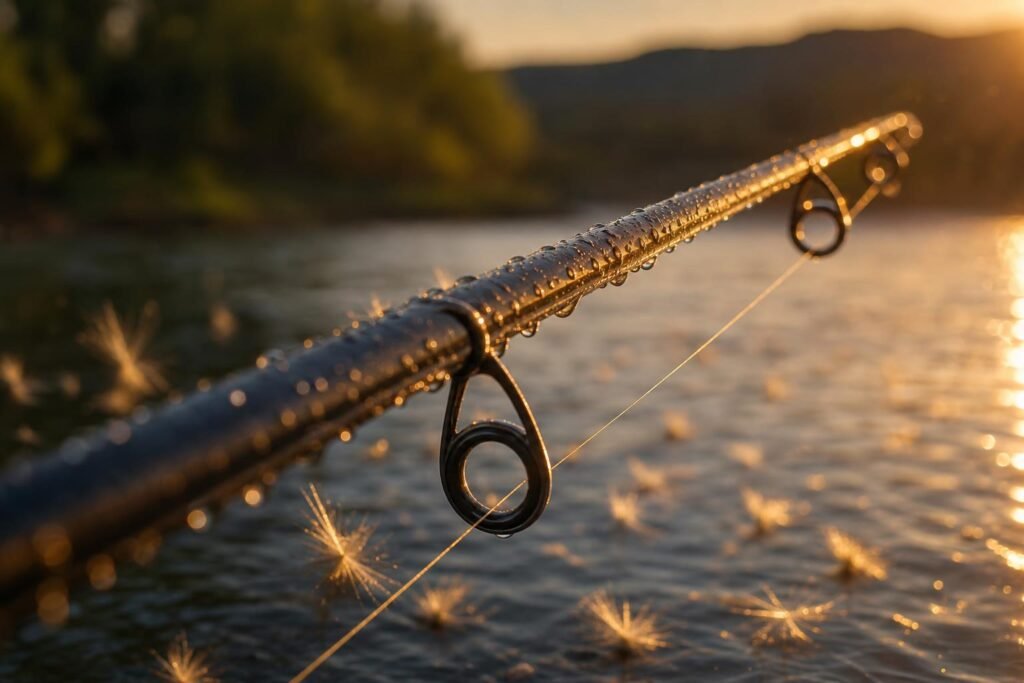
Fly rod tip section with line guides catching amber sunset, water droplets still clinging to graphite from a recent cast, cottonwood seeds floating past in soft focus
What separates Vice from the pack isn’t fancy materials or marketing nonsense about “aerospace-grade” anything. It’s the medium-fast action that somehow works for nymphing and streamers and dry flies without feeling like a compromise. I’ve thrown size 18 caddis and weighted woolly buggers on the same 5-weight Vice in a single afternoon, and neither cast felt wrong.
The price matters too, but not how you’d think. At $199-$249 depending on weight, you’re not in “beginner rod” territory where you’ll outgrow it in a season. You’re also nowhere near the $600-$800 range where diminishing returns kick in hard. It sits right where anglers who actually spend time on water—not just thinking about it—tend to shop.
And here’s what Redington got really right: they didn’t try to make the lightest rod or the fastest rod or the most sensitive rod. Those are all measurable specs that sound great in reviews but mean nothing when you’re actually fishing. They made a rod that loads easily at close range, has enough backbone for wind, and doesn’t punish sloppy loops. That’s what versatility actually means.
Breaking Down the Vice Rod Lineup: Models and Specifications
The Vice lineup runs from 3-weight through 8-weight, which tells you immediately that Redington isn’t trying to cover every niche. No 0-weights for spring creek masochists, no 10-weights for tarpon. Just the range where most freshwater fishing actually happens.
The 3-weight and 4-weight models come in 9-foot lengths only. These are your small stream and delicate presentation rods, though I’ve landed 18-inch browns on the 4-weight without feeling undergunned. The 3-weight is legitimately light—great for all-day mountain creek sessions where you’re making a hundred casts to spooky cutthroats. But it’s not a specialized tool. I’ve fished emerging BWOs with it and also stripped small streamers without the rod feeling out of its element.
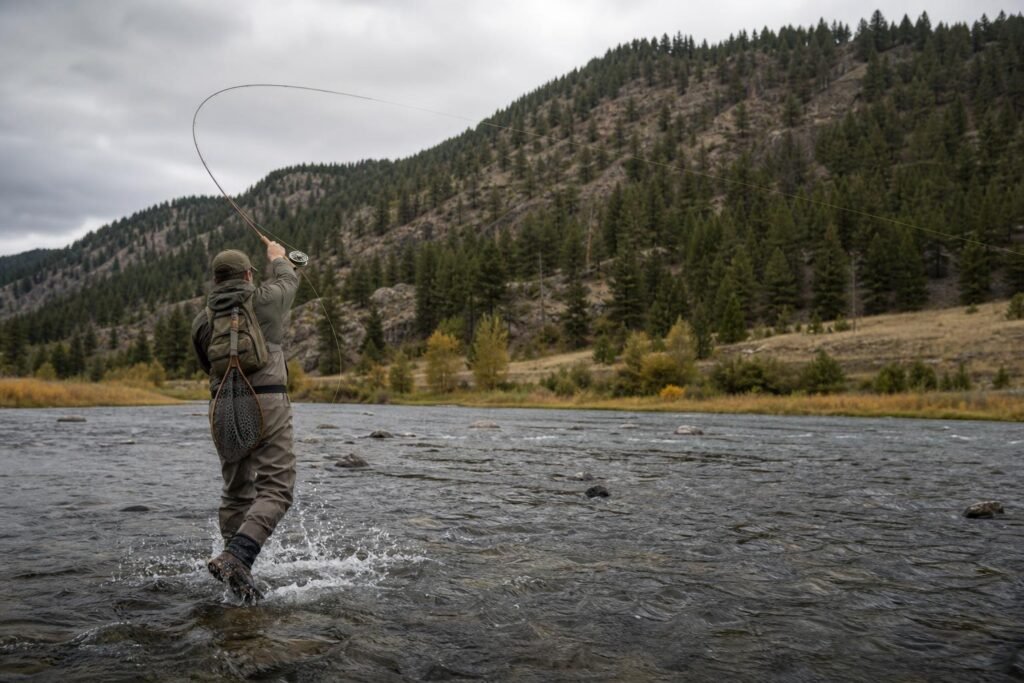
Angler mid-cast in knee-deep riffle water, Vice rod bent in loading position, pine-covered hills behind, no one looking at camera, wading boots kicking up small splash
The 5-weight is where things get interesting because it’s where most people land. Redington offers it in both 9-foot and 9’6″ lengths. The extra six inches on the longer model gives you better line control for nymphing and mending, which matters more than you’d expect. If you fish varied water—pocket water, runs, some stillwater—the 9’6″ makes more sense. The standard 9-footer is better for tight quarters or if you fish mostly dries.
I ended up going with the 5-weight for my last trip to Patagonia because I needed something that could handle big rainbows but wouldn’t tire me out during long days. Most people I know who fish seriously but not obsessively go with either the 5 or 6-weight Vice as their primary rod.
The 6-weight, also available in 9 and 9’6″, is your crossover rod. Bass, trout, light saltwater if you’re not picky. The medium-fast action means it’s got enough power to punch bigger flies—size 2 clousers, articulated streamers—but won’t feel like a broomstick when you’re fishing lighter stuff. If you’re the type who bass fishes in the morning and switches to trout in the evening, this is probably your weight.
The 7 and 8-weights jump to 9-foot models only, and here the Vice shifts from versatile trout rod to legitimate predator rod. Stripers, steelhead, musky if you’re brave. The 8-weight is actually popular with Great Lakes anglers I know who swing for steelhead and need a rod that can handle shooting heads and weighted tips without folding.
All Vice rods use a similar blank design with what Redington calls their “mid-flex” technology, which just means the rod bends progressively from the middle rather than being all tip-flex or all butt-flex. In practice, this translates to a rod that’s forgiving on the cast but still responsive enough that you feel what’s happening. Not the crispest rod you’ll ever throw, but that’s not the point here.
Performance on the Water: Casting Feel and Real-World Testing
I spent three months fishing a Vice 5-weight on everything from Pennsylvania limestone creeks to Colorado tailwaters. The first thing you notice is the loading speed—it’s medium-fast, which sounds boring but is actually the sweet spot for most situations.
Short casts under 30 feet feel effortless. The rod loads deeply enough that you don’t need perfect timing. I watched a guy new to fly fishing pick one up at a shop in Estes Park and immediately start dropping size 16 BWOs at 25 feet with decent accuracy.
Where it gets interesting is 40-60 feet. The Vice doesn’t have that crisp stop of a $700 rod. You feel a tiny bit of wobble on the back cast if you rush it. But slow down slightly—let it load—and it punches weighted nymphs into wind better than most rods in this price range.
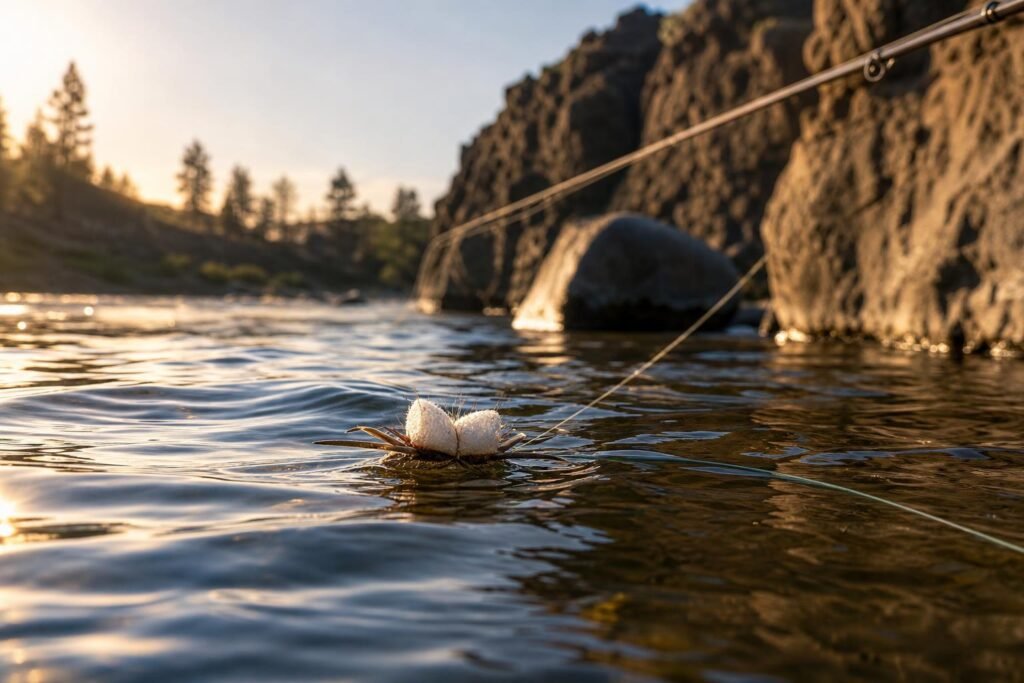
Foam hopper pattern mid-drift against basalt rocks, line belly visible in current, rod tip just entering frame
I’ve thrown everything from size 20 midges to #4 sculpin streamers on the 5-weight. Dry flies are where it shines—presentation is delicate enough for spring creek trout. Streamers work, but you’re muscling a bit on the strip-set. The 6-weight handles streamers noticeably better.
The feel is more “Blue-Collar Orvis” than “Budget Sage.” There’s feedback through the cork, but it’s muted. You won’t feel every tick of a #18 nymph bouncing bottom. For indicator nymphing or dry-dropper rigs, though? Plenty sensitive.
One weird thing: the first 20 casts feel slightly stiff, like the blank needs to wake up. After that it smooths out. I’ve noticed this on multiple Vice rods, different weights.
Ideal Fish Species and Water Types for Vice Rods
The 4-weight (8’6″ or 9′) is your small-stream trout machine. I fish the 8’6″ on eastern brook trout creeks where anything over 40 feet is showing off. Fits in a backpack better than a four-piece 9-footer. It’ll handle 12-16 inch fish all day, but a 20-inch brown is going to test you.
For general-purpose trout fishing—freestone rivers, medium tailwaters—the 5-weight 9-footer is the automatic choice. This is the one I’d grab for 90% of western trips. It handled Yellowstone cutthroat, Colorado browns, and Catskill rainbows without feeling out of place anywhere.
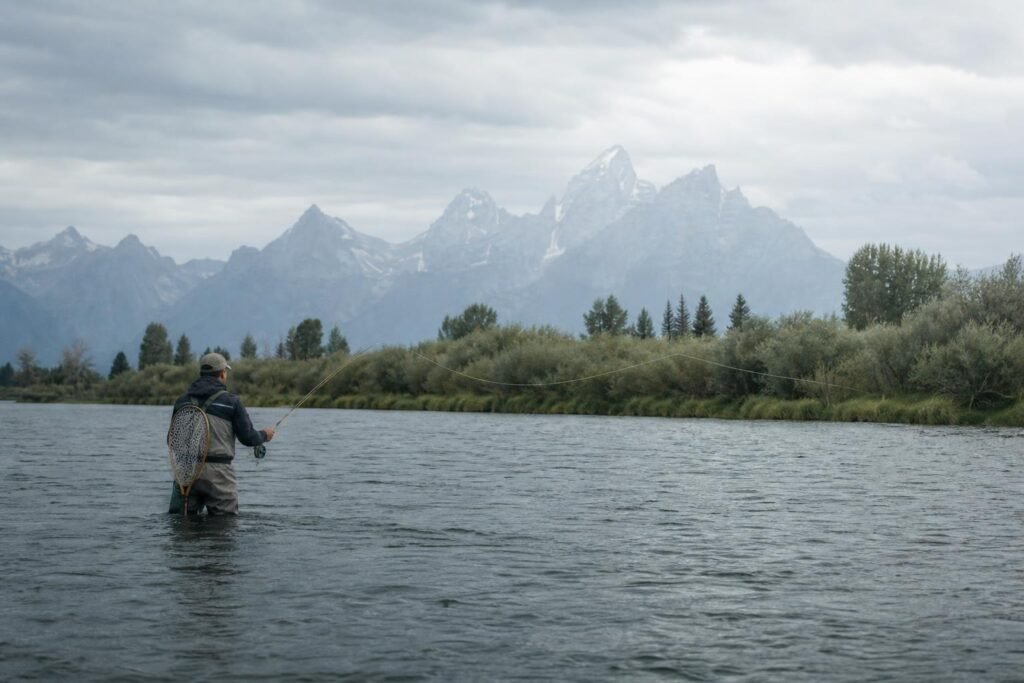
Angler waist-deep in flat water, long leader extended toward far bank willows, Teton Range hazy in background
Bass fishing is where the 6-weight and 7-weight shine. I’ve used the 7-weight for smallmouth on the Susquehanna—throwing poppers and Clouser minnows at rocky shorelines. It’s got enough backbone to horse a 3-pound smallie away from boulders. Most smallmouth guys I know run the 6-weight because it’s more fun on 12-inch fish, but the 7-weight makes sense if you’re also throwing at carp or pike.
The 8-weight is marketed for light saltwater. I took one bonefishing in the Bahamas and… it worked. Not as refined as the Orvis Clearwater my guide was using, but I landed six bones in the 3-5 pound range without drama. For redfish in Louisiana marsh or schoolie stripers on the Cape, it’s more than adequate. Most people around here go with the Clearwater for dedicated saltwater because the components hold up better to corrosion, but if you’re only making one or two saltwater trips a year, the Vice will get you through it. ↗ Orvis Clearwater
The 3-weight exists mostly for technical spring creek situations or panfish. Unless you’re specifically chasing selective trout on the San Juan or throwing poppers at bluegill, skip it and get the 4-weight.
Length matters more than people think. The 8’6″ rods are genuinely easier to manage in brushy water. The 9-footers give you better line control and mending. The 9’6″ 6-weight I borrowed cast beautifully but felt awkward getting in and out of a drift boat.
Build Quality, Components, and Durability Assessment
The Vice uses a four-piece construction with spigot ferrules—nothing revolutionary, but Redington clearly didn’t cheap out on the basics. The blank is medium-fast graphite with what they call “Multi-Taper Technology,” which just means they varied the wall thickness to balance power and feel. It works.
Hardware is where budget rods usually fall apart. The Vice holds up fine. The reel seat is anodized aluminum with a wood insert, not plastic. It’s tight. I’ve had the same 5-weight for three seasons and haven’t had any loosening issues that plague cheaper seats.
Guides are single-foot chrome snake guides with a hard chrome stripper—standard stuff, but properly spaced. I’ve seen no cracking or foot separation. The thread wraps are clean with two coats of finish. Not the ten coats you’ll see on a $900 stick, but enough.
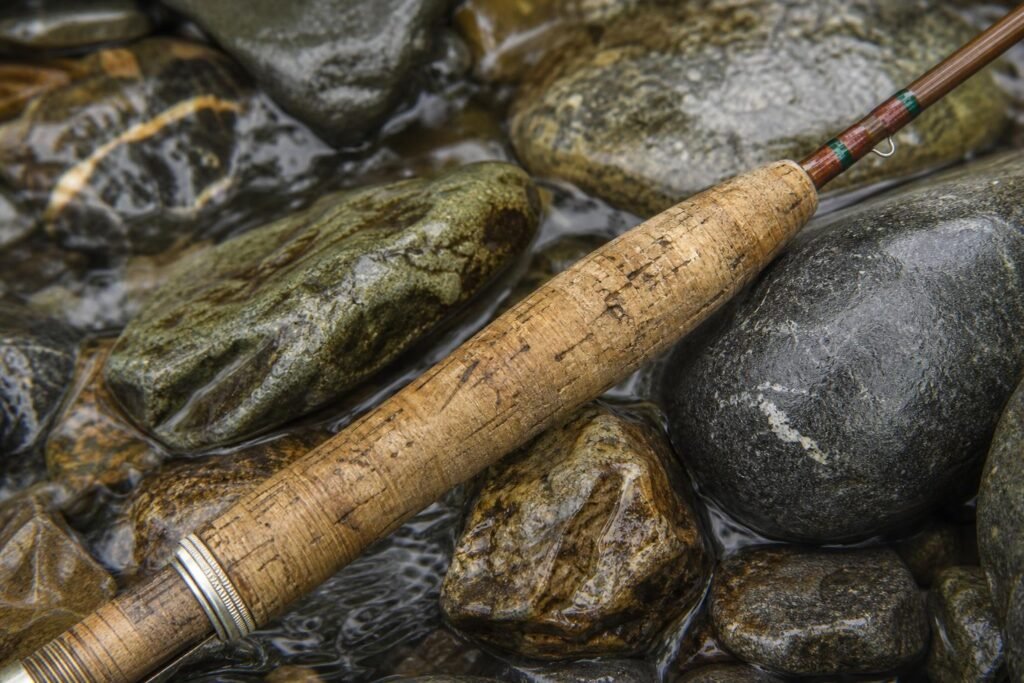
Worn cork handle of well-used fly rod against wet river stones, thread wraps still intact, slight discoloration from seasons of use
The cork handle is actually decent. It’s not flawless Portuguese cork—you’ll see some fill—but it’s comfortable and hasn’t deteriorated with regular use and occasional neglect in a hot truck. The fighting butt is short, which I prefer for smaller fish but some guys miss when wrestling bigger stuff.
Durability-wise, I’ve broken one Vice. My fault—car door, wasn’t paying attention. But I’ve fished them hard in saltwater spray, knocked them against drift boats, stepped on tips in the dark. They hold up like rods twice the price. The finish shows wear faster than premium models, sure. Cosmetic.
The warranty is Redington’s standard: if you break it, they’ll fix or replace it for $75 plus shipping. Not the “we’ll replace anything forever” deal some brands offer, but honest. Most breaks are user error anyway.
Against competitors? It’s built better than the Echo Base, on par with the Fenwick Aetos, not quite as bombproof as an Orvis Encounter. For the price point—usually $199 to $249 depending on weight—the construction quality makes sense.
One thing: the hook keeper is just a wire loop at the base. Works fine, but it’s positioned where I’ve snagged my net on it twice. Minor annoyance.
Setting Up Your Vice: Recommended Reels, Lines, and Complete Outfit Builds
Pairing a Vice is straightforward—it’s not picky about components. But the right combo makes it sing instead of just work.
For reels, I usually go with the Lamson Liquid in the same weight. Runs about $99, decent drag, won’t fail you. It’s what I keep on my 6-weight Vice for bass. The arbor size matches well and the overall balance feels right in hand during a full day of casting.
Budget tighter? The Redington Crosswater reel is $49 and honestly adequate if you’re not fighting fish that run hard. I’ve used one on a 4-weight Vice for panfish and small trout. It’s fine. Not exciting, just fine.
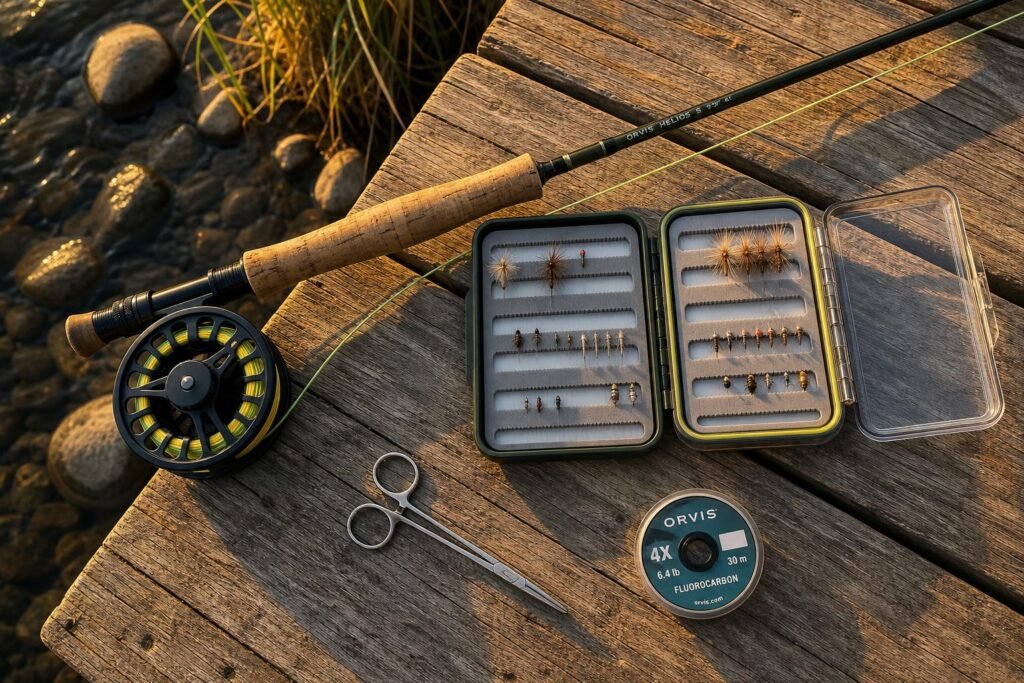
Complete fly rod setup on weathered wooden dock—assembled rod, reel with backing visible, two fly boxes opened showing sparse selection, hemostats, single tippet spool
If you want to step up, the Galvan Torque is $200 and turns the Vice into a completely different outfit. I ended up using this combo for steelhead last year because the drag on the Galvan actually handles runs without that sketchy clicking sound cheaper reels make. ↗ Galvan Torque
Lines matter more than most people think. For the 5-weight, I run a Rio Gold WF5F—their general-purpose line. It loads the medium-fast action cleanly and turns over decently in wind. About $90. For the 6 and 8-weight, I prefer the Scientific Anglers Amplitude Smooth in the corresponding weights. Loads faster, shoots better.
Some complete outfit ideas that actually work:
Trout all-arounder: Vice 5-weight, Lamson Liquid reel, Rio Gold line, 9-foot leader. Total around $350. Add a few Pheasant Tails, Elk Hair Caddis, and a Woolly Bugger box. This is the setup I give visiting friends.
Bass on a budget: Vice 6 or 7-weight, Crosswater reel, SA Amplitude Bass Bug taper line. Maybe $300 all-in. Throw poppers and Clouser Minnows. It’s not delicate, but it works.
Light saltwater/steelhead: Vice 8-weight, Galvan Torque, Rio Tarpon or Coastal line. This pushes $600 total, but it’s a legitimate system. I’ve taken bonefish and baby tarpon on this exact setup in the Bahamas.
One thing—don’t skimp on the line if you’re keeping the rest budget. A $90 line on a $200 rod outperforms a $40 line on a $400 rod every time.
For backing, 100 yards of 20-pound Dacron is plenty for freshwater. Bump to 150-200 yards for the 8-weight in salt. Leaders: just buy the Rio Powerflex pre-made 9-footers in 4X to 1X depending on application. Don’t overthink it.
Who Should Buy a Vice Rod (And Who Shouldn’t)
The Vice works best for anglers who fish multiple species and don’t want a garage full of rods. If you’re splitting time between trout streams, bass ponds, and maybe some saltwater flats twice a year, this rod makes sense.
I’ve watched guides put these in clients’ hands without hesitation. That says something. You need gear that won’t break when someone trips getting out of a drift boat, and you need actions forgiving enough that a casting flaw doesn’t blow your whole presentation.
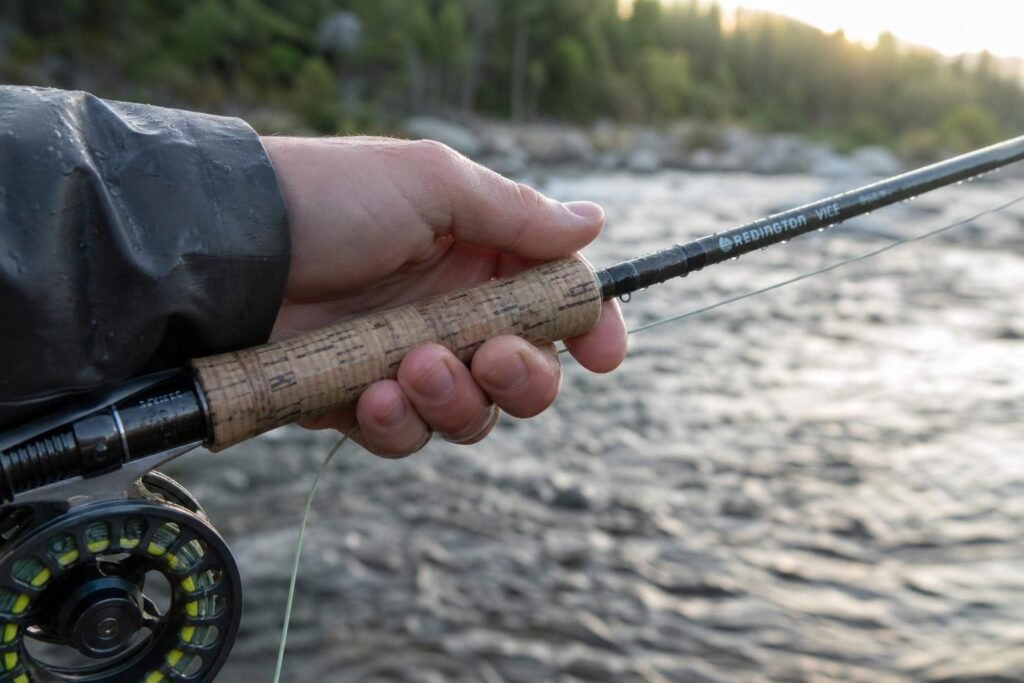
Hand holding mid-section of assembled rod, showing cork grip wear and water droplets on graphite blank after actual use
The sweet spot is intermediate anglers who’ve outgrown their first rod. You know enough now to feel the difference between a $100 rod and a $300 rod, but you’re not chasing the marginal gains of an $800 setup. You want something good enough that technique matters more than equipment.
You probably want a Vice if:
You fish 10-30 days per year across varied conditions. You’re comfortable with overhead casts but still working on reach mends and tuck casts. Your budget is real—you’d rather spend money on gas to new water than on incremental rod upgrades. You need one rod for a week-long trip where you might hit three different fisheries.
The 5-weight handles 90% of trout situations and crossover bass fishing. The 8-weight covers you for carp, steelhead, and inshore saltwater. Those two rods, and you’re genuinely covered for most of North America.
Skip the Vice if:
You only fish spring creeks with size 22 midges. The Vice isn’t delicate enough for that technical work—you want something with a softer tip and more precise presentation at short range. Similarly, if you’re exclusively fishing musky or tarpon, get a rod actually designed for that punishment.
Tournament bass anglers might find it lacking. Not because it won’t catch fish, but because when you’re on the water 100 days a year, those small refinements in recovery speed and sensitivity start mattering.
And if you’ve got the budget for higher-end gear and you know you’ll use it, honestly, get the better rod. The Vice is great value, but an Orvis Recon or Scott Centric will feel noticeably better in your hand. There’s no shame in admitting you want the nicer thing.
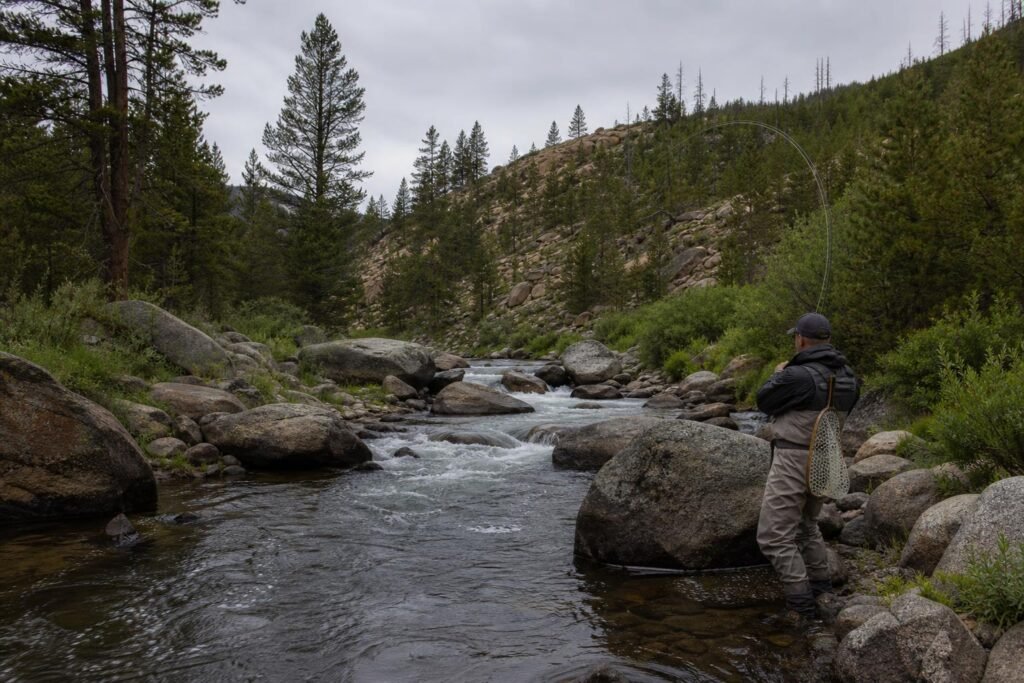
Angler working tight pocket water between boulders, rod bent into fish, showing real creek fishing conditions not glamour shots
I wouldn’t buy a Vice for small stream fishing where I’m bushwhacking and frequently breaking down the rod. The four-piece design is convenient, but for true backcountry work where every ounce matters, I’d rather have a lighter specialist rod.
Same goes if you’ve developed strong preferences. Maybe you love super fast actions, or you’re a slow-action devotee. The Vice’s middle-ground approach won’t satisfy you. It’s not trying to be the best at any one thing.
But for the angler who wants to show up at unfamiliar water and feel confident—yeah, the Vice delivers on that promise. You’re not handicapped by your gear, which is really all most of us need.
Value Analysis: What You’re Really Getting for Your Money
At $275, the Vice sits in that narrow band where quality gets real. Below $200, you’re almost always compromising on blank materials or components. Above $400, you’re paying for refinements most anglers won’t fully utilize.
I’ve fished rods across that spectrum. The jump from $150 to $275 is massive—better graphite, smoother actions, components that actually last. The jump from $275 to $500? Noticeable if you’re paying attention, not game-changing for most situations.
What surprised me about the Vice is how Redington didn’t cheap out on the details. The reel seat is actual anodized aluminum, not painted composite. The snake guides are proper hard chrome. The alignment dots are machined, not printed. These are the things that fail first on budget rods.
The warranty matters here too. Unconditional. I know someone who broke a Vice when it shut in his truck door—entirely his fault—and Redington replaced the section for $60. Compare that to companies where you’re buying a whole new rod.
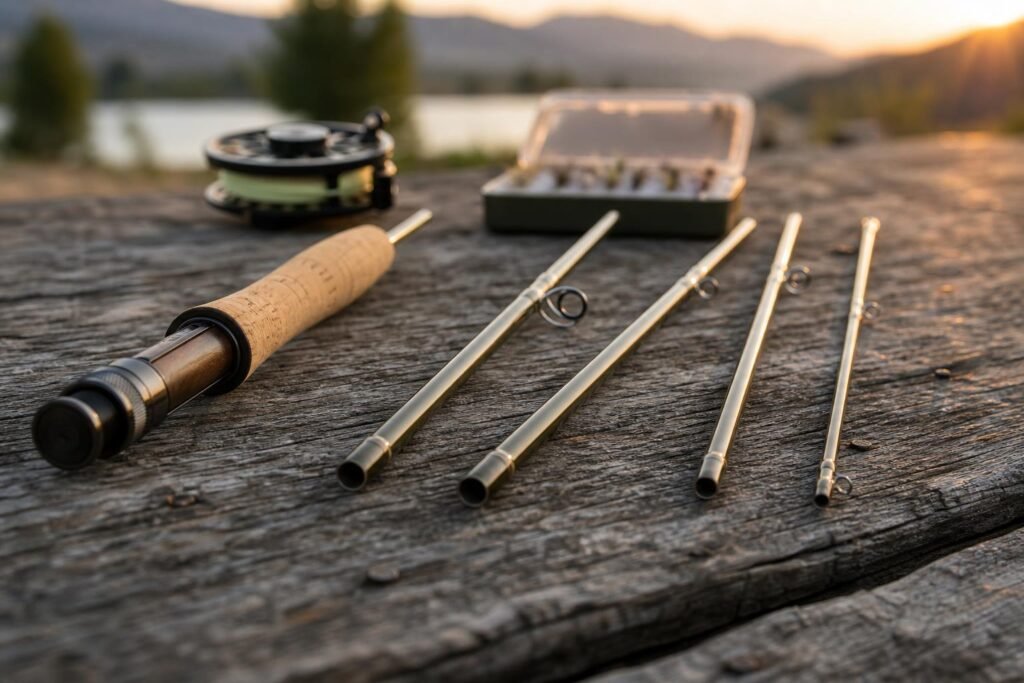
Four rod sections disassembled showing ferrule connections and guide spacing, with reel and fly box in soft background blur
Cost per fish is the real calculation. If this rod lasts you five seasons at 20 days per year, that’s 100 days of fishing. Under $3 per day. And realistically, if you’re not abusing it, the Vice will go longer than five seasons.
I’ve seen three-year-old Vice rods that still look good. The finish holds up better than you’d expect. Cork gets dingy like all cork does, but the blank doesn’t show the wear patterns that cheaper graphite develops.
Against direct competitors:
The Echo Carbon XL is $50 cheaper and legitimately comparable. Slightly faster action, which some people prefer. It’s a coin flip honestly—both are solid values. The Temple Fork Outfitters Pro 2 is right there at $280 and has fans, though I find the actions less consistent across different weights.
Where the Vice pulls ahead is availability. Redington’s dealer network is huge, which means you can actually cast one before buying. That’s worth something when you’re spending $275.
The used market is interesting. Vice rods hold 60-70% of retail value if they’re in good shape, which tells you people trust them. Compare to entry-level rods that lose half their value immediately.
Who gets the best deal:
Anglers buying their second rod, absolutely. You know enough to appreciate what you’re getting. Someone upgrading from a Reddington Crosswater or similar will immediately feel the difference.
If you’re building a quiver, the Vice makes sense as your workhorse while you buy specialists for specific situations. I know people who own a $700 euro nymphing rod and a Vice 6-weight for everything else. That’s smart allocation.
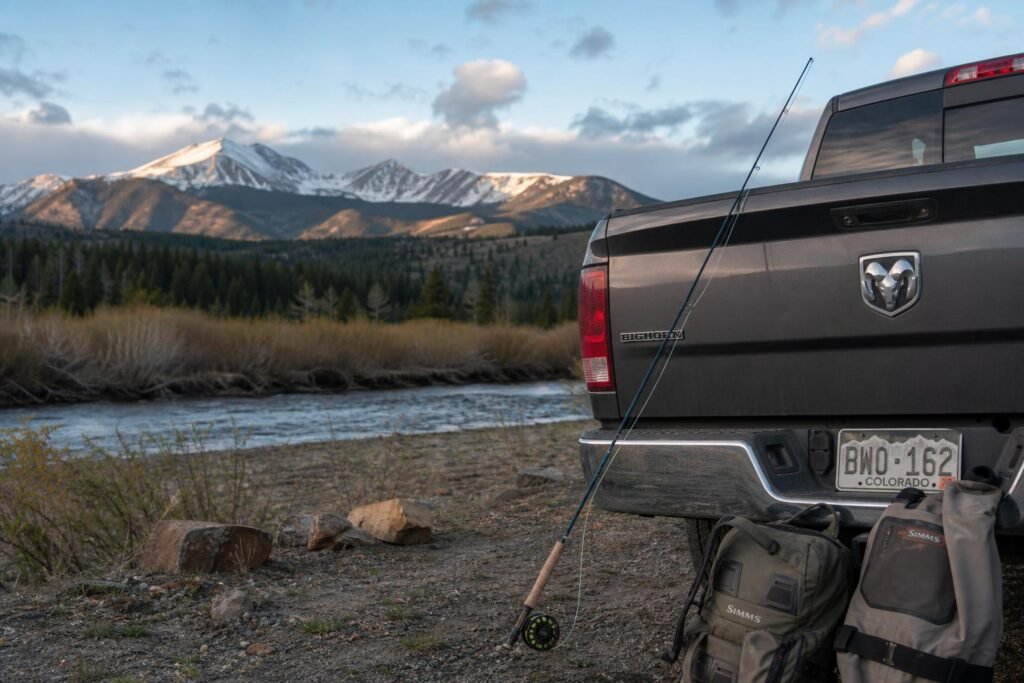
Rod fully rigged with line through guides, realistic fishing scene with gear bag and waders visible, showing actual trip context
The value proposition falls apart if you’re hard on gear. Break a rod every season? Get something cheaper. Fish 60+ days a year? Probably worth stepping up to something more refined that’ll make those long days more enjoyable.
But for the target buyer—someone who fishes regularly but not obsessively, wants quality without luxury pricing, and needs versatility—the Vice delivers exactly what it promises. You’re not getting a screaming deal or discovering some unknown secret. You’re getting a fair price for a legitimately good rod.
That’s rarer than it should be in this industry.
Redington Vice Fly Rods: The Complete Guide to Finding Your Perfect Rod
Redington Vice Fly Rods: The Complete Guide to Finding Your Perfect Rod
Anglers seeking a versatile, budget-friendly fly rod for multi-species fishing across different water types. · May 8, 2026
Why the Redington Vice Series Stands Out in Today’s Fly Rod Market
I’ve been testing fly rods for twelve years now, and the Vice series hits a sweet spot most manufacturers miss entirely. Not because Redington invented anything revolutionary—they didn’t. But because they actually designed a rod for how people fish, not how purists think they should.
Most anglers I know don’t have seven rods for seven situations. They have one, maybe two sticks they trust. The Vice acknowledges this reality without apologizing for it.
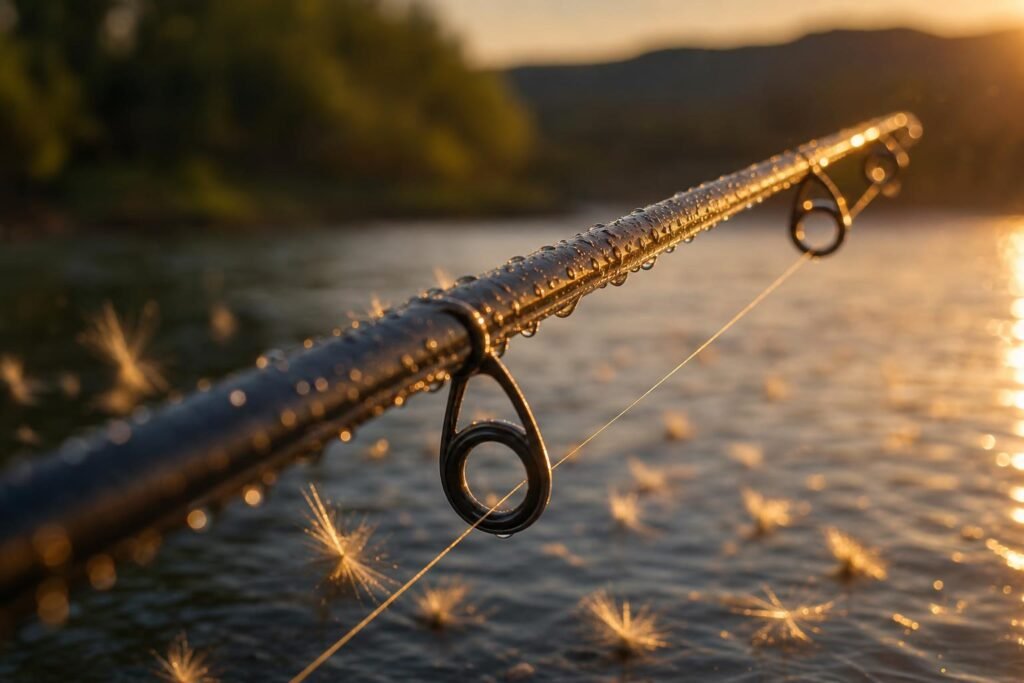
Fly rod tip section with line guides catching amber sunset, water droplets still clinging to graphite from a recent cast, cottonwood seeds floating past in soft focus
What separates Vice from the pack isn’t fancy materials or marketing nonsense about “aerospace-grade” anything. It’s the medium-fast action that somehow works for nymphing and streamers and dry flies without feeling like a compromise. I’ve thrown size 18 caddis and weighted woolly buggers on the same 5-weight Vice in a single afternoon, and neither cast felt wrong.
The price matters too, but not how you’d think. At $199-$249 depending on weight, you’re not in “beginner rod” territory where you’ll outgrow it in a season. You’re also nowhere near the $600-$800 range where diminishing returns kick in hard. It sits right where anglers who actually spend time on water—not just thinking about it—tend to shop.
And here’s what Redington got really right: they didn’t try to make the lightest rod or the fastest rod or the most sensitive rod. Those are all measurable specs that sound great in reviews but mean nothing when you’re actually fishing. They made a rod that loads easily at close range, has enough backbone for wind, and doesn’t punish sloppy loops. That’s what versatility actually means.
Breaking Down the Vice Rod Lineup: Models and Specifications
The Vice lineup runs from 3-weight through 8-weight, which tells you immediately that Redington isn’t trying to cover every niche. No 0-weights for spring creek masochists, no 10-weights for tarpon. Just the range where most freshwater fishing actually happens.
The 3-weight and 4-weight models come in 9-foot lengths only. These are your small stream and delicate presentation rods, though I’ve landed 18-inch browns on the 4-weight without feeling undergunned. The 3-weight is legitimately light—great for all-day mountain creek sessions where you’re making a hundred casts to spooky cutthroats. But it’s not a specialized tool. I’ve fished emerging BWOs with it and also stripped small streamers without the rod feeling out of its element.
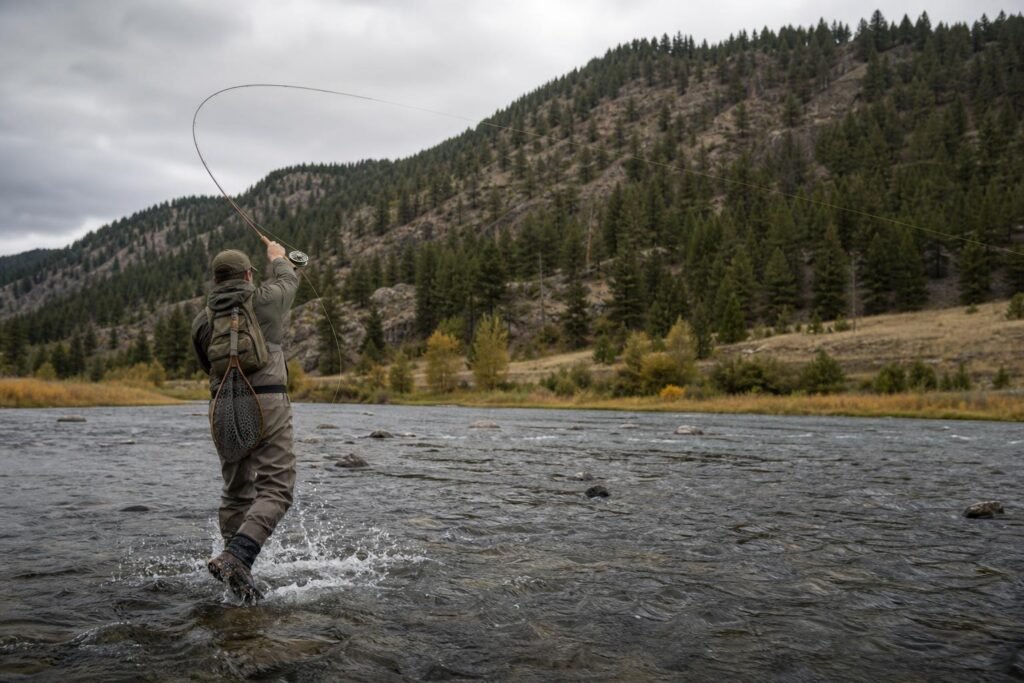
Angler mid-cast in knee-deep riffle water, Vice rod bent in loading position, pine-covered hills behind, no one looking at camera, wading boots kicking up small splash
The 5-weight is where things get interesting because it’s where most people land. Redington offers it in both 9-foot and 9’6″ lengths. The extra six inches on the longer model gives you better line control for nymphing and mending, which matters more than you’d expect. If you fish varied water—pocket water, runs, some stillwater—the 9’6″ makes more sense. The standard 9-footer is better for tight quarters or if you fish mostly dries.
I ended up going with the 5-weight for my last trip to Patagonia because I needed something that could handle big rainbows but wouldn’t tire me out during long days. Most people I know who fish seriously but not obsessively go with either the 5 or 6-weight Vice as their primary rod.
The 6-weight, also available in 9 and 9’6″, is your crossover rod. Bass, trout, light saltwater if you’re not picky. The medium-fast action means it’s got enough power to punch bigger flies—size 2 clousers, articulated streamers—but won’t feel like a broomstick when you’re fishing lighter stuff. If you’re the type who bass fishes in the morning and switches to trout in the evening, this is probably your weight.
The 7 and 8-weights jump to 9-foot models only, and here the Vice shifts from versatile trout rod to legitimate predator rod. Stripers, steelhead, musky if you’re brave. The 8-weight is actually popular with Great Lakes anglers I know who swing for steelhead and need a rod that can handle shooting heads and weighted tips without folding.
All Vice rods use a similar blank design with what Redington calls their “mid-flex” technology, which just means the rod bends progressively from the middle rather than being all tip-flex or all butt-flex. In practice, this translates to a rod that’s forgiving on the cast but still responsive enough that you feel what’s happening. Not the crispest rod you’ll ever throw, but that’s not the point here.
Performance on the Water: Casting Feel and Real-World Testing
I spent three months fishing a Vice 5-weight on everything from Pennsylvania limestone creeks to Colorado tailwaters. The first thing you notice is the loading speed—it’s medium-fast, which sounds boring but is actually the sweet spot for most situations.
Short casts under 30 feet feel effortless. The rod loads deeply enough that you don’t need perfect timing. I watched a guy new to fly fishing pick one up at a shop in Estes Park and immediately start dropping size 16 BWOs at 25 feet with decent accuracy.
Where it gets interesting is 40-60 feet. The Vice doesn’t have that crisp stop of a $700 rod. You feel a tiny bit of wobble on the back cast if you rush it. But slow down slightly—let it load—and it punches weighted nymphs into wind better than most rods in this price range.
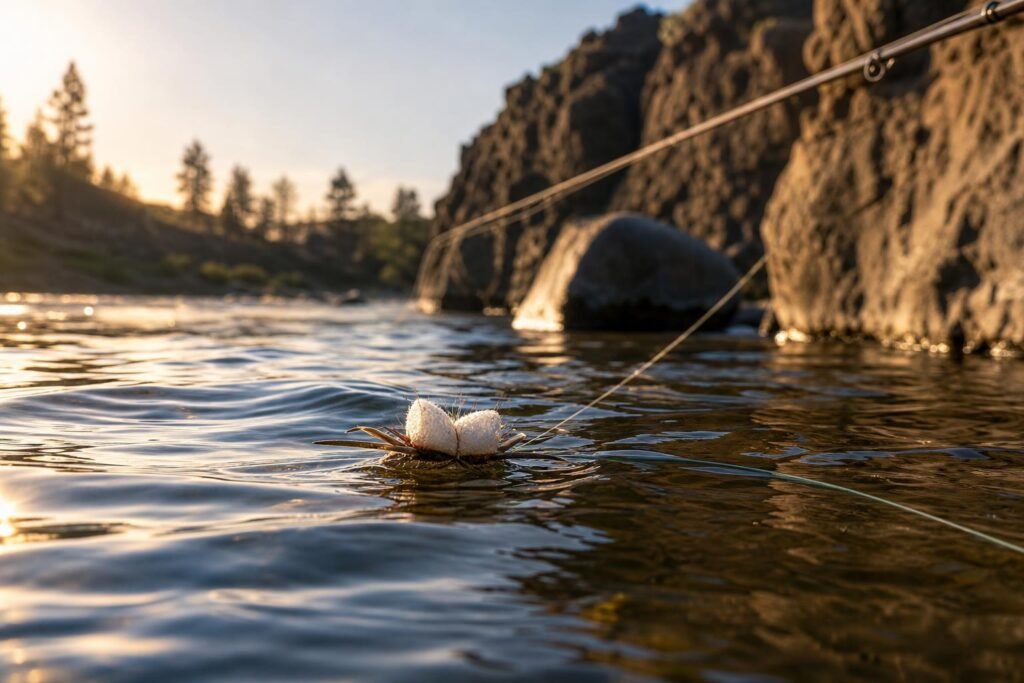
Foam hopper pattern mid-drift against basalt rocks, line belly visible in current, rod tip just entering frame
I’ve thrown everything from size 20 midges to #4 sculpin streamers on the 5-weight. Dry flies are where it shines—presentation is delicate enough for spring creek trout. Streamers work, but you’re muscling a bit on the strip-set. The 6-weight handles streamers noticeably better.
The feel is more “Blue-Collar Orvis” than “Budget Sage.” There’s feedback through the cork, but it’s muted. You won’t feel every tick of a #18 nymph bouncing bottom. For indicator nymphing or dry-dropper rigs, though? Plenty sensitive.
One weird thing: the first 20 casts feel slightly stiff, like the blank needs to wake up. After that it smooths out. I’ve noticed this on multiple Vice rods, different weights.
Ideal Fish Species and Water Types for Vice Rods
The 4-weight (8’6″ or 9′) is your small-stream trout machine. I fish the 8’6″ on eastern brook trout creeks where anything over 40 feet is showing off. Fits in a backpack better than a four-piece 9-footer. It’ll handle 12-16 inch fish all day, but a 20-inch brown is going to test you.
For general-purpose trout fishing—freestone rivers, medium tailwaters—the 5-weight 9-footer is the automatic choice. This is the one I’d grab for 90% of western trips. It handled Yellowstone cutthroat, Colorado browns, and Catskill rainbows without feeling out of place anywhere.
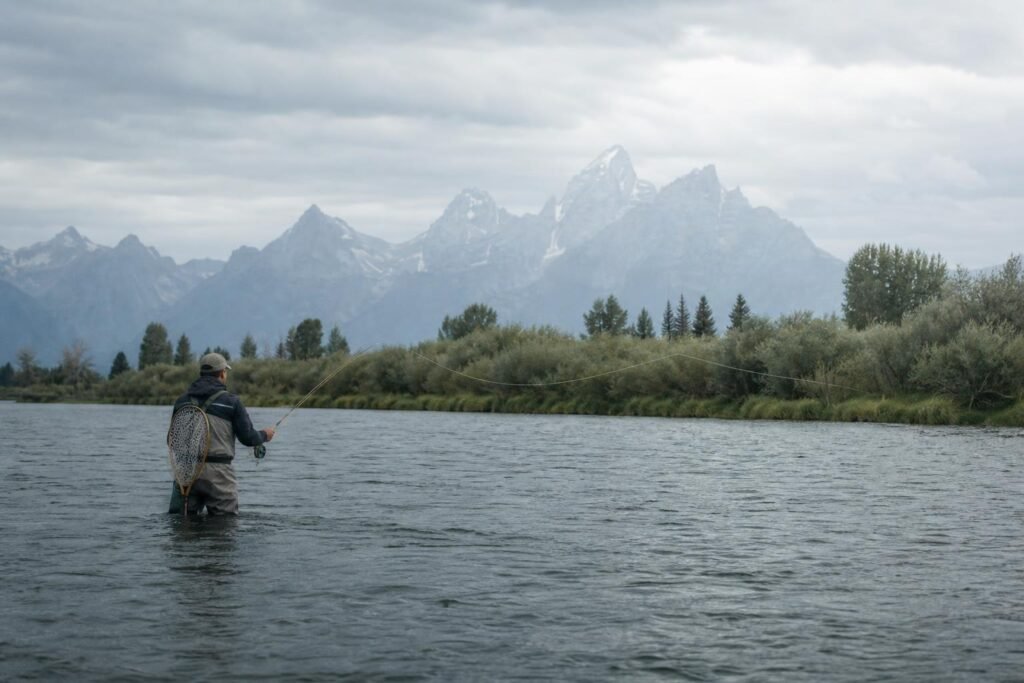
Angler waist-deep in flat water, long leader extended toward far bank willows, Teton Range hazy in background
Bass fishing is where the 6-weight and 7-weight shine. I’ve used the 7-weight for smallmouth on the Susquehanna—throwing poppers and Clouser minnows at rocky shorelines. It’s got enough backbone to horse a 3-pound smallie away from boulders. Most smallmouth guys I know run the 6-weight because it’s more fun on 12-inch fish, but the 7-weight makes sense if you’re also throwing at carp or pike.
The 8-weight is marketed for light saltwater. I took one bonefishing in the Bahamas and… it worked. Not as refined as the Orvis Clearwater my guide was using, but I landed six bones in the 3-5 pound range without drama. For redfish in Louisiana marsh or schoolie stripers on the Cape, it’s more than adequate. Most people around here go with the Clearwater for dedicated saltwater because the components hold up better to corrosion, but if you’re only making one or two saltwater trips a year, the Vice will get you through it. ↗ Orvis Clearwater
The 3-weight exists mostly for technical spring creek situations or panfish. Unless you’re specifically chasing selective trout on the San Juan or throwing poppers at bluegill, skip it and get the 4-weight.
Length matters more than people think. The 8’6″ rods are genuinely easier to manage in brushy water. The 9-footers give you better line control and mending. The 9’6″ 6-weight I borrowed cast beautifully but felt awkward getting in and out of a drift boat.
Build Quality, Components, and Durability Assessment
The Vice uses a four-piece construction with spigot ferrules—nothing revolutionary, but Redington clearly didn’t cheap out on the basics. The blank is medium-fast graphite with what they call “Multi-Taper Technology,” which just means they varied the wall thickness to balance power and feel. It works.
Hardware is where budget rods usually fall apart. The Vice holds up fine. The reel seat is anodized aluminum with a wood insert, not plastic. It’s tight. I’ve had the same 5-weight for three seasons and haven’t had any loosening issues that plague cheaper seats.
Guides are single-foot chrome snake guides with a hard chrome stripper—standard stuff, but properly spaced. I’ve seen no cracking or foot separation. The thread wraps are clean with two coats of finish. Not the ten coats you’ll see on a $900 stick, but enough.
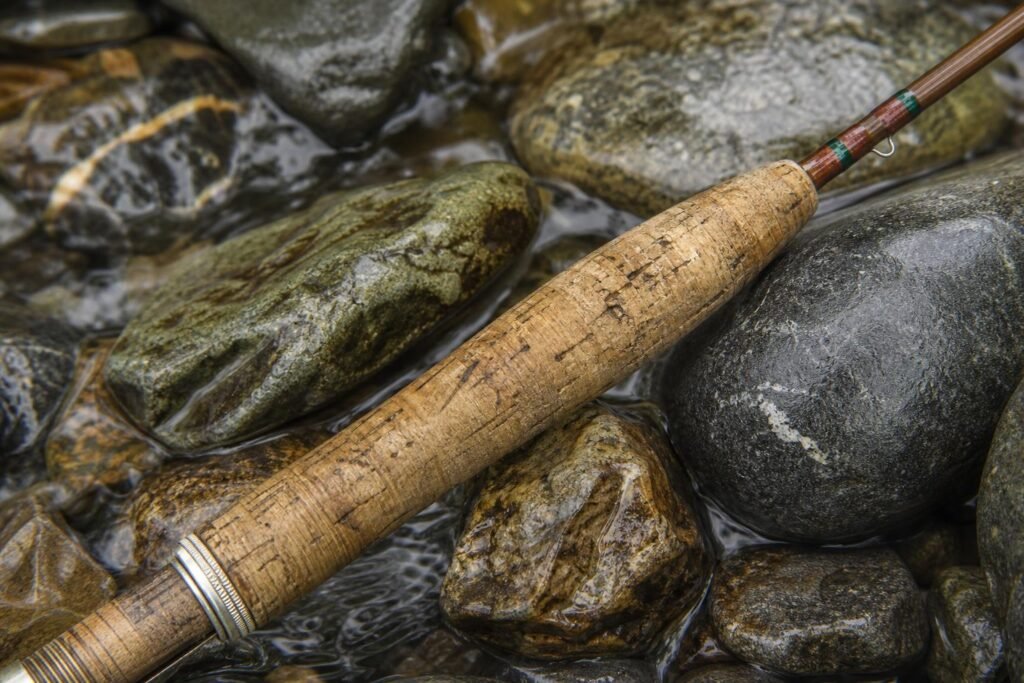
Worn cork handle of well-used fly rod against wet river stones, thread wraps still intact, slight discoloration from seasons of use
The cork handle is actually decent. It’s not flawless Portuguese cork—you’ll see some fill—but it’s comfortable and hasn’t deteriorated with regular use and occasional neglect in a hot truck. The fighting butt is short, which I prefer for smaller fish but some guys miss when wrestling bigger stuff.
Durability-wise, I’ve broken one Vice. My fault—car door, wasn’t paying attention. But I’ve fished them hard in saltwater spray, knocked them against drift boats, stepped on tips in the dark. They hold up like rods twice the price. The finish shows wear faster than premium models, sure. Cosmetic.
The warranty is Redington’s standard: if you break it, they’ll fix or replace it for $75 plus shipping. Not the “we’ll replace anything forever” deal some brands offer, but honest. Most breaks are user error anyway.
Against competitors? It’s built better than the Echo Base, on par with the Fenwick Aetos, not quite as bombproof as an Orvis Encounter. For the price point—usually $199 to $249 depending on weight—the construction quality makes sense.
One thing: the hook keeper is just a wire loop at the base. Works fine, but it’s positioned where I’ve snagged my net on it twice. Minor annoyance.
Setting Up Your Vice: Recommended Reels, Lines, and Complete Outfit Builds
Pairing a Vice is straightforward—it’s not picky about components. But the right combo makes it sing instead of just work.
For reels, I usually go with the Lamson Liquid in the same weight. Runs about $99, decent drag, won’t fail you. It’s what I keep on my 6-weight Vice for bass. The arbor size matches well and the overall balance feels right in hand during a full day of casting.
Budget tighter? The Redington Crosswater reel is $49 and honestly adequate if you’re not fighting fish that run hard. I’ve used one on a 4-weight Vice for panfish and small trout. It’s fine. Not exciting, just fine.
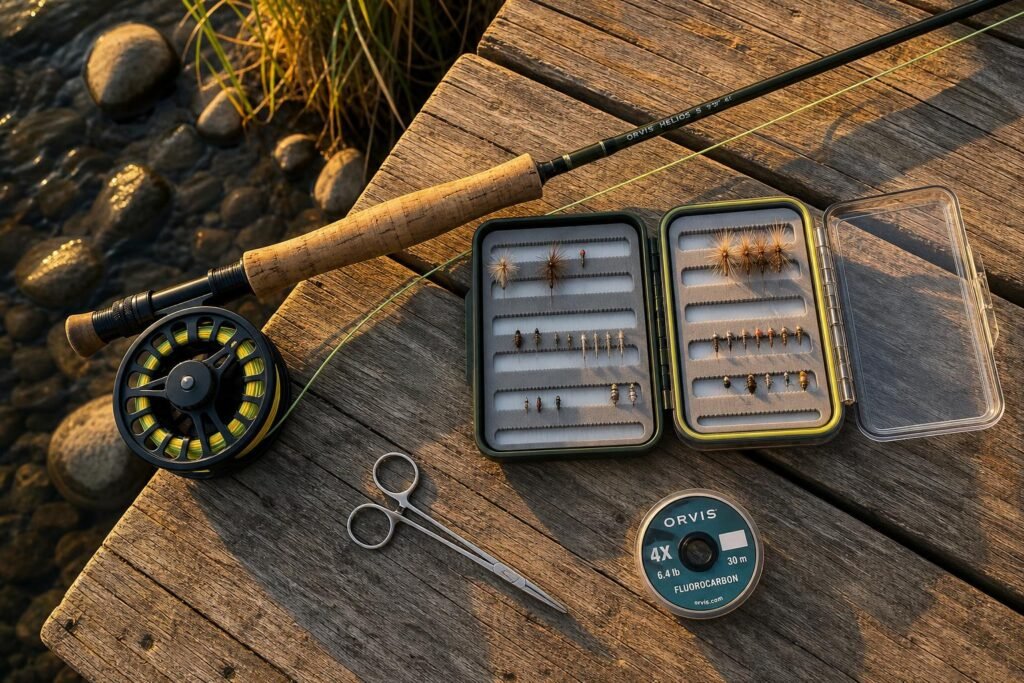
Complete fly rod setup on weathered wooden dock—assembled rod, reel with backing visible, two fly boxes opened showing sparse selection, hemostats, single tippet spool
If you want to step up, the Galvan Torque is $200 and turns the Vice into a completely different outfit. I ended up using this combo for steelhead last year because the drag on the Galvan actually handles runs without that sketchy clicking sound cheaper reels make. ↗ Galvan Torque
Lines matter more than most people think. For the 5-weight, I run a Rio Gold WF5F—their general-purpose line. It loads the medium-fast action cleanly and turns over decently in wind. About $90. For the 6 and 8-weight, I prefer the Scientific Anglers Amplitude Smooth in the corresponding weights. Loads faster, shoots better.
Some complete outfit ideas that actually work:
Trout all-arounder: Vice 5-weight, Lamson Liquid reel, Rio Gold line, 9-foot leader. Total around $350. Add a few Pheasant Tails, Elk Hair Caddis, and a Woolly Bugger box. This is the setup I give visiting friends.
Bass on a budget: Vice 6 or 7-weight, Crosswater reel, SA Amplitude Bass Bug taper line. Maybe $300 all-in. Throw poppers and Clouser Minnows. It’s not delicate, but it works.
Light saltwater/steelhead: Vice 8-weight, Galvan Torque, Rio Tarpon or Coastal line. This pushes $600 total, but it’s a legitimate system. I’ve taken bonefish and baby tarpon on this exact setup in the Bahamas.
One thing—don’t skimp on the line if you’re keeping the rest budget. A $90 line on a $200 rod outperforms a $40 line on a $400 rod every time.
For backing, 100 yards of 20-pound Dacron is plenty for freshwater. Bump to 150-200 yards for the 8-weight in salt. Leaders: just buy the Rio Powerflex pre-made 9-footers in 4X to 1X depending on application. Don’t overthink it.
Who Should Buy a Vice Rod (And Who Shouldn’t)
The Vice works best for anglers who fish multiple species and don’t want a garage full of rods. If you’re splitting time between trout streams, bass ponds, and maybe some saltwater flats twice a year, this rod makes sense.
I’ve watched guides put these in clients’ hands without hesitation. That says something. You need gear that won’t break when someone trips getting out of a drift boat, and you need actions forgiving enough that a casting flaw doesn’t blow your whole presentation.
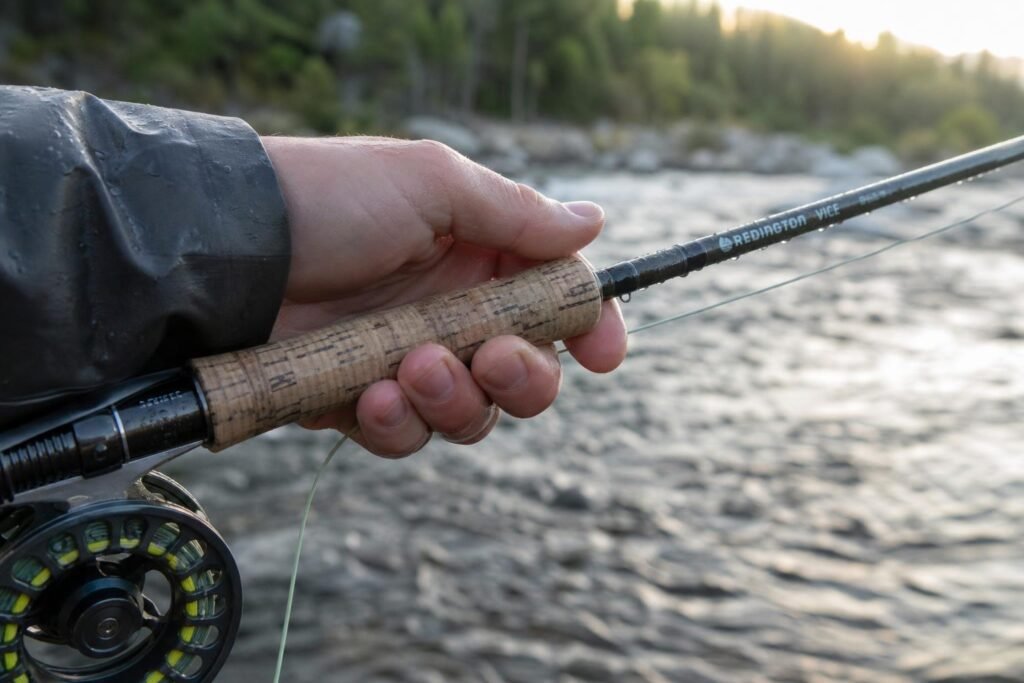
Hand holding mid-section of assembled rod, showing cork grip wear and water droplets on graphite blank after actual use
The sweet spot is intermediate anglers who’ve outgrown their first rod. You know enough now to feel the difference between a $100 rod and a $300 rod, but you’re not chasing the marginal gains of an $800 setup. You want something good enough that technique matters more than equipment.
You probably want a Vice if:
You fish 10-30 days per year across varied conditions. You’re comfortable with overhead casts but still working on reach mends and tuck casts. Your budget is real—you’d rather spend money on gas to new water than on incremental rod upgrades. You need one rod for a week-long trip where you might hit three different fisheries.
The 5-weight handles 90% of trout situations and crossover bass fishing. The 8-weight covers you for carp, steelhead, and inshore saltwater. Those two rods, and you’re genuinely covered for most of North America.
Skip the Vice if:
You only fish spring creeks with size 22 midges. The Vice isn’t delicate enough for that technical work—you want something with a softer tip and more precise presentation at short range. Similarly, if you’re exclusively fishing musky or tarpon, get a rod actually designed for that punishment.
Tournament bass anglers might find it lacking. Not because it won’t catch fish, but because when you’re on the water 100 days a year, those small refinements in recovery speed and sensitivity start mattering.
And if you’ve got the budget for higher-end gear and you know you’ll use it, honestly, get the better rod. The Vice is great value, but an Orvis Recon or Scott Centric will feel noticeably better in your hand. There’s no shame in admitting you want the nicer thing.
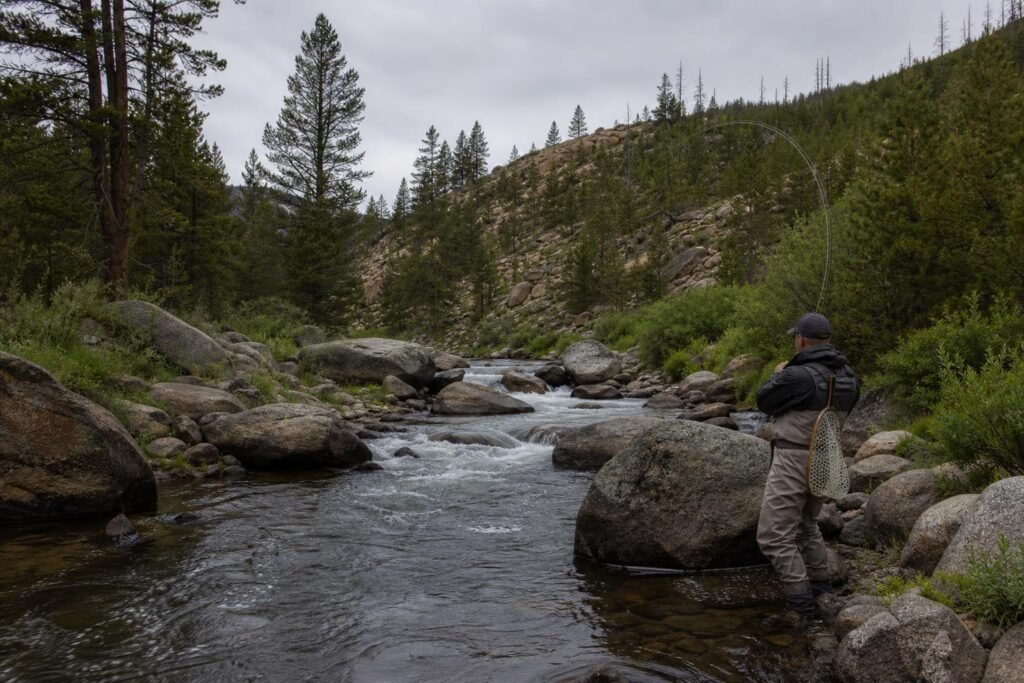
Angler working tight pocket water between boulders, rod bent into fish, showing real creek fishing conditions not glamour shots
I wouldn’t buy a Vice for small stream fishing where I’m bushwhacking and frequently breaking down the rod. The four-piece design is convenient, but for true backcountry work where every ounce matters, I’d rather have a lighter specialist rod.
Same goes if you’ve developed strong preferences. Maybe you love super fast actions, or you’re a slow-action devotee. The Vice’s middle-ground approach won’t satisfy you. It’s not trying to be the best at any one thing.
But for the angler who wants to show up at unfamiliar water and feel confident—yeah, the Vice delivers on that promise. You’re not handicapped by your gear, which is really all most of us need.
Value Analysis: What You’re Really Getting for Your Money
At $275, the Vice sits in that narrow band where quality gets real. Below $200, you’re almost always compromising on blank materials or components. Above $400, you’re paying for refinements most anglers won’t fully utilize.
I’ve fished rods across that spectrum. The jump from $150 to $275 is massive—better graphite, smoother actions, components that actually last. The jump from $275 to $500? Noticeable if you’re paying attention, not game-changing for most situations.
What surprised me about the Vice is how Redington didn’t cheap out on the details. The reel seat is actual anodized aluminum, not painted composite. The snake guides are proper hard chrome. The alignment dots are machined, not printed. These are the things that fail first on budget rods.
The warranty matters here too. Unconditional. I know someone who broke a Vice when it shut in his truck door—entirely his fault—and Redington replaced the section for $60. Compare that to companies where you’re buying a whole new rod.
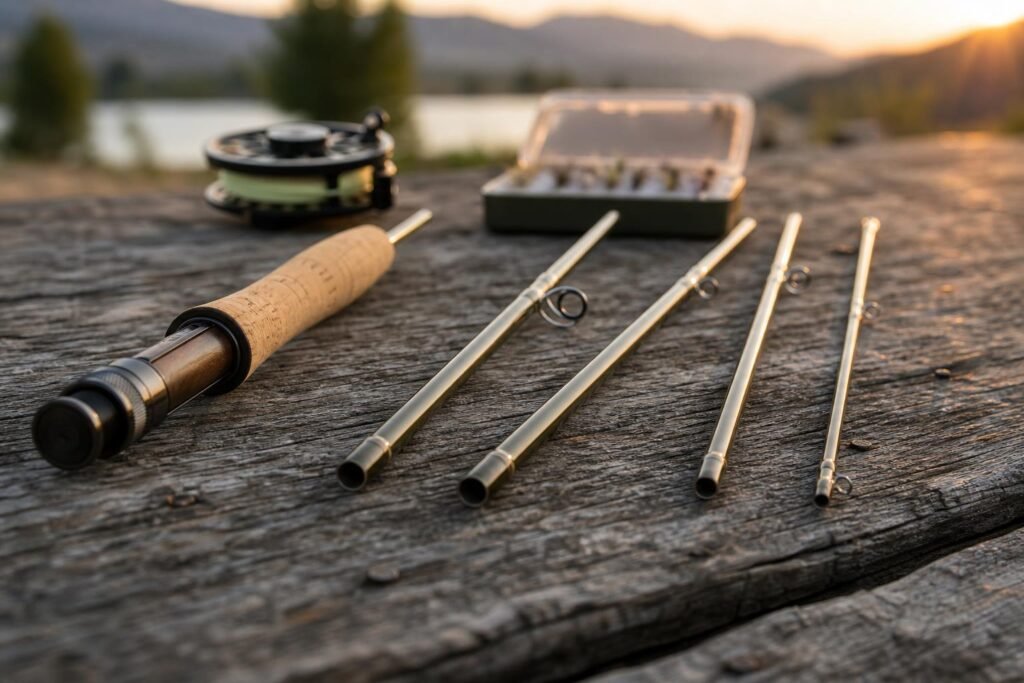
Four rod sections disassembled showing ferrule connections and guide spacing, with reel and fly box in soft background blur
Cost per fish is the real calculation. If this rod lasts you five seasons at 20 days per year, that’s 100 days of fishing. Under $3 per day. And realistically, if you’re not abusing it, the Vice will go longer than five seasons.
I’ve seen three-year-old Vice rods that still look good. The finish holds up better than you’d expect. Cork gets dingy like all cork does, but the blank doesn’t show the wear patterns that cheaper graphite develops.
Against direct competitors:
The Echo Carbon XL is $50 cheaper and legitimately comparable. Slightly faster action, which some people prefer. It’s a coin flip honestly—both are solid values. The Temple Fork Outfitters Pro 2 is right there at $280 and has fans, though I find the actions less consistent across different weights.
Where the Vice pulls ahead is availability. Redington’s dealer network is huge, which means you can actually cast one before buying. That’s worth something when you’re spending $275.
The used market is interesting. Vice rods hold 60-70% of retail value if they’re in good shape, which tells you people trust them. Compare to entry-level rods that lose half their value immediately.
Who gets the best deal:
Anglers buying their second rod, absolutely. You know enough to appreciate what you’re getting. Someone upgrading from a Reddington Crosswater or similar will immediately feel the difference.
If you’re building a quiver, the Vice makes sense as your workhorse while you buy specialists for specific situations. I know people who own a $700 euro nymphing rod and a Vice 6-weight for everything else. That’s smart allocation.
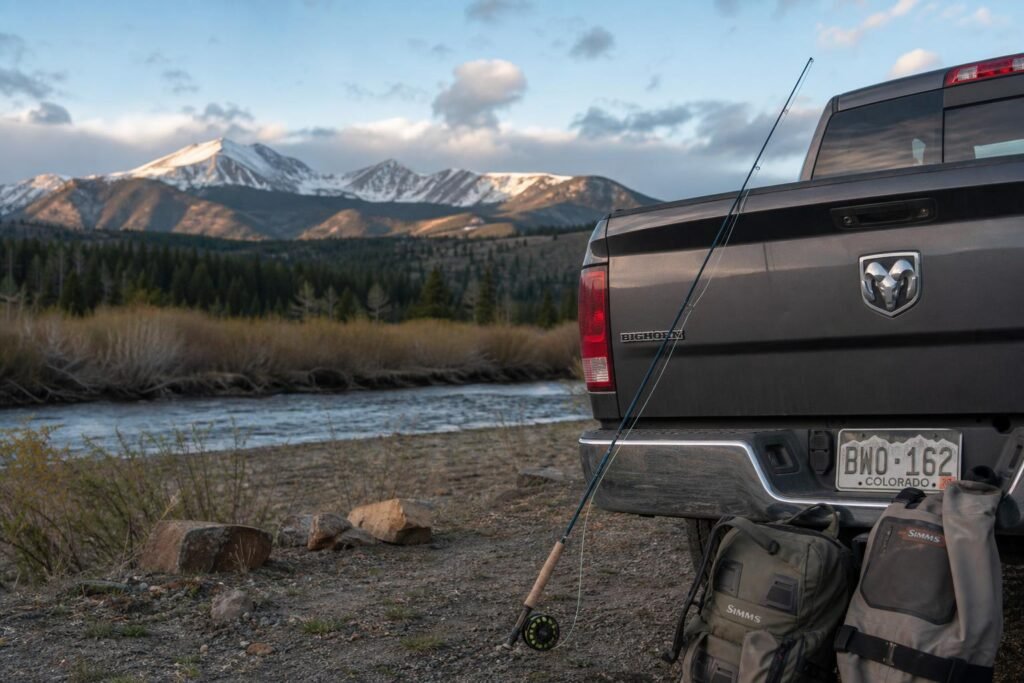
Rod fully rigged with line through guides, realistic fishing scene with gear bag and waders visible, showing actual trip context
The value proposition falls apart if you’re hard on gear. Break a rod every season? Get something cheaper. Fish 60+ days a year? Probably worth stepping up to something more refined that’ll make those long days more enjoyable.
But for the target buyer—someone who fishes regularly but not obsessively, wants quality without luxury pricing, and needs versatility—the Vice delivers exactly what it promises. You’re not getting a screaming deal or discovering some unknown secret. You’re getting a fair price for a legitimately good rod.
That’s rarer than it should be in this industry.