
Fly fishers and anglers seeking reliable, high-performance wading boots for river and stream fishing.
Why Redington Wading Boots Stand Out in the Market
I’ve destroyed a lot of wading boots over the years. Seams splitting on the Deschutes. Soles delaminating in Montana spring runoff. The cheap ones die fast, and the expensive ones sometimes aren’t much better.
Redington occupies this weird middle ground that actually works. They’re not bargain-bin garbage, but you’re also not dropping $400 on boots like you’re sponsoring someone’s graduate degree in material science.
The brand started in 1986, and they’ve always had this thing about not overengineering gear. Their Sonic-Pro waders became kind of a cult favorite because they just worked—breathable, durable enough, priced so you didn’t panic every time you scraped a log. The boots follow the same philosophy.
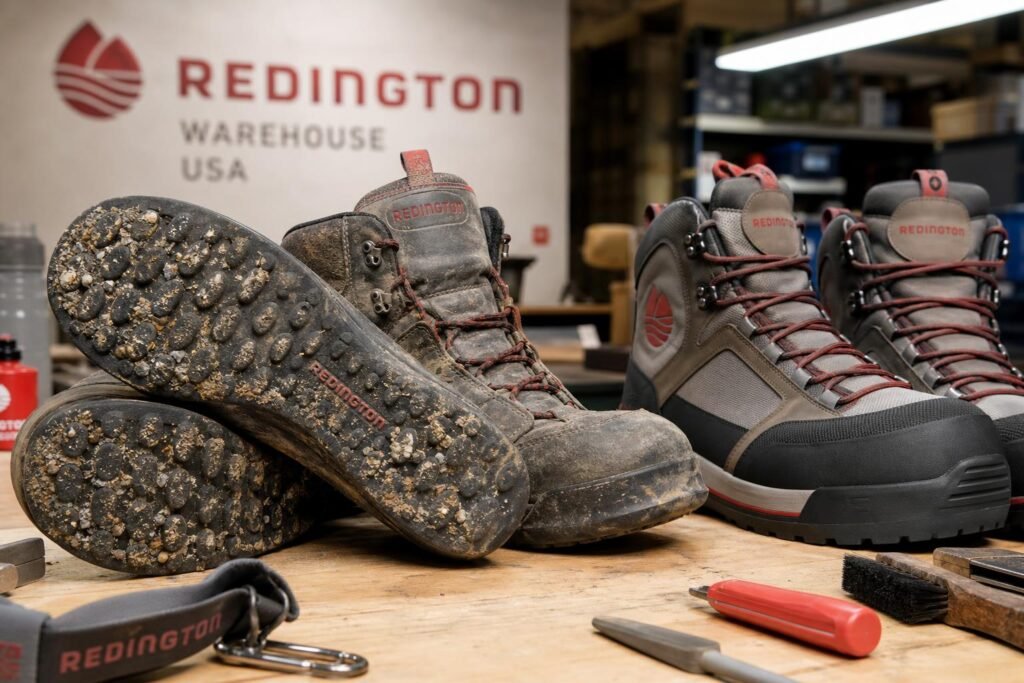
Well-worn Redington wading boots on a wooden workbench, gravel still stuck in tread, next to newer pair showing the reinforced toe box design
What I actually appreciate is that Redington tests this stuff with guides. Not just sending free boots to Instagram influencers, but putting prototypes on people’s feet for 200-day seasons in Alaska and the Rockies. When a boot has a reinforced ankle or a specific lacing system, there’s usually a reason beyond marketing copy.
The range isn’t overwhelming either. Three or four main models, felt and rubber options, sizes that actually fit normal human feet. You’re not scrolling through 47 SKUs trying to decode the difference between “Pro Elite” and “Elite Pro.”
Felt vs. Rubber Sole: Which Redington Boot is Right for You?
This decision matters more than the boots themselves, honestly.
Felt is better. Let’s just start there. On slick river rock, especially that algae-covered basalt you get in Western rivers, felt grips in a way rubber just doesn’t. I’ve fished the same run in the Yellowstone in both types, and with felt I’m confidently reading water. With rubber I’m doing this weird shuffle-step like I’m 90 years old.
But felt is also illegal or restricted in a bunch of places now. Alaska, Missouri, Maryland, Vermont—states worried about invasive species hitchhiking on wet felt. New Zealand banned them years ago. Even if it’s legal where you fish, some rivers have their own regulations.
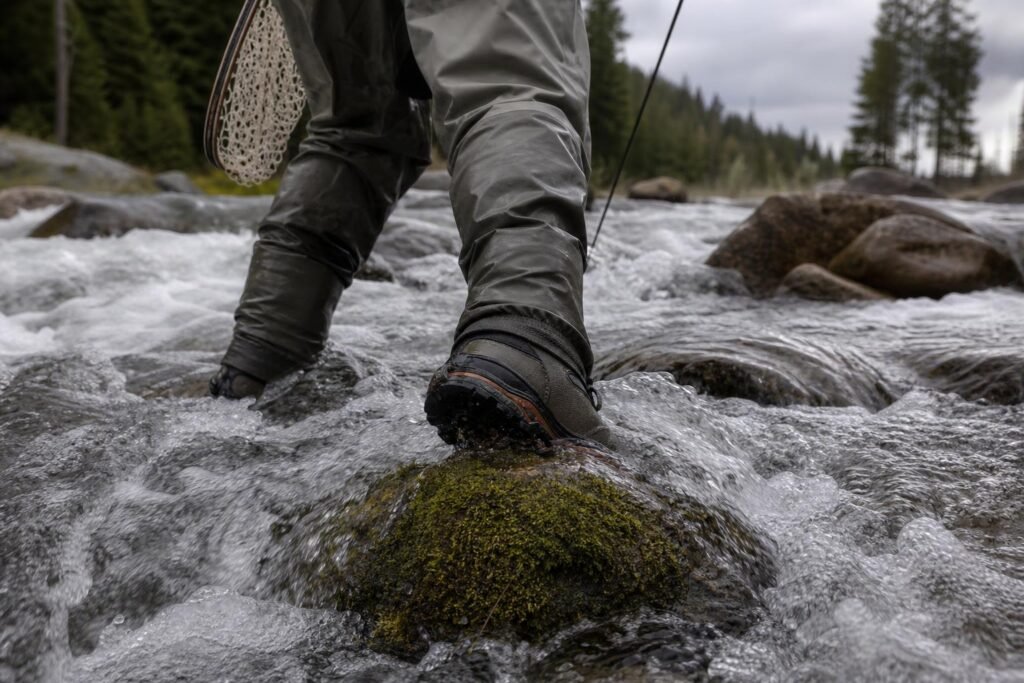
Angler’s legs mid-wade through fast current, rubber-soled boot planted on moss-covered rock, water rushing white around boot
Redington makes their Prowler and Escape models in both sole types, which is helpful. Rubber technology has improved—the Vibram Idrogrip compound actually bites pretty well, and sticky rubber does fine on dry rock and gravel bars. I ended up using the Prowler rubber boots for most of my fishing last season because I cross state lines enough that felt became a hassle. You adapt your wading. Stay more careful. Use a staff.
The trade-off is real though. Steep pocket water, smooth bedrock rivers, anywhere the current pushes hard—felt is still king. If you fish one home river system and felt is legal, that’s probably your move. If you travel, or fish tailwaters with boat ramps that prohibit felt, rubber makes your life simpler.
Weight-wise they’re similar. Felt dries slower, which matters if you’re hiking between spots or worried about freezing temps in your truck overnight. Rubber sheds water and mud faster, cleans easier.
Some people buy both. Depends how much space you have and whether your significant other has strong opinions about the amount of fishing gear colonizing the garage.
Top Redington Wading Boot Models Reviewed
I’ve stood in a lot of rivers wearing different boots over the years. Redington’s lineup has gotten tighter—they’ve trimmed the fat and kept what actually works.
The Prowler is their workhorse. Synthetic leather and mesh upper that dries faster than you’d think. I wore a pair through two seasons on Oregon’s Deschutes before the sole needed attention. The BOA lacing system means you’re cinched tight in about three seconds, which matters more than it sounds when you’re rigging in 42-degree drizzle at dawn. They run $179.95, which is mid-tier. Not cheap, not trying to be.
Most guides I know on Montana’s Madison use either Prowlers or the Sonic-Pro. The Sonic-Pro is lighter—you feel it by day three of a long trip. Redington shaved weight without going flimsy, mostly through a streamlined sole design and less bulky toe cap. These are $159.95, and I ended up using them for smaller spring creeks where you’re walking more than wading deep. The trade-off: slightly less ankle support on uneven substrate.
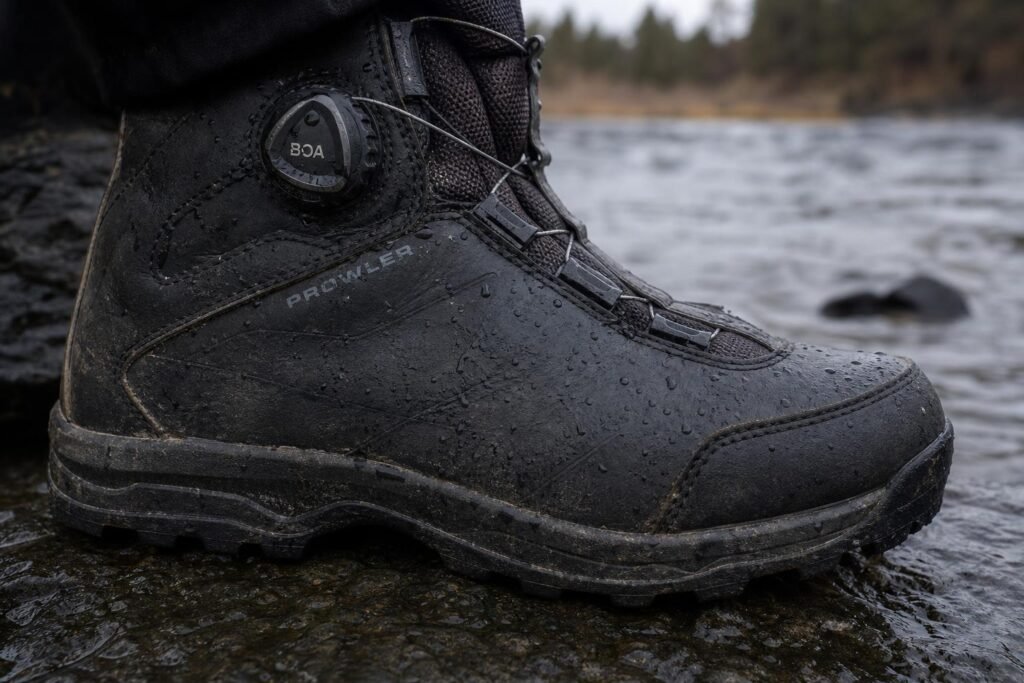
BOA dial and weathered synthetic leather against wet basalt, river barely out of focus behind, water droplets on laces
The Benchmark sits at the budget end—$129.95—but don’t write it off. Traditional laces instead of BOA, heavier build. I’ve recommended these to friends just getting into fly fishing who aren’t ready to drop two hundred on boots before they know if they’ll stick with it. Stood in the Benchmark for four hours on Washington’s Yakima last spring. Feet stayed dry, no hot spots. They’re not refined, but they work.
Here’s what separates them in actual use: sole stickiness varies. Prowler felt-compatible models (if you’re in felt-legal water) grip better on algae-covered stone than the Sonic-Pro’s rubber. But the Sonic-Pro’s Vibram Idrogrip sole is friendlier for hiking stretches between holes. The Benchmark uses a standard studded rubber—adequate, not exceptional.
Ankle support matters more than most people think until they roll one. The Prowler’s mid-height cuff kept me stable when I stepped wrong on a submerged log in the Metolius. The Sonic-Pro’s lower profile gives you more mobility but less protection. Choose based on where you fish. Technical boulder gardens? Prowler. Gravel-bottom freestones? Sonic-Pro’s fine.
One thing across all three: drainage holes actually drain. I’ve owned boots where that was theoretical. These empty fast when you step back on shore.
Sizing and Fit: Getting Your Redington Boots Right the First Time
Redington boots run about a half-size large compared to your street shoes. Which sounds simple until you factor in neoprene socks.
Here’s what I do: measure your foot in the evening after you’ve been walking around. Feet swell during the day. Stand on a piece of paper, mark heel and longest toe, measure in centimeters. Redington’s size chart is actually accurate—I’ve tested it across four different models now. If you’re 27.5 cm and normally wear a US 10, order a 10 in Redingtons.
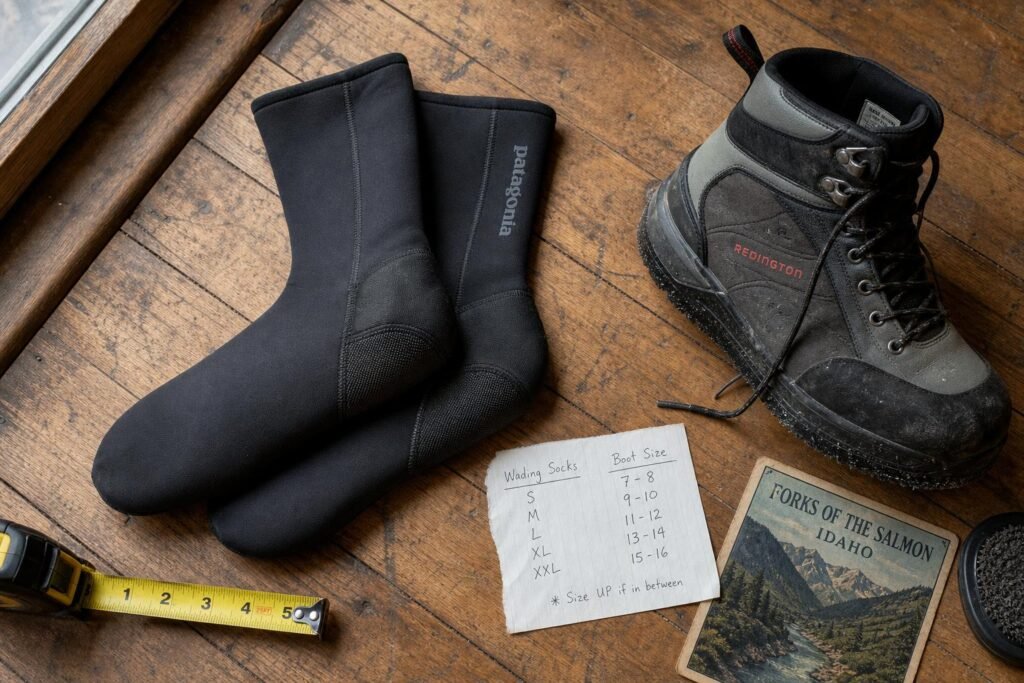
Neoprene wading socks laid next to Redington boot, measuring tape partially visible, handwritten sizing notes on paper scrap
The neoprene sock question trips people up. You need room for 3-5mm socks without your toes jamming forward. I wear 5mm Simms socks in winter. With those, I go up a half size in the boot. In summer with 3mm socks, my true size works. If you’re between sizes, go larger. A little heel slip with thin socks beats crushed toes with thick ones.
Width is where Redington sits medium. Not narrow like some European brands, not wide like certain US hunting boots. If you normally need wide-width shoes, these might pinch. I’ve got average-width feet and the Prowler’s toe box gives me enough room even after six hours when everything’s a bit puffy.
Try them on with your actual wading socks before you cut tags. Walk around your house for twenty minutes. Sounds excessive, but boot fit reveals itself after the initial five-minute “these feel fine” window. Pay attention to pressure points at the ankle bones and across the top of your foot where the lacing cinches.
The BOA models let you micro-adjust tension, which helps if one foot’s slightly bigger than the other. Mine are—right foot’s a hair wider. Traditional laces on the Benchmark work too, just takes more fiddling.
One more thing: if you’re ordering online, do it somewhere with free returns. Even with perfect measurements, individual foot shape varies enough that you might need to swap sizes. I got my first pair of Prowlers wrong, went up a half size on the exchange, and they’ve been right for three years since.
Durability and Maintenance: Making Your Boots Last
I killed my first pair of wading boots in eighteen months. Tossed them wet in the truck bed, left them there for days, never bothered with a brush. The stitching rotted out before the soles wore down.
Redington boots will take a beating—I’ve watched guides put 80+ days a season on Sonic-Pros—but they won’t survive neglect. The good news: basic maintenance adds years.
After every trip, rinse them. Hose off mud, sand, algae, whatever’s packed into the treads. I use an old vegetable brush for the tough stuff around the laces and rubber rand. Takes three minutes. If you’ve been in saltwater, this isn’t optional—salt crystals will shred stitching and corrode eyelets.
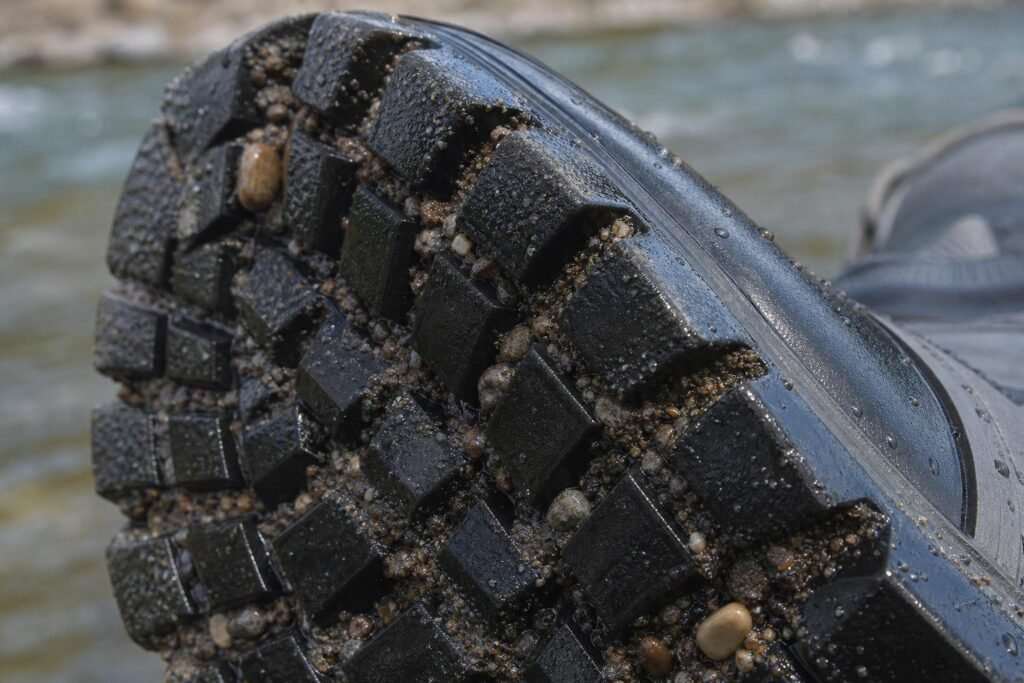
Wading boot sole caked with river sand and small stones wedged in lug pattern, water droplets still clinging to dark rubber
Don’t put them away wet. Ever. I prop mine upside down on a boot dryer—the Peet ones that use gentle heat, not the hair-dryer style that’ll crack adhesives. No boot dryer? Stuff them with newspaper and set them in front of a fan. Took me one bout of mildew inside the liner to learn this lesson.
Check your laces monthly. They’ll fray where they pass through eyelets, especially on boots you cinch tight. I replace mine once a season whether they need it or not—$6 for paracord beats a blowout mid-wade. Keep tension even when you lace up; one-sided pulling warps the boot structure over time.
The heel counter—that stiff cup around your heel—is usually the first thing to collapse. Happens when you kick boots off without unlacing. I’m guilty. But if you loosen them properly and use the pull loop, that counter stays rigid for years instead of months.
Felt soles need different care than rubber. Felt holds bacteria and invasive species, so some rivers ban them entirely. If you fish felt, dry them completely between waters—48 hours minimum. I know a guy who keeps two pairs and rotates. Overkill for most of us, but it works.
Rubber soles last longer if you avoid hiking on pavement. I learned this walking a quarter-mile from the parking area on the Madison—wore visible flat spots in the lugs. Now I change into sneakers for the approach, switch at the water. Annoying but effective.
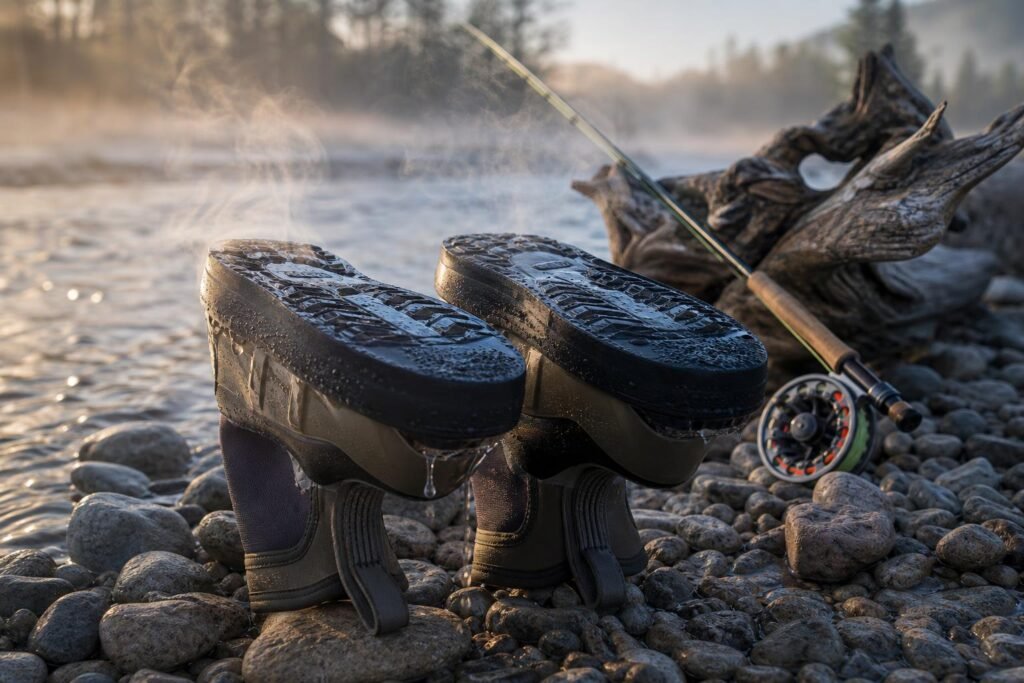
Pair of wading boots drying upside-down on riverbank stones, steam rising from wet neoprene, fly rod leaning against driftwood in soft focus behind
Store them loosely laced, out of direct sun. UV breaks down rubber and synthetic materials faster than wear does. My garage gets hot in summer, so they go on a shelf in the basement. Cool, dry, dark.
Inspect stitching before each season. If you catch a separated seam early, any cobbler can restitch it for $15-20. Wait until the upper detaches from the sole and you’re looking at new boots.
The weak point on most Redingtons is where the toe rand meets the upper. That joint takes constant flex and impact. I’ve started applying Aquaseal to that seam preemptively—thin bead, let it cure overnight. Hasn’t failed me yet.
If you fish studded boots, check those screws every few trips. They back out. I tighten mine with a Leatherman before I even rig up. Lost studs mean lost traction, and I’m not re-buying a full set because I skipped a thirty-second check.
One more thing: break them in at home. Wear them around the house, in the yard, on short walks. New boots that feel fine in the store will find every hot spot on your foot during an eight-hour float. Better to discover that on your deck than three miles upstream.
Wading Boot Accessories and Upgrades
Wading boots don’t exist in isolation. You need a few extras to make them actually work, and Redington’s ecosystem of add-ons is decent but not complete. Here’s what I carry and why.
Gravel guards are non-negotiable. Those neoprene or canvas sleeves that seal the gap between your wader booties and boot tops keep out sand, gravel, and the tiny pebbles that’ll shred your feet. Redington sells their own, but I’ve had better luck with Simms Freestone guards—they’re $25, fit most boots, and the Velcro actually holds.
I wrecked a day on the Green River in Utah with a boot full of sand. Quarter-mile into the wade, felt it accumulating. By lunchtime I had a blister the size of a quarter. Could’ve been avoided with $25 of neoprene.
Most quality waders come with built-in gravel guards, but they wear out. Check them before the season. If the elastic is shot or the Velcro is fuzzy and useless, replace them. You can sew on universal guards for about ten bucks if you’ve got basic skills.
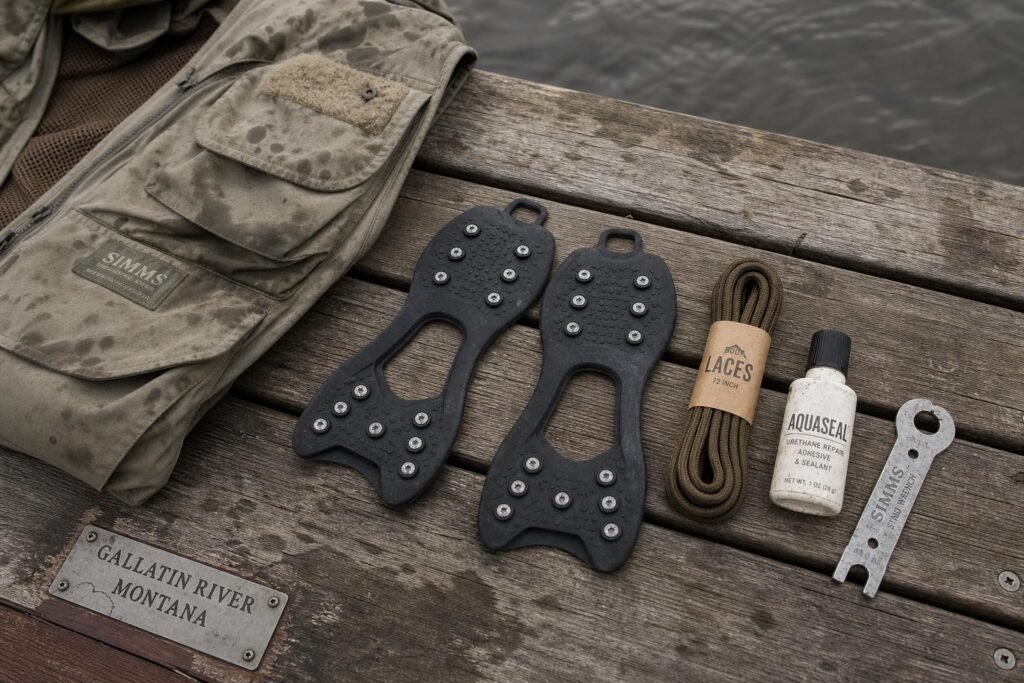
Gravel guards, spare bootlaces, small bottle of Aquaseal, and stud wrench laid out on weathered wooden dock, water-stained fishing vest in corner of frame
Laces will fail. Keep a spare set in your wader pocket. I use 550 paracord cut to length—stronger than standard laces, dries fast, costs almost nothing. You can buy it by the foot at any outdoor shop. Thread it while you’re at home and know how it routes. Trying to re-lace a boot streamside when you can’t feel your fingers is miserable.
Aftermarket studs transform rubber-soled boots. Redington’s Sonic-Pro comes studded, but if you’ve got the non-studded Palix or Crosswater, adding carbide studs is the single best upgrade. I use Grip Studs—they screw into the existing lug pattern, twenty studs runs about $30, takes fifteen minutes with a drill.
Makes an absurd difference on algae-covered bedrock or that slick clay bottom you get in tailwaters. I added them to my Crosswaters before a trip to the Elk River in Tennessee and went from skating around to actually planting my feet.
If you’re adding studs yourself, stagger them. Don’t just load up the front or heel. Distribute them across the sole, focus on the edges and the ball of the foot where you transfer weight. And use Loctite on the threads—you don’t want them vibrating loose.
Most anglers pair Redington boots with Simms or Redington waders. The booties are fairly universal in sizing, but some combos fit better than others. Redington’s own Sonic-Pro HDZ Waders are built to match the boot lineup—sized together, the neoprene bootie fills the boot without bunching. I ended up going with those after fighting a too-large bootie in my old Hodgmans that left dead space and blisters. ↗ Redington Sonic-Pro HDZ Waders
If you’re mixing brands, just make sure your wader bootie isn’t oversized. A size 10 boot should fit a size 10 or maybe 10.5 bootie snugly. Any more and you’re creating hot spots and losing feel for the bottom.
Angler’s legs mid-calf in clear water, boots planted on rocky riverbed visible through surface, long shadow stretching downstream, fly line curling in current
Trekking poles help, especially if you’re older or fish big water. Not technically a boot accessory, but they change how you use your boots. A collapsible wading staff lets you probe depth and brace on slick rock. I clip a Simms guide staff to my pack—$50, aluminum, folds to twelve inches. Used it maybe six times last season, but two of those times probably kept me dry.
Boot dryers are worth it if you fish often. The Peet boot dryer I mentioned earlier runs $40, uses twelve watts, and I leave it on all night after trips. Dry boots are happy boots. They also don’t smell like something died inside them.
If you’re serious about traction on soft rubber boots, look into Korkers OmniTrax sole systems. They’re interchangeable—felt, studded rubber, even kling-on spikes. Redington doesn’t make an interchangeable boot, but some anglers run Korkers specifically for that flexibility. I tried them once and didn’t love the added bulk, but guides I know swear by having options.
One last thing: a small tube of Aquaseal or Shoe Goo in your gear bag. Field repairs happen. A split seam or blown eyelet can usually get you through the day if you’ve got adhesive. I keep a 0.25 oz tube in the pocket of my vest. Used it twice this year, both times for other people who didn’t carry their own.
The right accessories don’t make you a better angler. But they mean fewer problems, less downtime, more focus on the water instead of your feet. That’s the upgrade that actually matters.
Performance in Different Fishing Environments
I’ve waded everything from Pennsylvania limestone creeks to Alaskan glacial runs in Redington boots, and they handle most conditions better than you’d expect at their price point.
Rocky rivers are where these boots earn their keep. The rubber outsoles grip algae-covered boulders surprisingly well—I’ve scrambled up Montana’s Madison River feeling more confident than I did in my old Simms Freestones. The felt versions stick even better on slick rock, though you’ll need to check regulations first. Some states banned felt to prevent invasive species spread.
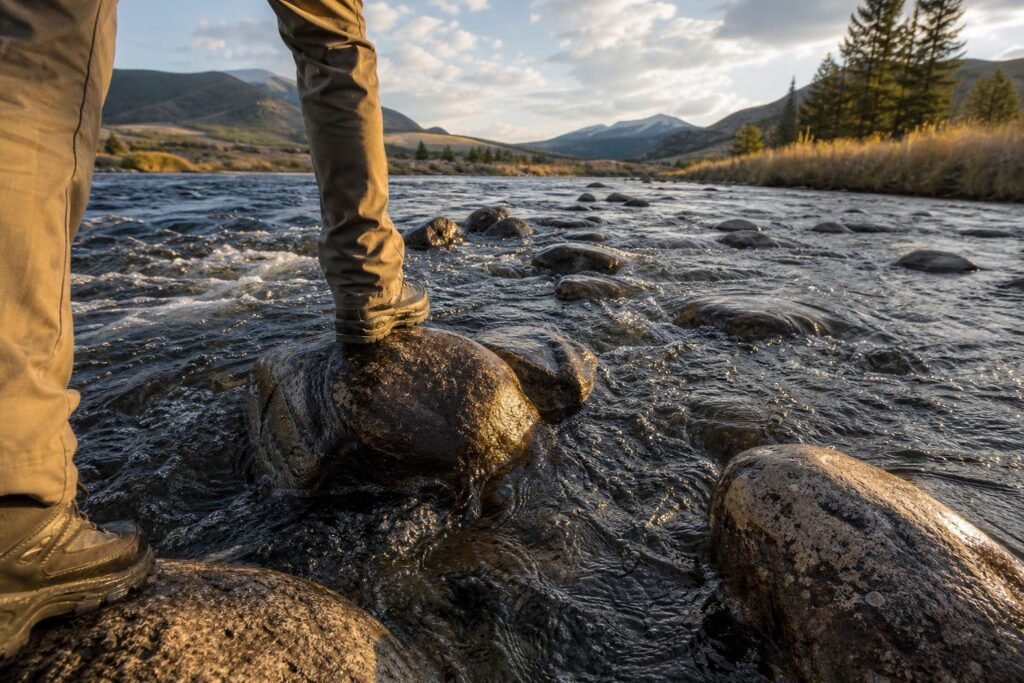
Wet granite rocks create stepping stones across fast current, boot-clad legs visible in foreground navigating the crossing
Muddy banks are trickier. The aggressive tread helps, but no wading boot does great when you’re sinking three inches into riverbank muck. I fish Ohio’s Grand River often—tons of clay—and just accept I’ll slide a bit getting in and out. Quick-dry materials at least mean the boots aren’t holding water weight.
Saltwater flats in the Bahamas taught me Redington boots handle sand and coral reasonably well. Rinse them thoroughly after, though. I didn’t the first time and could hear salt crystals crunching in the laces for weeks. The non-corrosive hardware held up fine.
High-alpine streams are where I’ve pushed them hardest. Eleven thousand feet in Colorado’s wilderness areas, crossing snowmelt current over car-sized granite. The ankle support kept me stable, though I added aftermarket insoles for the long approaches. The drainage ports work fast when you inevitably step in over your boot top.
One limitation: really technical scrambles over dry rock to reach backcountry water. The soft rubber compounds that grip wet surfaces feel skatey on dry granite slabs. I’ve started keeping approach shoes in my pack for those sections.
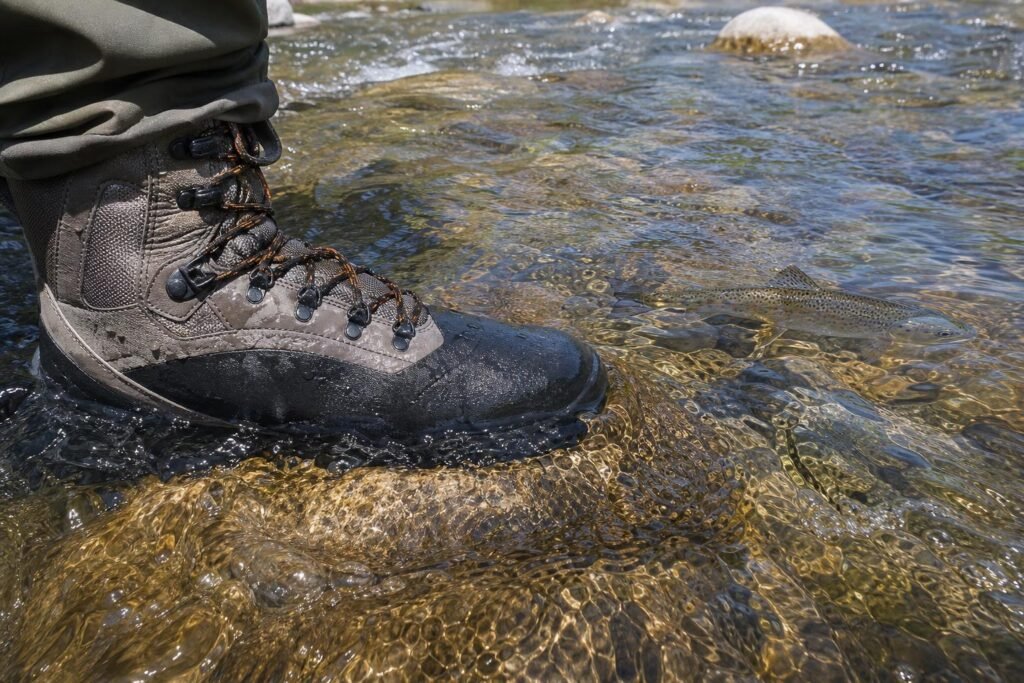
Wading boot planted on submerged stone, clear rushing water flowing around boot, small trout visible in shallow riffle beyond
Temperature extremes matter less than you’d think. I’ve fished 15-degree January mornings—your feet stay cold regardless of boot brand. Neoprene socks matter more than the boot itself. Summer heat is fine unless you’re hiking miles in them, which you shouldn’t do anyway in any wading boot.
Value Comparison: Redington vs. Other Leading Brands
Redington boots typically run $130-180. Simms Freestones are $200. Orvis Pro boots hit $250. Patagonia Foot Tractors sit around $179. Those gaps matter when you’re also buying waders, rods, reels.
The honest truth: Simms builds a more refined boot. Their Vibram soles last longer, stitching stays tighter after two seasons, the overall feel is more dialed. I’ve owned both. The Simms are better boots.
But are they $70-120 better? For most anglers, no. Redington gives you maybe 80% of the performance at 60% of the cost. That math works if you fish 15-30 days a year. If you’re guiding or fishing 100+ days annually, spend more.
Orvis boots feel overpriced to me. Similar construction to Redington but you’re paying for the brand heritage. They’re fine boots, just not a clear value proposition. I’d rather have Redington boots and spend the savings on better fly line.
Patagonia’s Foot Tractors are the closest competitor. Similar price range, similar durability, better environmental story if that matters to you. I’ve guided clients wearing both—can’t tell meaningful performance difference. Comes down to which fits your foot better.
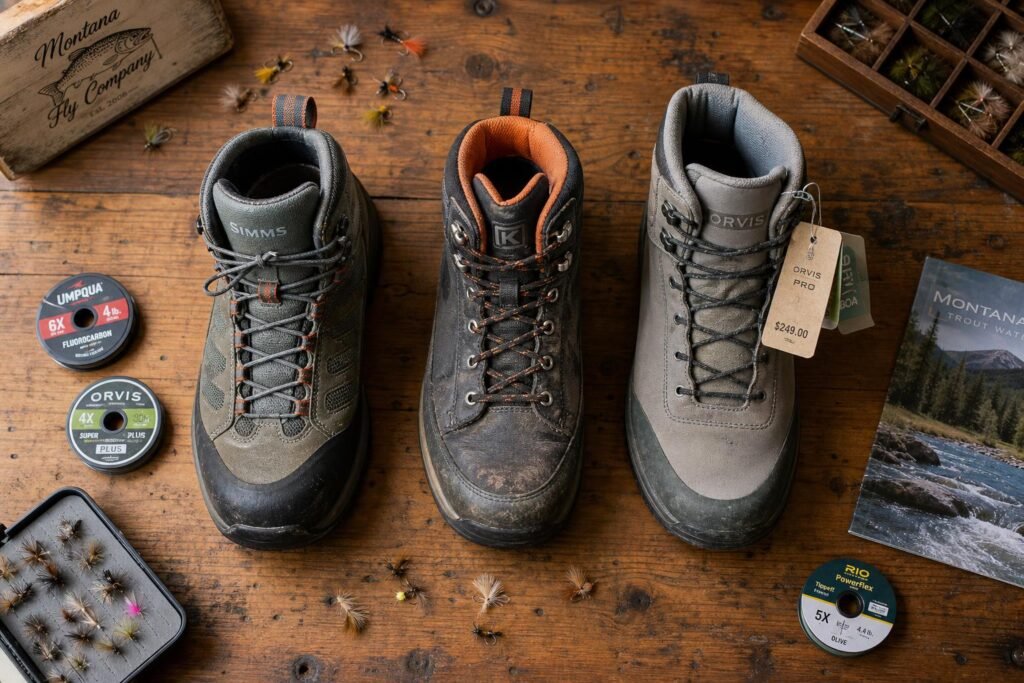
Three different wading boots arranged side by side showing wear patterns, price tags still attached to one, scattered flies and tippet spools around them
Korkers with the interchangeable sole system cost more ($220+) but solve the felt-versus-rubber debate. Swap soles for different waters. Smart if you fish varied regulations, though that’s more complexity to maintain.
Budget options like Frogg Toggs boots ($80-100) exist, but I’ve seen them fall apart mid-season. The savings aren’t worth the failure risk when you’re two miles upstream. Redington is about the floor for reliability.
The durability gap matters most over time. My Simms Freestones lasted four hard seasons before the sole started delaminating. Redington boots typically show serious wear by season three. If you replace boots every three years anyway—common for dedicated anglers—that difference shrinks.
Where Redington really shines is the mid-tier angler. You fish enough to need real gear, not enough to justify premium pricing. You want boots that won’t fail on a Montana trip but don’t need bombproof construction. That’s exactly what Redington delivers.
I keep both now. Simms for serious trips and guide days. Redington for local rivers and teaching new anglers who might trash them thrashing through alders. Different tools for different jobs, which is probably the most honest approach.