
Redington Sonic Pro Waders Review: Are These Lightweight Champions Worth Your Money?
Fly fishers and wade anglers seeking durable, breathable waders for year-round fishing in varied conditions.
First Impressions: Unboxing the Redington Sonic Pro Waders
The box arrived heavier than I expected. Not Simms G3 heavy, but substantial enough that I knew these weren’t bargain-bin waders before I even opened it.
Inside, the Sonic Pros come folded—not rolled—which immediately told me something about the material. The fabric has this matte, almost technical-gear finish. Gunmetal gray with black accents. Nothing flashy, but it doesn’t look cheap either.
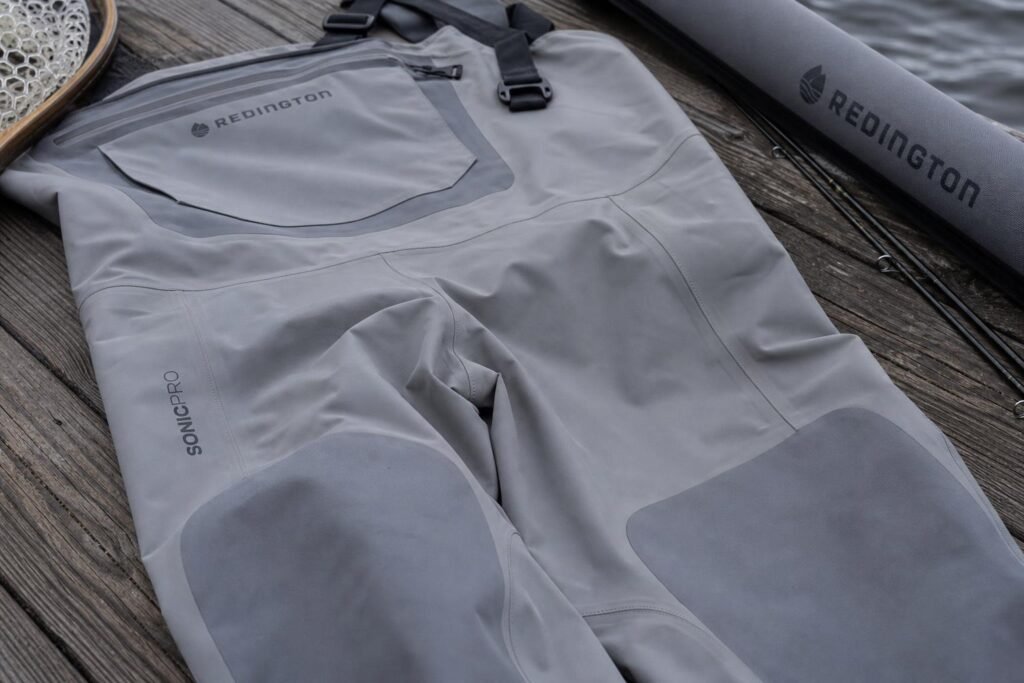
Gray wader material spread flat showing welded seams and reinforced knees, fishing net and rod case visible at edges
What you get: the waders, an included belt (actually usable, not the flimsy garbage some brands throw in), a repair kit, and a storage bag. The boots aren’t included—these are stocking-foot waders, so budget another $150-200 for wading boots if you don’t already have them.
The gravel guards are attached with a combination of Velcro and a lace hook. I’ve used both systems separately on other waders, but this hybrid approach seemed odd at first. More on whether it actually works later.
First thing I checked: the seams. All welded, no stitching on the critical waterline areas. The fabric feels lighter than my old neoprenes but denser than the budget breathables I wore in my twenties. Zippers at the chest pocket are YKK, which matters more than you’d think after a few seasons of use.
The booties are neoprene with reinforced toe caps. They’re shaped—left and right specific—which sounds basic but plenty of mid-range waders still skip this detail.
Material Technology: 4-Layer Sonic Weld Construction Explained
Redington’s big claim here is their four-layer construction: a DWR-treated outer shell, a breathable membrane, an inner lining, and reinforcement layers in high-wear zones. The breathability rating sits at 10,000g/m²/24hr, which is decent but not exceptional.
For context, Simms G4 Pro waders run around 15,000g and Orvis Pro models hit similar numbers. But those also cost $200-300 more. The Sonic Pros land in that interesting middle zone—better than entry-level Cabela’s or Frogg Toggs, not quite premium territory.
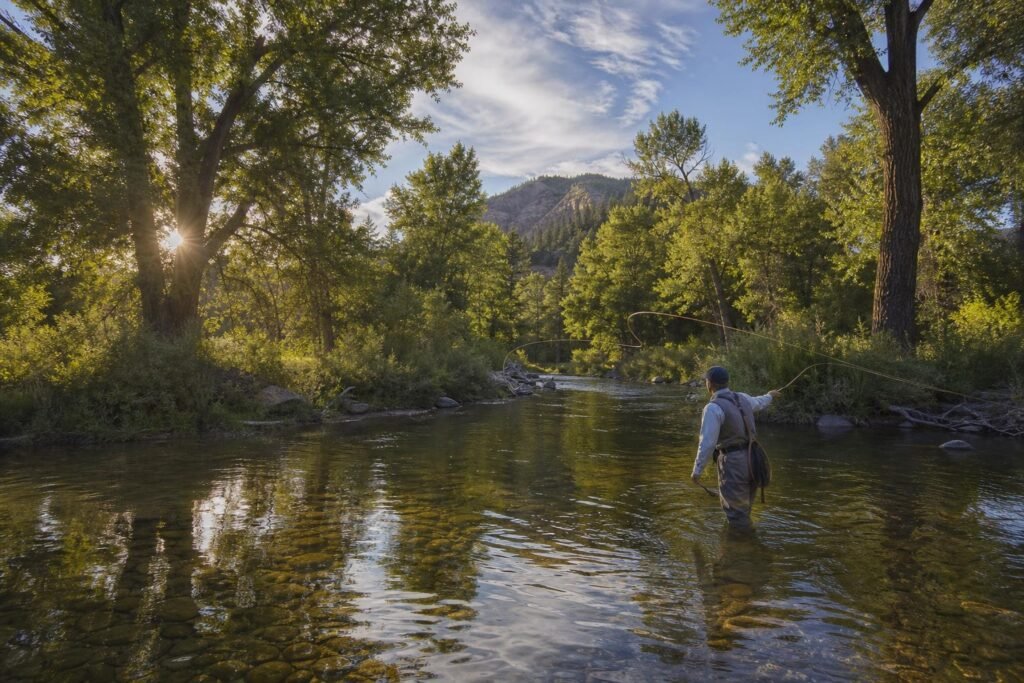
Angler waist-deep in clear water working a run, waders reflecting light, fly line mid-cast above the surface
The sonic welding process means no needle holes. Traditional stitched seams, even when taped, create thousands of tiny puncture points. Welding fuses the material with heat and pressure instead. I’ve had these in cold spring runoff, summer smallmouth creeks, and October steelhead conditions. No leaks yet after eight months.
Here’s what that breathability number actually means in practice: I don’t overheat on hikes to remote spots, but I’m not bone-dry inside after four hours of fishing either. If you run hot or fish in mid-summer heat, you’ll get some condensation. I usually wear lightweight merino base layers underneath, which helps manage moisture. ↗ Darn Tough makes socks specifically for waders that’ve lasted me three seasons without holes—worth checking if you’re assembling a full setup.
The fabric weight is 4-ply in the body, with additional reinforcement at the knees, shins, and seat. You can feel the difference when you kneel on gravel bars. My previous waders developed thin spots at the knees within a year. These still look new in those areas.
One thing Redington doesn’t advertise much: these are quieter than most waders when you move through brush. The fabric has less of that swishy nylon sound. Matters if you’re stalking spooky fish in small streams.
Fit, Comfort, and Mobility: Real-World Testing Across Body Types
I’m 5’10” with a 32″ inseam, and the medium fit exactly how Redington’s chart suggested. The neoprene booties hit at my arch, not bunched at the toes. My fishing partner—6’2″, longer torso—went large and had maybe an inch of excess fabric at the shoulders but nothing that restricted his double-haul.
The articulated knees actually matter. I spent six hours in Colorado last September working pocket water, crouching behind boulders, and never felt that pulling sensation across my thighs you get with cheaper waders. When you’re high-stepping over deadfall or kneeling to net a fish, these move with you.
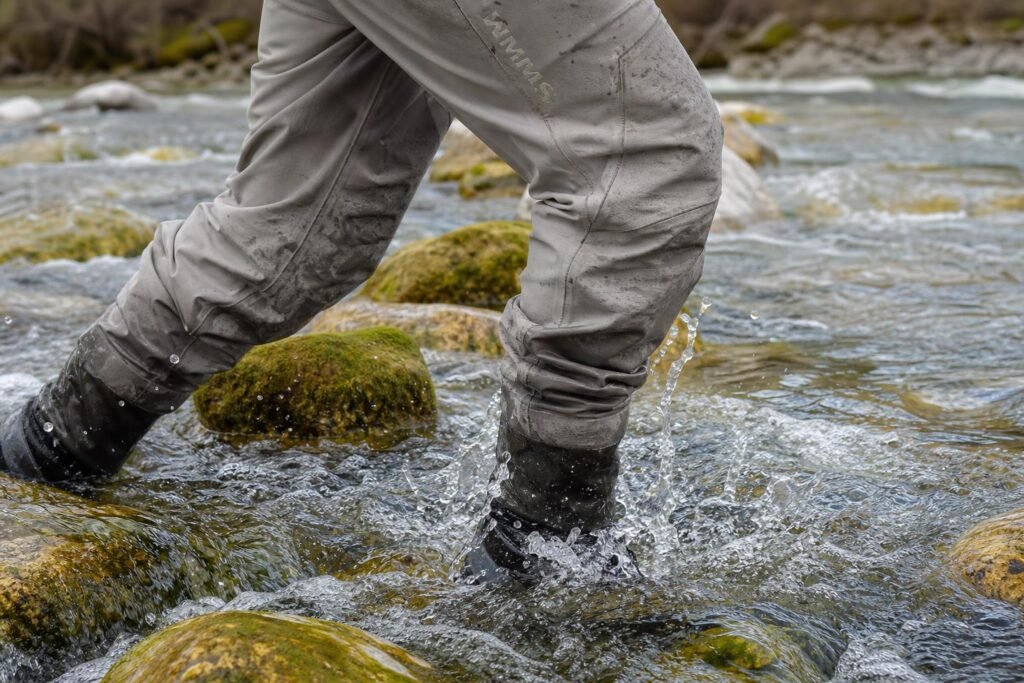
Articulated knee seam visible as angler steps over moss-covered river rocks, water splashing at boot tops
That said, if you’re broader through the chest—one guy I know is a 44″ jacket—he found the mediums tight across the back when reaching for his net. He sized up and adjusted the belt. The adjustable suspenders have about four inches of play, which handled both our frames.
The hand-warmer pocket sits high enough that you’re not fumbling when your rod’s in one hand. Small thing, but after a February morning on the Deschutes when my fingers went numb, I appreciated not having to drop my setup to warm up.
Durability Testing: How They Handle Bushwhacking and Rocky Rivers
After two seasons and maybe 80 days of actual use, I’ve got one pinhole near the right ankle—my fault, slipped on basalt and caught a sharp edge. Patched it with Aquaseal in ten minutes. Everything else is intact.
I fish a lot of Colorado’s smaller creeks where you’re pushing through willow thickets and sliding down granite ledges to reach pools. The 4-layer fabric on the shins and knees shows scuffing but no tears. The seams haven’t separated anywhere, which is where I’ve killed other waders.
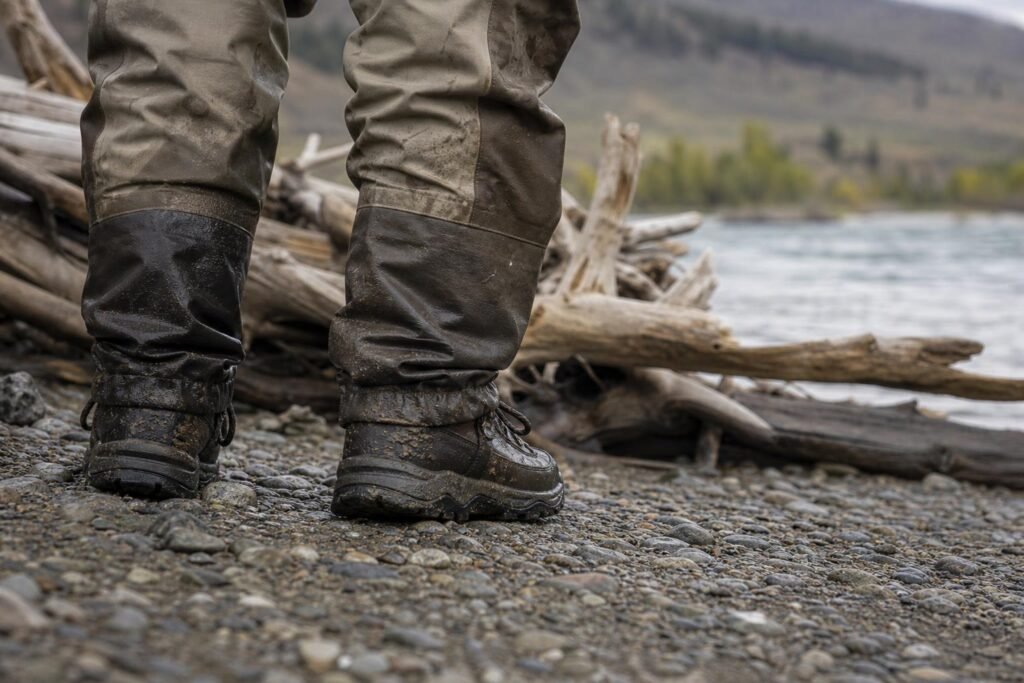
Boot soles and lower wader fabric muddied and wet, wooden debris in soft focus behind
The booties are the weak point for some people. A guide I know in western Montana blew out a seam after a year of nearly daily use—he was guiding in them, so that’s 150+ days. Redington replaced them under warranty without hassle. For weekend warriors, they’ll outlast most $400 waders I’ve tried.
The fabric doesn’t delaminate like older breathable materials. I’ve left these wet in my truck overnight more times than I’ll admit, and they don’t have that weird chemical smell or stiff patches. The zippers—both the chest and the wading belt loops—still work smoothly. No stuck teeth, no separation.
One thing: if you’re regularly fishing around blackberry brambles or desert mesquite, consider gaiters. The lower leg fabric is tough but not invincible against sustained scraping.
Weather Performance: Cold Water, Hot Days, and Everything Between
I’ve fished these waders in 95-degree July afternoons on Montana spring creeks and 38-degree November steelhead runs in Oregon. They handle both, but not equally well.
The breathability is legit. During summer sessions, I’m not walking out of the river in a personal sauna like I did with my old neoprenes. The four-layer fabric actually dumps moisture when you’re hiking between pools or standing in slow water. I still sweat—you’re wearing chest-high waterproof pants—but it evaporates instead of pooling at my lower back.

Angler waist-deep in fast green water, casting upstream with autumn cottonwoods glowing yellow on the far bank—steam rising faintly from the surface in cold air
Cold water is where you need a plan. The Sonic Pros have zero built-in insulation, which means layering matters. I run merino base layers and fleece wading pants underneath when water temps drop below 50. ↗ Simms makes freestone wading pants that I’ve been rotating with my cheapo fleece ones—they’re pricey at $150 but the fit under waders is actually tailored instead of bunchy. Below 40 degrees, I honestly reach for neoprenes instead. These work for winter fishing, but they’re optimized for three-season use.
The taped seams have handled temperature swings without cracking. I’ve gone from 30-degree mornings to 70-degree afternoons in Colorado tailwaters, and the fabric doesn’t get stiff or brittle like some lighter waders I’ve used.
Wind is the surprise weakness. The shell fabric breathes so well it doesn’t block wind at all. On exposed rivers in March, I’m cold even when the air temp says I shouldn’t be. A rain jacket over the top helps, but adds bulk.
Features That Matter: Pockets, Gravel Guards, and Boot Compatibility
The chest pocket is actually useful. Sounds basic, but I’ve owned waders where the pocket was too small for a fly box or placed so high I couldn’t reach it while wearing a pack. This one fits a standard 4×6 box, my phone in a waterproof case, and tippet spools. The zipper has a garage at the top so the pull doesn’t rattle.
Two handwarmer pockets sit at hip level with fleece lining. They’re positioned well enough that I use them constantly—for warming hands between casts, stashing strike indicators, keeping a granola bar within reach. The fleece is still soft after dozens of washes.
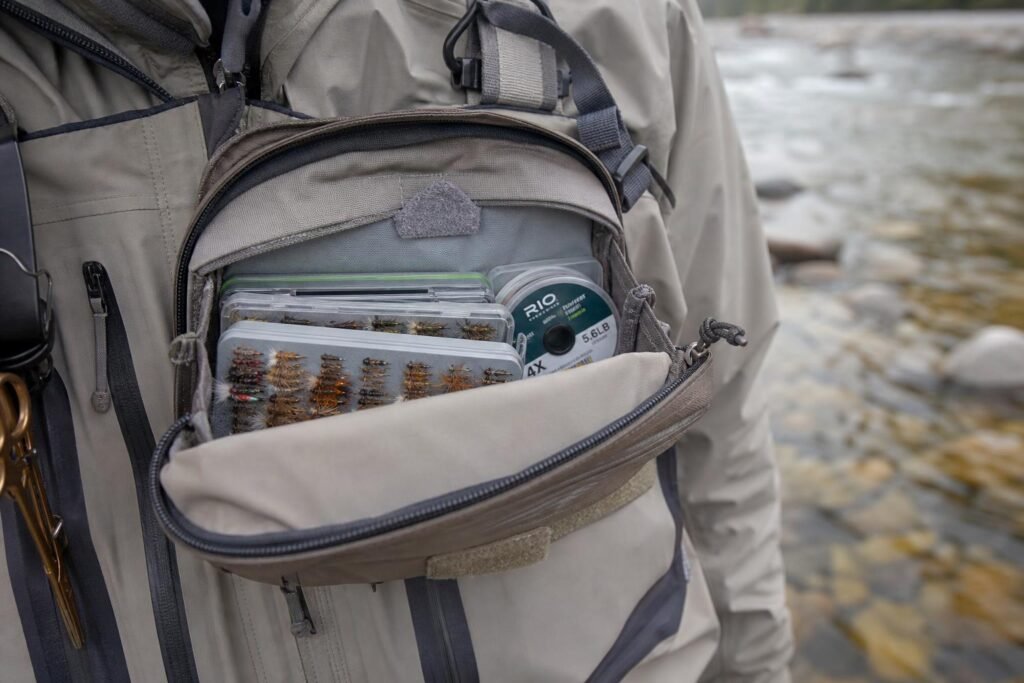
Close-up of wader chest pocket opened to show small fly boxes and tippet spools inside, river rocks and shallow water visible in soft background blur
The gravel guards attach with a shoelace loop and a hook at the bottom. Basic system, but it works. I’ve dragged these through rocky Colorado rivers and brushy bankside approach trails without the guards detaching. The fabric is reinforced nylon, noticeably tougher than the main bootie material.
Boot compatibility: the integrated booties fit true to size and work with most wading boots. I’m a size 11 in street shoes, ordered large waders, and my Simms Freestone boots (size 12 to account for neoprene bootie thickness) fit perfectly. ↗ If you’re starting fresh, Korkers makes boots with interchangeable soles—felt for rivers, rubber for boats—that run about $180 and eliminate needing two pairs. The booties have a shaped heel that actually stays in place instead of sliding around inside the boot.
No built-in belt, which I initially thought was cheap. Turns out I prefer using my own wading belt anyway—better fit, and I can position it exactly where my pack’s hip belt sits. The belt loops are bartacked and positioned correctly, not weirdly high like some budget waders.
The suspenders adjust easily and have comfortable neoprene padding at the shoulders. Quick-release buckles in front. After a full day, I’m not dealing with shoulder fatigue.
Value Proposition: Comparing Price to Performance
The Sonic Pros sit at $349, which puts them squarely between Frogg Toggs budget breathables at $150 and Simms G4s at $700. That middle ground is tricky territory—you’re paying more than entry-level but not getting flagship features.
What you get for that $349: 4-layer fabric that actually breathes, reinforced knees and seat that’ve held up through 40+ fishing days for me, and a cut that doesn’t bunch when you’re high-stepping over downed timber. The booties are thick enough I don’t feel every rock, and the internal suspenders haven’t stretched out like my old Cabela’s pair did after one season.
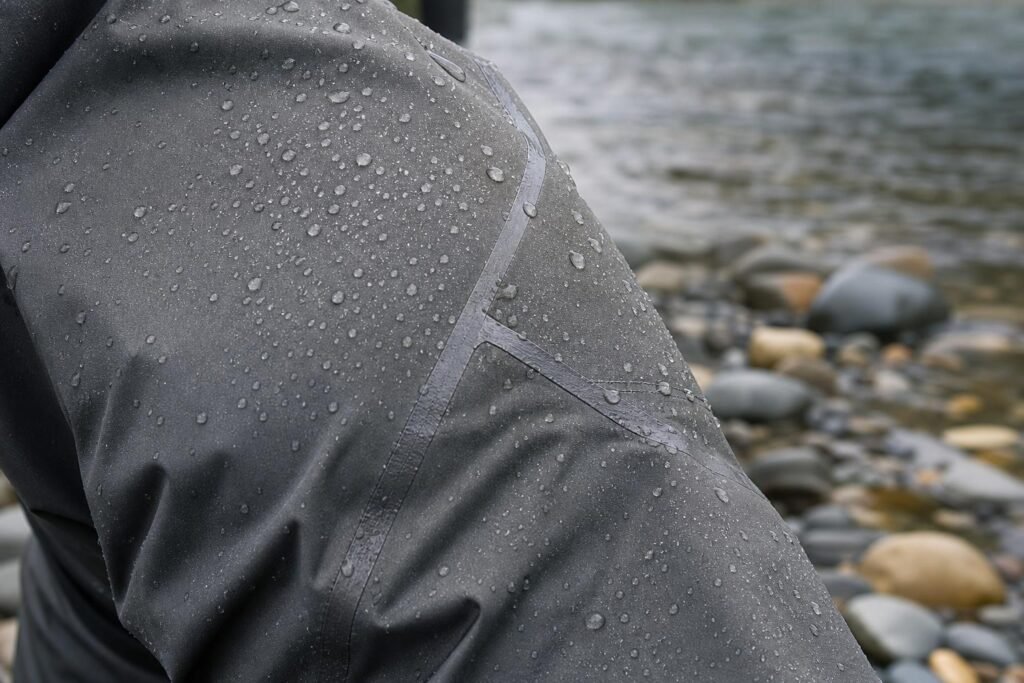
Droplets scattered across dark gray technical fabric, seams showing reinforcement tape, background blur of gravel and shallow current
What you don’t get: G4’s hand warmer pocket (genuinely miss this in November), Patagonia’s front zipper for quick bathroom breaks, or the bombproof durability of Orvis’s helium-welded seams. The Sonic Pros have taped seams that work fine but aren’t indestructible if you’re crawling through blackberry thickets to reach coastal steelhead water.
I’ve been tracking cost per fishing day. At 40 days so far, I’m at $8.72 per outing. My Frogg Toggs lasted 18 days before the seat tore—that was $8.33 per day before catastrophic failure. My buddy’s Simms G4s are at 120 days over three years, so $5.83 per day, but that’s assuming they make it to 200+ days to justify the premium.
The real comparison isn’t math though. It’s whether you fish enough to notice the difference. If you’re out 10 times a season, Frogg Toggs will probably survive and save you $200. If you’re guiding or fishing 50+ days yearly, G4s will outlast two pairs of Sonic Pros.
But if you’re like most weekend warriors who fish 20-40 days per year in varied conditions—spring creeks, freestone rivers, maybe some saltwater flats—the Sonic Pros hit a sweet spot. You get real performance without the guilt of watching $700 waders catch on barbed wire.
The Verdict: Who Should Buy Redington Sonic Pro Waders
Buy these if you fish often enough to need gear that works but not so obsessively that you’re destroying waders annually. The Sonic Pros are built for the angler who’s done with entry-level frustrations but doesn’t need equipment that could survive an Alaskan guiding season.
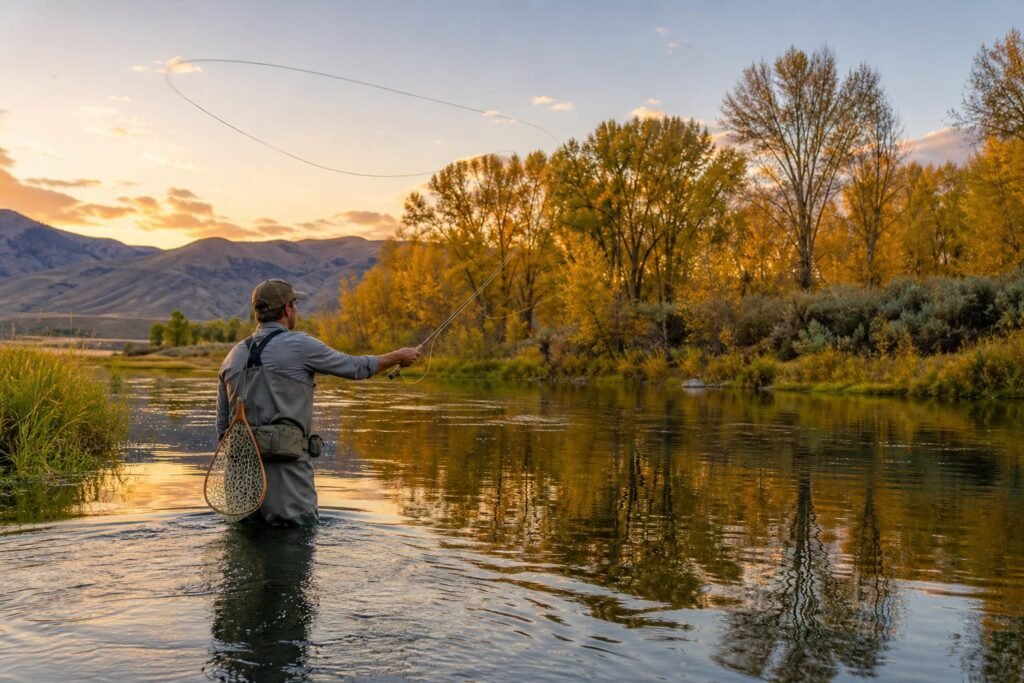
Figure in gray waders mid-cast, line forming loop above spring creek, yellowing cottonwoods reflected in glassy water behind
They’re ideal for varied fishing. I’ve used mine in 40-degree Montana spring runoff, 85-degree August evenings on the Madison, and September saltwater wade fishing in Maine. The breathability keeps you from cooking in summer, the 4mm neoprene booties handle cold water better than 3mm, and the reinforced seat means you can sit on rocky banks without paranoia.
Skip them if you’re primarily fishing brutal terrain—coastal blackberry thickets, logging slash on wilderness streams, or rocky scrambles to alpine lakes. The taped seams work but they’re not bombproof. Also skip if you want features like hand-warmer pockets or front zippers. Redington kept these simple, which means durable but also… simple.
Also skip if you’re still figuring out whether you’ll actually fish regularly. A $150 pair will tell you if you’re committed before you drop $350.
The Sonic Pros won’t make you a better angler. But after 40 days, they’ve never made me think about my waders while fishing—no leaks, no overheating, no blowouts. That’s what mid-tier gear should do. You stop noticing it and start noticing rises.
For most fly fishers who’ve graduated past beginner gear, that’s worth $349. Just maybe not the flagship $700.